Handcrafted Christmas: A 2-Day Artist's Itinerary in Strasbourg
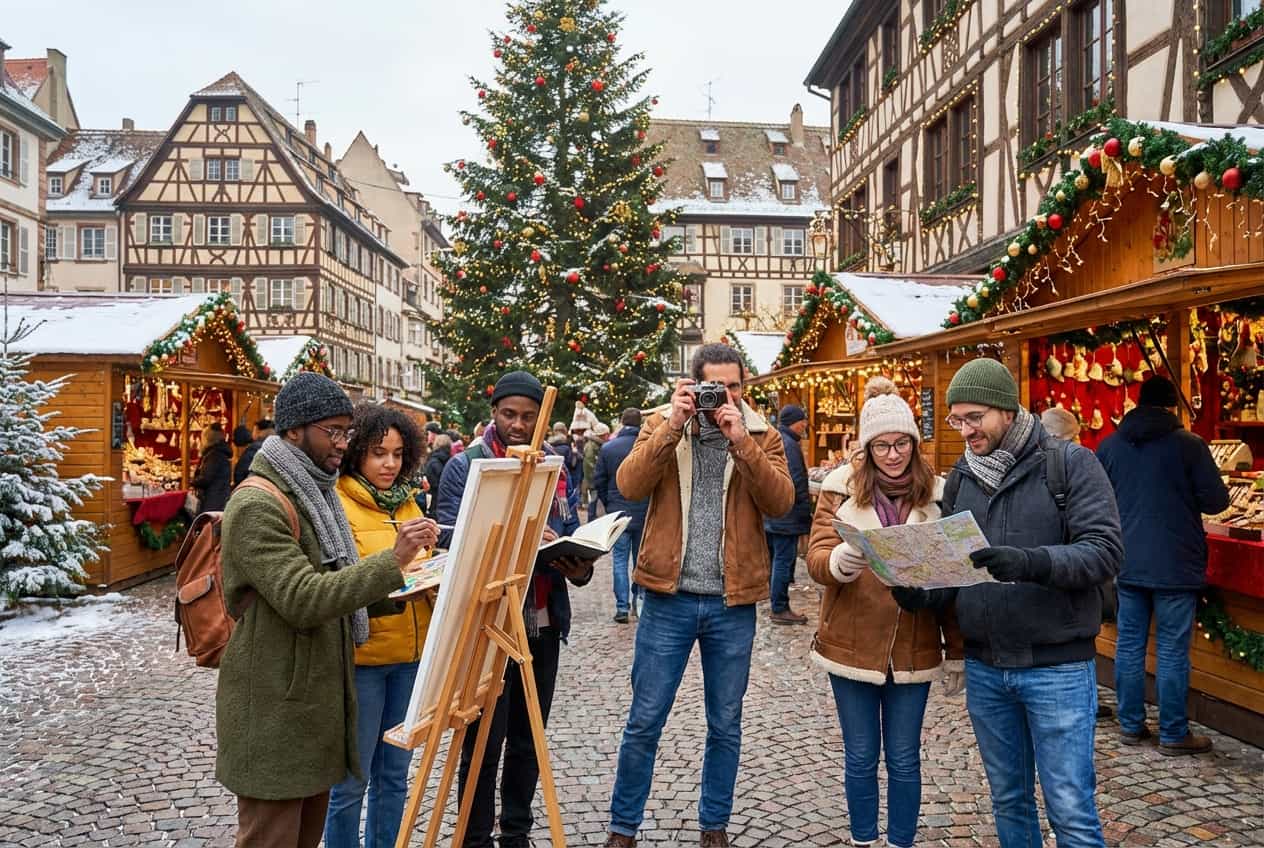
A whimsical, handcrafted two-day winter route through Strasbourg for artists: plein-air sketching by the cathedral and canals, visits to major but non-touristy art venues, hands-on creative time at a fablab, and time to browse authentic Christmas artisan stalls for unique materials and inspiration.
Highlights
- Plein-air sketching under the cathedral spire
- Contemporary art at MAMCS and classical treasures at Musée des Beaux-Arts
- Hands-on session at Le Shadok (FabLab) and an art-supply hunt at Rougier & Plé
- Evening strolls through Strasbourg's magical Christmas markets (Place Kléber & Place Broglie)
Explore all itineraries in Strasbourg.
Itinerary
Day 1
Wake up to the cathedral, sketch by day, warm light and artisan markets by night. Balance museum time, a fablab workshop and a materials run.
Breakfast & sketching warm-up at Maison Kammerzell
Settle into the ornate timbered Maison Kammerzell with a hot drink and a quick thumbnail-sketch session—its carved interior is a feast for pattern studies.
- Monday8:00 AM – 10:00 PM
- Tuesday8:00 AM – 10:00 PM
- Wednesday8:00 AM – 10:00 PM
- Thursday8:00 AM – 10:00 PM
- Friday8:00 AM – 10:00 PM
- Saturday8:00 AM – 10:00 PM
- Sunday8:00 AM – 10:00 PM
Tips from local experts:
- Ask for a window seat facing the cathedral to sketch in short 10–15 minute thumbnails before the interior gets busy.
- Carry a small waterproof sketchbook (A5) — the tables are cozy but space is tight, so keep materials minimal.
- If you prefer quieter light for detail studies, arrive early (they open for breakfast) to avoid the midday crowd.
Plein-air sketching at Cathédrale Notre-Dame de Strasbourg
Capture the cathedral’s gothic tracery and the dramatic winter sky — a perfect place for atmospheric studies in charcoal, ink, or quick watercolours.
- Monday8:30 – 11:15 AM, 12:45 – 5:45 PM
- Tuesday8:30 – 11:15 AM, 12:45 – 5:45 PM
- Wednesday8:30 – 11:15 AM, 12:45 – 5:45 PM
- Thursday8:30 – 11:15 AM, 12:45 – 5:45 PM
- Friday8:30 – 11:15 AM, 12:45 – 5:45 PM
- Saturday8:30 – 11:15 AM, 12:45 – 5:45 PM
- Sunday9:00 AM – 12:00 PM, 2:00 – 5:15 PM
Tips from local experts:
- Set up on the southern steps for the best morning light and a view of the flying buttresses; bring a small folding stool and a thick glove for sketching.
- In winter the wind off the spire can be sharp — use a heavy clipboard or binder clip to secure papers and keep a spare plastic bag to shield wet washes.
- If you plan a longer easel session, avoid blocking tourist paths and position yourself near the trees on Place du Château for a quieter micro-spot.
Contemporary art hour at Musée d'Art Moderne et Contemporain de Strasbourg (MAMCS)
Observe contemporary pieces and rotating local-artist shows — great for compositional experiments and meeting local curators.
- MondayClosed
- Tuesday10:00 AM – 1:00 PM, 2:00 – 6:00 PM
- Wednesday10:00 AM – 1:00 PM, 2:00 – 6:00 PM
- Thursday10:00 AM – 1:00 PM, 2:00 – 6:00 PM
- Friday10:00 AM – 1:00 PM, 2:00 – 6:00 PM
- Saturday10:00 AM – 6:00 PM
- Sunday10:00 AM – 6:00 PM
Tips from local experts:
- Focus on small-format works and installation details that translate easily into sketch studies — take photos only where allowed and make color notes in your sketchbook.
- Check the information desk for any current exhibitions by Alsatian artists; staff are often happy to point out artist statements useful for inspiration.
- Wear layers — galleries are kept cool in winter; a lightweight glove allows you to sketch while browsing.
Walk (transfer) to La Petite France via medieval streets
A short, scenic transfer on foot through narrow lanes — use this time to make quick compositional thumbnails of rooftops and canals.
Tips from local experts:
- Keep a tiny sketchbook and a pencil in your coat pocket for five-minute thumbnails en route.
- Watch for frosty cobbles in winter — non-slip shoes and ankle support help when carrying sketching gear.
- If you notice an interesting façade, jot down the door-to-window proportions—these little drawings make great studio references later.
Lunch in Petite France at La Maison des Tanneurs
Savory Alsatian dishes in a charming timbered setting — enjoy a relaxed meal and flip through your morning sketches while warming up.
- MondayClosed
- Tuesday12:00 – 2:00 PM, 7:00 – 9:30 PM
- Wednesday12:00 – 2:00 PM, 7:00 – 9:30 PM
- Thursday12:00 – 2:00 PM, 7:00 – 9:30 PM
- Friday12:00 – 2:00 PM, 7:00 – 9:30 PM
- Saturday12:00 – 2:00 PM, 7:00 – 9:30 PM
- SundayClosed
Tips from local experts:
- Ask for a table with a window view over the canal for inspiration and to continue thumbnailing between courses.
- If you bought wet sketches earlier, use the restaurant's radiator-side seating to let pages dry gently (check with staff first).
- Keep lunch simple so you have energy for an afternoon of materials scouting — a tarte flambée and hot drink is restorative in winter.
Art-supply run: Rougier & Plé Strasbourg
Hunt for specialty papers, winter-friendly pigment inks, and compact plein-air brushes — this larger art-supply shop is stocked for studio and fieldwork.
- Monday10:00 AM – 7:00 PM
- Tuesday10:00 AM – 7:00 PM
- Wednesday10:00 AM – 7:00 PM
- Thursday10:00 AM – 7:00 PM
- Friday10:00 AM – 7:00 PM
- Saturday10:00 AM – 7:00 PM
- SundayClosed
Tips from local experts:
- Look for oil-bar and wax-medium travel sets that are easier to use outdoors in cold weather.
- Ask staff for sturdy, compact sketching boards and clips made for plein-air use; they often carry small-format papers not shown online.
- Buy an extra roll of blotting paper or a small portable spray bottle — washes in winter dry differently and a mist bottle helps control drying time.
Transfer walk to Le Shadok (creative workshop / FabLab)
Short stroll across the river to Le Shadok — a creative tech and image fablab that often hosts crafts-and-technology workshops perfect for mixed-media experiments.
Tips from local experts:
- Carry purchases in a small backpack for easy mobility; the Shadok entrance area is best for setting up your kit.
- Check Le Shadok’s schedule on arrival — they sometimes have drop-in maker sessions that pair well with sketchbook-to-print experiments.
- If you're bringing a laptop or tablet for digital sketching, keep a compact USB charger handy; power outlets can be limited in workshop spaces.
Hands-on creative session at Le Shadok (FabLab / workshop)
Join an open workshop or use FabLab tools to experiment with scans of your plein-air work, transfers, or small print runs — cross-pollinate analogue and digital methods.
- MondayClosed
- Tuesday9:00 AM – 5:30 PM
- Wednesday9:00 AM – 5:30 PM
- Thursday9:00 AM – 5:30 PM
- Friday9:00 AM – 5:30 PM
- Saturday9:00 AM – 5:30 PM
- SundayClosed
Tips from local experts:
- Bring 2–3 small studies to scan or photograph; Le Shadok has large-format scanners or cameras some days — ask at reception for access.
- If you want to use laser-cutters or vinyl printers, arrive early to brief staff — cold weather schedules can reduce available workshop hours.
- Wear layers and bring tweezers/gloves for handling cold metal tools; workshops can be drafty near the machines.
Transfer to Place Kléber for the evening Christmas market
Walk toward the heart of the Christkindelsmärik — the market’s lights are magical for night sketches and sourcing handmade papers, ornaments, and small embroidered textiles.
Tips from local experts:
- Keep sketching materials in a warm inner pocket so inks and paints don’t thicken in the cold before you use them.
- Carry small coins (euros) for artisan stalls; many small-makers prefer cash and will be glad to show process tips when you buy.
- Pick a bench near a light source for night sketching (lamps cast interesting shadows); wrap your hands around a hot drink between strokes.
Explore the Christkindelsmärik and sketch artisan stalls at Place Kléber
Amble through Strasbourg’s famous Christmas market with an artist’s eye: study wood-carving motifs, textile patterns, and paper craft techniques from local vendors.
Tips from local experts:
- Talk to stall makers about materials — many are happy to explain wood types, dyes, and stitching methods useful for studio reference.
- For material sourcing, look for small paper- and bookbinding stalls that sell remnants ideal for collage and sketchbook decoration.
- Stand back and compose quick 5–10 minute gesture sketches of stall groupings before focusing on a single object for a detailed study.
Dinner: rustic Alsace at La Corde à Linge (Petite France)
End the day with shared plates and seasonal flavors in a cozy Petite France spot—compare notes and lay out sketches over dessert.
- Monday10:30 AM – 12:30 AM
- Tuesday10:30 AM – 12:30 AM
- Wednesday10:30 AM – 12:30 AM
- Thursday10:30 AM – 12:30 AM
- Friday10:30 AM – 12:30 AM
- Saturday10:30 AM – 12:30 AM
- Sunday10:30 AM – 12:30 AM
Tips from local experts:
- Ask for a corner table with space to spread out portfolios if you want to review and photograph your day’s work.
- Order something local and hearty to warm up after a day outside; a shared dish encourages conversation and art-swapping among traveling artists.
- If you want to continue working after dinner, request a spot close to an outlet (many cafés will oblige) for phone/tablet use.
Day 2
A quieter second day focused on canalside painting, regional craft studies, museum collections for technique inspiration, and an afternoon of sourcing rare materials at artisan markets.
Light breakfast & planning at Le Pain Quotidien Strasbourg
A simple, wholesome breakfast while annotating your favorite sketches from Day 1 and planning plein-air locations for the morning.
- MondayClosed
- Tuesday10:00 AM – 6:30 PM
- Wednesday10:00 AM – 6:30 PM
- Thursday10:00 AM – 6:30 PM
- Friday10:00 AM – 6:30 PM
- Saturday10:00 AM – 5:00 PM
- SundayClosed
Tips from local experts:
- Use the meal time to make a priority list of three studies to complete outdoors so you stay focused in the short winter daylight.
- Order a hot drink in a to-go cup if you plan to move quickly — it warms your hands while you walk between sites.
- Map nearby public toilets and sheltered spots in case the weather turns; Le Pain Quotidien staff can often suggest quieter corners to work from.
Plein-air painting session in La Petite France canals
Settle near the bridges and half-timbered houses for a two-hour tonal study — the canal reflections offer exquisite compositional rhythm in winter light.
Tips from local experts:
- Choose a spot with a sheltered windbreak (near the eastern bank) so paint and paper behave predictably in cold air.
- Bring a thermos and clamping system for your board—cold fingers work more slowly so short, intentional sessions yield stronger studies.
- Frame small studies focusing on reflections and rooflines — these translate well to later studio paintings and linocuts.
Visit Musée Alsacien for folk crafts and pattern study
Explore traditional Alsatian textiles, ceramics, and carved objects — invaluable reference for patterning, colour palettes, and ornament motifs.
Tips from local experts:
- Photograph details of embroidery and trim (where allowed) at mid-range zoom for later studio reference; note natural dyes and color aging.
- Compare motif repeats in textiles and carved frames — sketch one repeat in the margins of your notebook to adapt into modern compositions.
- The museum can be warm; remove gloves briefly to handle sketchbooks more deftly while taking quick notes.
Classical art study at Musée des Beaux-Arts (Palais Rohan)
Absorb composition, chiaroscuro and palette from classical collections — perfect for translating old techniques into contemporary holiday-themed work.
- Monday10:00 AM – 1:00 PM, 2:00 – 6:00 PM
- TuesdayClosed
- Wednesday10:00 AM – 1:00 PM, 2:00 – 6:00 PM
- Thursday10:00 AM – 1:00 PM, 2:00 – 6:00 PM
- Friday10:00 AM – 1:00 PM, 2:00 – 6:00 PM
- Saturday10:00 AM – 6:00 PM
- Sunday10:00 AM – 6:00 PM
Tips from local experts:
- Focus on one painting and make a 15–20 minute monochrome study to learn how the master handled light; use graphite or a sepia wash.
- Museum labels often mention former restorations — these notes can hint at original pigments worth researching for palette experimentation.
- If you're seeking artist contacts, ask the museum shop or desk for upcoming talks or local artist-led tours.
Transfer stroll to Place Broglie and Place Gutenberg Christmas stalls
A short walk to smaller artisan squares where local makers sell unique supplies — ideal for sourcing rare papers, natural-dyed threads, and carved ornaments.
Tips from local experts:
- Bring fabric swatches or small paper samples to compare colors in person with what you already have in your kit.
- Chat with stallholders about material origins — local makers often offer tips on how pieces were dyed or assembled.
- Buy one small sample (even scraps) rather than a finished object — materials themselves are often the best studio inspiration.
Evening artisan market exploration: Place Broglie & Place Gutenberg
Savour quieter, more local market stalls in the evening light: jewelry, paper-makers, small woodcarvers and textile artisans with studio knowledge.
Tips from local experts:
- Ask makers about their tools and workspaces — many will gladly describe their process and may invite you to visit a nearby studio or give contact details.
- Look for leftover material scraps or offcuts sold cheaply — perfect for collage, mixed-media experiments, and small assemblages.
- Keep a dedicated sketch page for surface patterns and motifs you see; note the stall name and maker so you can follow up after your trip.
Late-afternoon reflective sketch & hot chocolate at Place du Château
Return to the cathedral precinct for a final reflective sketch session as lights come on — round out studies and photograph works under consistent lighting for portfolio use.
- MondayOpen 24 hours
- TuesdayOpen 24 hours
- WednesdayOpen 24 hours
- ThursdayOpen 24 hours
- FridayOpen 24 hours
- SaturdayOpen 24 hours
- SundayOpen 24 hours
Tips from local experts:
- Choose a sheltered bench and work on a study that can be finished in 30–45 minutes as daylight fades — use warm, high-contrast strokes for evening drama.
- A thermos or hot chocolate helps maintain dexterity in cold fingers; keep extra tissues to blot damp pages if needed.
- Before packing, mark your favorite pieces with sticky tabs or paper clips and photograph them for high-quality reference under the market lights.
Farewell dinner & sketch-sharing in a cozy bistro
Gather your selections, trade sketches with travel companions, and plan how to turn these studies into studio work back home.
- Monday11:30 AM – 10:00 PM
- Tuesday11:30 AM – 10:00 PM
- Wednesday11:30 AM – 10:00 PM
- Thursday11:30 AM – 10:00 PM
- Friday11:30 AM – 10:00 PM
- Saturday11:30 AM – 10:00 PM
- Sunday11:30 AM – 10:00 PM
Tips from local experts:
- Lay out only a few favorite pieces and photograph them under soft indoor lighting for documentation before packing.
- Discuss local artist contacts you met and note any recommended follow-ups (email/Instagram) while details are fresh.
- Ask the restaurant staff about a calm corner table or an outside alcove if you need to safely dry any damp materials before departure.
Itinerary Attributes
| Days | 2 |
| Highlights | 4 |
| Season | - |
| Month | - |
| Persona | Artists |
| Transfers | 4 |
| Restaurants | 5 |
| Total Activities | 15 |
| Total Places | 15 |
| Activities Types | Meal, Outdoor, Attraction, Transfer, Shopping, Experience, Culture, Break |
Why this experience
Strasbourg's Christmas markets are famous, but this itinerary isn't about shopping — it's about making something. You'll arrive as an observer and leave as someone who's created. Picture yourself sketching the Cathedral's stone carvings with soft light spilling across your paper, wandering art supply shops where every shelf holds possibility, spending an evening at a FabLab experimenting with tools you've never used. This is a city that celebrates handcraft as much as it celebrates beauty, and for two days, you get to inhabit both.
Winter in Strasbourg is moody and golden — perfect for the kind of deep focus that art demands. The Christmas markets aren't just scenery; they're inspiration. Medieval timber frames, hand-carved ornaments, artisan stalls with generations of craft embedded in every object. You'll move between museums that show you how it's been done, workshops where you try doing it yourself, and quiet cafés where you sketch what you've seen. There's something about making something during the holidays — it connects you to the city, to its traditions, and to yourself. You'll leave with sketches, possibly with something you made, and definitely with a different relationship to craft.
Before you go
- Best time: Winter for Christmas markets, atmospheric light, and the seasonal craft focus
- Budget: Check the booking widget for current tour pricing. Add budget for meals, art supplies, museum entries, and FabLab workshop time
- Difficulty: Easy to moderate — mostly walking, some standing time in museums and markets, creative activities suit all skill levels
- What to bring: Sketchbook (or we'll help you find one), pencils or preferred drawing medium, comfortable walking shoes, warm layers for outdoor markets, and an open mind about experimentation
- Getting there: Itineraries typically start at a central hotel or Place Kléber; markets are walkable from most locations
- Accessibility: Markets have uneven terrain; museums are accessible; FabLab and workshops can accommodate accessibility needs with advance notice
Frequently asked questions
Do I need to be a "real" artist to do this? No. This itinerary is for people who want to make things and observe how others do the same. Beginners, experienced artists, and curious explorers all fit here equally.
What if I've never been to a FabLab before? Perfect. FabLabs welcome beginners, and the staff will guide you through whatever tool or project interests you. You'll be amazed at what you can make in a couple of hours.
Are the Christmas markets touristy? Yes, but they're also genuinely beautiful and genuinely filled with artisans. Instead of rushing through, this itinerary has you stop, sketch, observe, and appreciate the craft behind what you're seeing.
What's included in this itinerary? This itinerary on TheNextGuide is free to read and follow at your own pace. If you book through the platform, the tour includes guided museum visits, FabLab workshop time, market tours, meals, and art supply stops based on your operator's package.
Complete your trip in Strasbourg
Artists find endless inspiration here — whether you extend your stay or explore complementary perspectives.
- Christmas moody golden-hour photo escape for photographers — A sister itinerary for those capturing the season through a lens
- Indulgent cozy Christmas weekend for food lovers — Another sensory-focused itinerary that pairs beautifully with this one
- Photographers 48-hour golden hour escape — If you want to document your creative journey
Browse all Strasbourg itineraries at TheNextGuide.
Last updated: April 2026