Strasbourg Christmas: Moody, Golden-Hour Photo Escape (2 days)
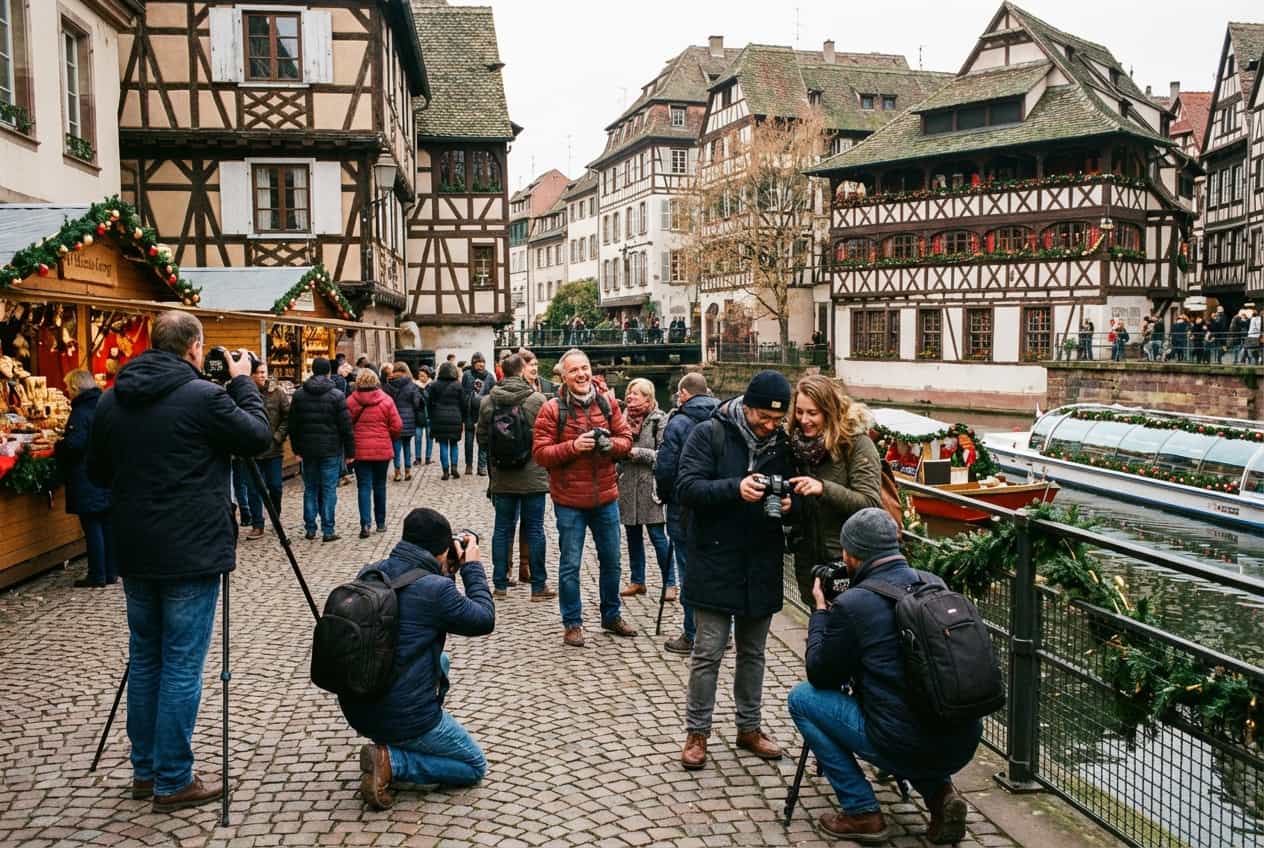
A 2-day winter photography-focused itinerary across Strasbourg's Christmas markets, iconic medieval streets and river viewpoints. Targets golden hour and blue hour for moody, warm-glow images while balancing quieter, local vantage points and practical breaks.
Highlights
- Golden-hour and blue-hour captures of Petite France and the Ill river
- Strasbourg Cathedral exterior and rooftop panoramas at low winter sun
- Classic Christkindelsmärik ambiance at Place Kléber and Place Broglie
- Reflections from Barrage Vauban and Batorama twilight boat
- Cozy Alsatian meals and late-evening light studies in hidden corners
Explore all itineraries in Strasbourg.
Itinerary
Day 1
Arrival, cathedral & main Christmas markets leading into golden-hour river scenes and evening lights in Petite France.
Arrival — Gare de Strasbourg (drop & gear check)
Quick arrival drop-off or luggage stow at the station; check camera batteries, clear memory cards and layer up for cold winter light.
Tips from local experts:
- The station has indoor benches where you can prep gear out of the cold—avoid changing lenses outside to limit condensation.
- Charge spare batteries immediately; cold drains batteries much faster in December.
- If you have a large tripod, consolidate straps and carry it in a padded bag — security at the station is relaxed but busy; keep it compact for the walk to the center.
Breakfast & warm-up — Café Bretelles
Fuel up with coffee and a pastry in a relaxed spot popular with locals; finalize the day’s shot list over a warm drink.
- Monday8:00 AM – 6:00 PM
- Tuesday8:00 AM – 6:00 PM
- Wednesday8:00 AM – 6:00 PM
- Thursday8:00 AM – 6:00 PM
- Friday8:00 AM – 6:00 PM
- Saturday9:00 AM – 6:00 PM
- Sunday10:00 AM – 6:00 PM
Tips from local experts:
- Reserve a window seat if possible for soft indoor light shots of portraits and gear silhouettes.
- Battery and lens cleaning: use this indoor 45–60 minute break to change batteries and de-fog lenses before heading back into the cold.
- Ask staff politely if you can shoot a small corner of the cafe interior for moody, golden-toned cafe portraits — many local cafes are used to photographers in winter.
Strasbourg Cathedral exterior + surrounding timber-frame vistas
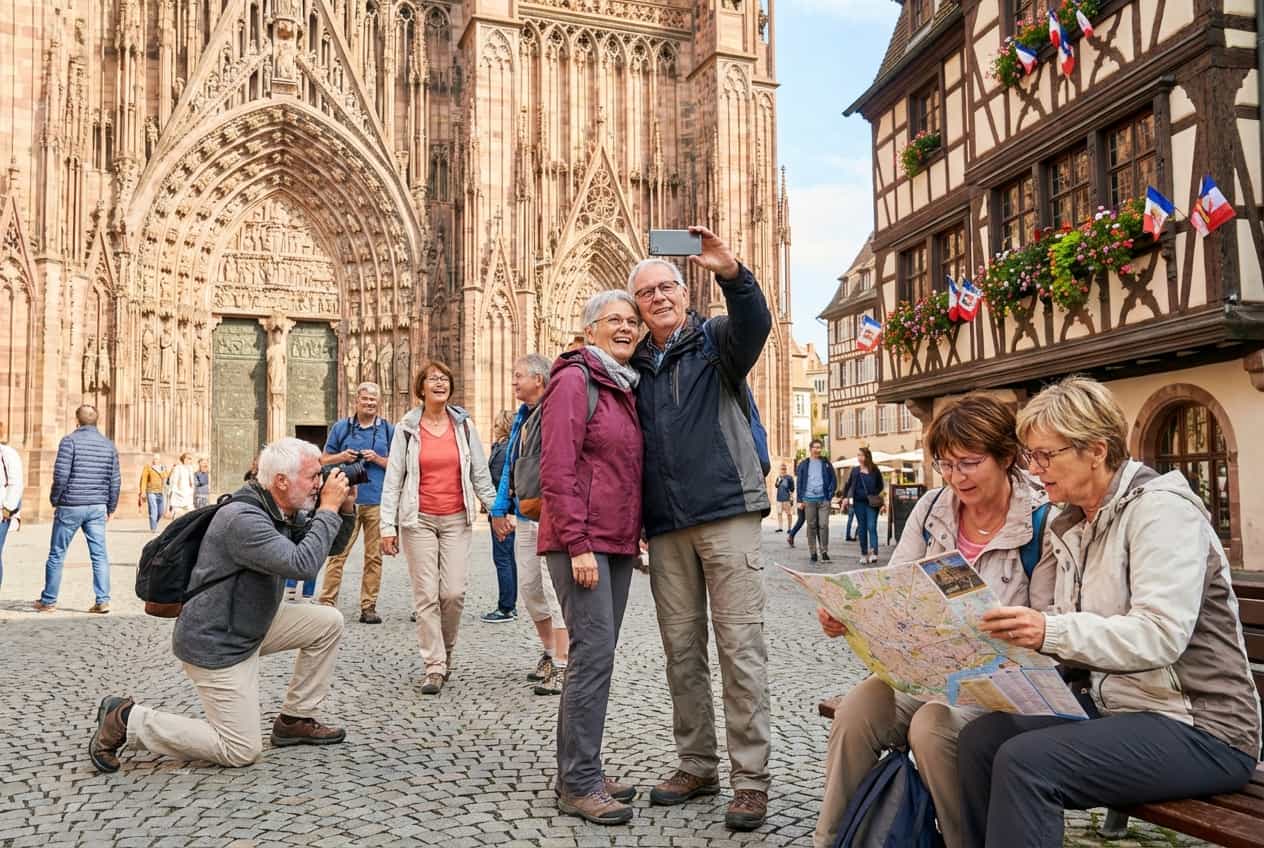
Shoot the cathedral façades and the dramatic rooflines; seek compositional frames using the narrow streets and Maison Kammerzell timber façade.
- Monday8:30 – 11:15 AM, 12:45 – 5:45 PM
- Tuesday8:30 – 11:15 AM, 12:45 – 5:45 PM
- Wednesday8:30 – 11:15 AM, 12:45 – 5:45 PM
- Thursday8:30 – 11:15 AM, 12:45 – 5:45 PM
- Friday8:30 – 11:15 AM, 12:45 – 5:45 PM
- Saturday8:30 – 11:15 AM, 12:45 – 5:45 PM
- Sunday9:00 AM – 12:00 PM, 2:00 – 5:15 PM
Tips from local experts:
- For tight cathedral details and gargoyles bring a 24–70mm and a 70–200mm tele for compressed views of the façade.
- Tripods are usually not allowed inside the cathedral without permit; stick to handheld for interior shots and plan a tripod for exteriors.
- Arrive before the midday tourist swell; late-morning (right now ~10:45–12:15) gives strong side-light for texture on the stone while still manageable crowds.
Lunch in the shadow of the cathedral — Maison Kammerzell
Sit in the historic timbered Maison Kammerzell for classic Alsatian fare and photos of the ornate building from the inside/outside.
- Monday8:00 AM – 10:00 PM
- Tuesday8:00 AM – 10:00 PM
- Wednesday8:00 AM – 10:00 PM
- Thursday8:00 AM – 10:00 PM
- Friday8:00 AM – 10:00 PM
- Saturday8:00 AM – 10:00 PM
- Sunday8:00 AM – 10:00 PM
Tips from local experts:
- Ask for a seat by the window to get interior shots with warm artificial light balanced against winter daylight—great for moody portraits.
- The building exterior is a photographic subject in itself; use a wide-angle (16–35mm) for context shots including passersby for scale.
- Note: mid-December is busy — if you want unobstructed photos of the façade, plan a short walk around the corner and return after the lunch rush.
Christkindelsmärik — Place Kléber & Place Broglie
Explore the main Christmas market stalls, focusing on intimate vendor portraits, ornaments and warm light from stalls against a cold-blue sky.
Tips from local experts:
- Bring a fast prime (35mm or 50mm f/1.8–f/1.4) for low-light portraits and detail shots of ornaments and food stalls.
- Tripods are often restricted on busy market aisles — use a monopod or shoot handheld with IS to stay agile.
- Scout less crowded side-alleys off the main square for moody compositions with fewer people; aim to shoot toward the lights late afternoon when crowds shift.
Golden-hour & blue-hour shoot along Quai des Bateliers
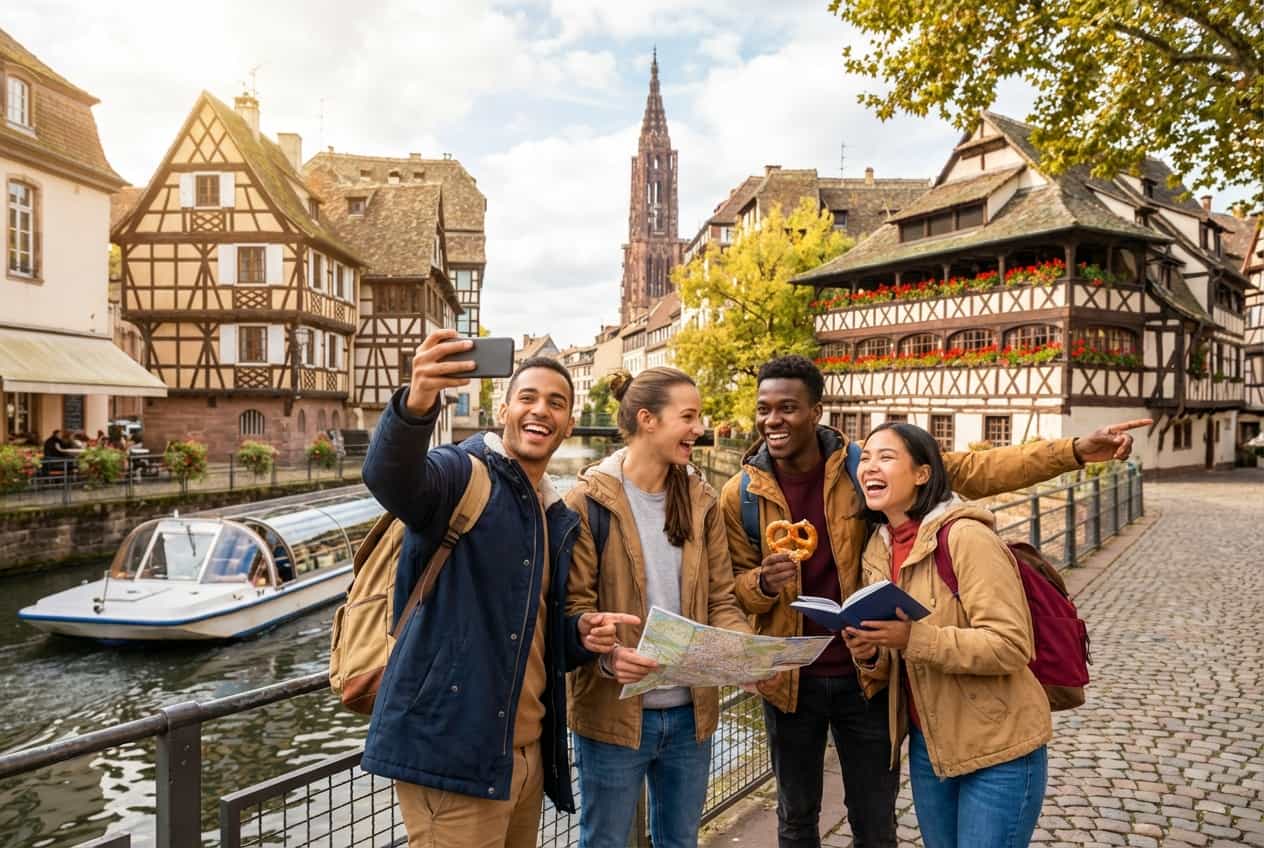
Move to the riverbanks for warm, reflective takes of the timber houses and Christmas lights as the sun descends — ideal for long exposures and silhouettes.
Tips from local experts:
- Golden hour in Strasbourg in December is short; arrive early with a tripod and filters for bracketed exposures and long exposures of reflections.
- Lens choice: 24–70mm for river panoramas, and a 70–200mm for compressed compositions of lit windows and rooflines.
- Protect your gear from river spray and condensation; keep a microfiber cloth handy and use sealed camera bags between shots.
Dinner — Le Gruber (Petite France)
Warm up with hearty Alsatian specialties in a cozy interior — capture intimate food and interior-light portraits.
- Monday11:30 AM – 10:30 PM
- Tuesday11:30 AM – 10:30 PM
- Wednesday11:30 AM – 10:30 PM
- Thursday11:30 AM – 10:30 PM
- Friday11:30 AM – 11:00 PM
- Saturday11:30 AM – 11:00 PM
- Sunday11:30 AM – 10:30 PM
Tips from local experts:
- Ask for a warmly lit corner or window table for low-light food and portrait work—use a 50mm prime for natural perspective.
- Use higher ISO with modern sensors and lens stabilization; keep shutter speeds above 1/60 for table portraits without flash.
- Reserve ahead in December; allowing a little extra time avoids rushing golden-hour processing or evening shoots.
Evening lights & intimate alleys — La Petite France
After dinner, wander Petite France for lantern-lit streets, reflections and close-up architectural details under Christmas lights.
Tips from local experts:
- Blue-hour and night: use a tripod for 5–10s exposures of canal reflections and light trails — a remote or cable release is useful in colder hands.
- Seek elevated vantage points on small bridges for symmetrical compositions of house reflections; bring a small stool or lightweight tripod for low angles.
- Watch for wet cobbles—use wide rubber soles for steady stance and try to capture the glow from shop windows for warm foreground interest.
Day 2
Early-morning river reflections, Barrage Vauban viewpoint, cathedral platform panorama, Batorama twilight boat and a final market sweep before departure.
Dawn/golden-hour shoot — Ponts Couverts & timber-house reflections
Early light brings soft warmth across the canal facades and bridge towers; capture low-angle reflections and silhouettes before the crowds arrive.
- Monday9:00 AM – 7:00 PM
- Tuesday9:00 AM – 7:00 PM
- Wednesday9:00 AM – 7:00 PM
- Thursday9:00 AM – 7:00 PM
- Friday9:00 AM – 7:00 PM
- Saturday9:00 AM – 7:00 PM
- Sunday9:00 AM – 7:00 PM
Tips from local experts:
- Arrive at least 20 minutes before official sunrise to catch pre-dawn tones and set up tripod compositions for layered exposures.
- Use low ISO and long exposures for glassy water reflections; a polariser can help manage reflections but remove it when you want mirrored symmetry.
- Dress in warm layers and bring hand warmers — steady hands and steady shutter releases are easier when you’re not numb from the cold.
Breakfast & quick review — La Corde à Linge
A riverside café/restaurant in Petite France where you can warm up and review morning shots; ideal for candid interior imagery.
- Monday10:30 AM – 12:30 AM
- Tuesday10:30 AM – 12:30 AM
- Wednesday10:30 AM – 12:30 AM
- Thursday10:30 AM – 12:30 AM
- Friday10:30 AM – 12:30 AM
- Saturday10:30 AM – 12:30 AM
- Sunday10:30 AM – 12:30 AM
Tips from local experts:
- Use this break to tether-shoot or quickly back up files to a laptop or portable drive—cold can hide card faults, so verify exposures early.
- Ask for a seat with river view for natural light food and portrait shots; the restaurant’s décor is also a nice subject for still-life frames.
- If you want pastry detail shots, shoot at aperture ~f/2.8–f/4 to keep texture sharp while getting a soft background.
Barrage Vauban viewpoint & rooftop walk
Short walk to the Vauban dam for elevated views across the Grande Île — excellent for layered cityscapes and river geometry.
- Monday7:15 AM – 9:00 PM
- Tuesday7:15 AM – 9:00 PM
- Wednesday7:15 AM – 9:00 PM
- Thursday7:15 AM – 9:00 PM
- Friday7:15 AM – 9:00 PM
- Saturday7:15 AM – 9:00 PM
- Sunday7:15 AM – 9:00 PM
Tips from local experts:
- Bring a mid-range zoom (24–105mm) for flexible framing — the viewpoint gives broad city context and compressed roofline shots.
- The walkway can be windy in winter — secure lens hoods and stabilise your tripod with a coat or camera bag weight.
- Early to mid-morning light works well here for soft cross-light; watch for ice on paths in cold snaps and wear grips on boots for traction.
Cathedral rooftop platform — panoramic cityscapes (permit/fee)
Climb the cathedral platform for a high vantage over Strasbourg’s turrets and markets. There is a small fee and stairs — perfect for wide city panoramas.
- Monday8:30 – 11:15 AM, 12:45 – 5:45 PM
- Tuesday8:30 – 11:15 AM, 12:45 – 5:45 PM
- Wednesday8:30 – 11:15 AM, 12:45 – 5:45 PM
- Thursday8:30 – 11:15 AM, 12:45 – 5:45 PM
- Friday8:30 – 11:15 AM, 12:45 – 5:45 PM
- Saturday8:30 – 11:15 AM, 12:45 – 5:45 PM
- Sunday9:00 AM – 12:00 PM, 2:00 – 5:15 PM
Tips from local experts:
- Bring wide (16–35mm) and a stitched panorama plan; the platform fee is small but check opening hours in advance in winter and expect a stair climb.
- Tripods are usually restricted up top; plan on handheld panoramas or lightweight support. Ask staff about short-term tripod permission if shooting commercially.
- Wind and cold are harsher on exposed platforms — shoot bracketing sets quickly and keep lenses covered between frames to avoid condensation.
Batorama twilight canal boat (golden-hour reflections)
Take a framed boat tour timed for late afternoon to capture the river reflections, bridges and house fronts as lights come on — ideal for long exposures and reflection studies.
- Monday9:30 AM – 9:00 PM
- Tuesday9:30 AM – 9:00 PM
- Wednesday9:30 AM – 9:00 PM
- Thursday9:30 AM – 9:00 PM
- Friday9:30 AM – 9:00 PM
- Saturday9:30 AM – 9:00 PM
- Sunday9:30 AM – 9:00 PM
Tips from local experts:
- Reserve window-side or bow seats for steady framing; bring a small travel tripod or use image stabilization — tripods are limited on boats.
- Use mid-ISO and shoot burst bracketing for moving subjects; long exposures can work for soft water but bracket to allow for motion blur.
- Pack lens cloths and ziploc bags to protect gear from spray — winter river spray can quickly fog a lens during long exposures.
Final market sweep & souvenir detail shots — Place Broglie
A last pass of the Broglie stalls for hand-made ornaments and candid vendor portraits before departure.
Tips from local experts:
- Use a short telephoto (85–135mm) for candid vendor portraits from a comfortable distance; ask permission for close portraits.
- Capture detail shots (ornaments, wood textures) at low apertures and use off-camera flash sparingly to keep the warm mood intact.
- If shipping prints or delicate purchases, look for local protective packaging at stalls—many vendors offer simple wrapping for fragile items.
Itinerary Attributes
| Days | 2 |
| Highlights | 5 |
| Season | - |
| Month | - |
| Persona | Photographers |
| Transfers | 1 |
| Restaurants | 4 |
| Total Activities | 13 |
| Total Places | 13 |
| Activities Types | Transfer, Meal, Attraction, Outdoor, Nightlife, Experience, Shopping |
Why this experience
Strasbourg in winter is a photographer's fever dream. The Christmas markets cast warm amber across medieval facades, but it's the light itself that transforms the city. Short days mean extended golden hours—sometimes two to three hours of soft, directional light that turns the Cathédrale into a study in shadow and stone, and the Petite France's timber-framed houses into something from another century. The blue hour stretches longer too, giving you time to catch those moody reflections off the Ill River without rushing, and to chase the last neon glow of market lights reflected in rain-slicked cobblestone.
You'll move between extreme contrasts: the harsh brilliance of midday market crowds and the intimate solitude of an alley at dusk, lit only by a single window. This rhythm—hunting light, finding angles, waiting for that perfect moment—is what makes winter photography in Strasbourg so addictive. The city itself becomes your studio, with centuries of architecture and the ephemeral beauty of seasonal markets as your subjects.
Before you go
- Best time: Winter (late autumn through early spring), with extended golden/blue hours and the full Christkindelsmärik in place. Cold weather and low sun angles create dramatic contrast and mist effects.
- Budget: Check the booking widget for current tour pricing. Budget extra for hot drinks between shoots (essential for staying warm), and perhaps a warming meal at a local winstub.
- Difficulty: Moderate — lots of walking in cold weather, early mornings and late evenings required. Some cathedral interior work requires low-light technique.
- What to bring: Tripod, fast lenses (f/1.8 or wider), ND filters for daytime, extra batteries (cold drains them fast), warm clothing in layers, good boots with grip, remote trigger or timer.
- Getting there: Most locations are within the Grande Île (historic center). Walking is best; rent a bike for wider shots of the riverbanks and Barrage Vauban.
- Accessibility: The Grande Île's cobblestone streets are uneven. Ponts Couverts and Barrage Vauban have some steep sections. Many venues (Cathedral rooftop, elevated viewpoints) require climbing stairs.
Frequently asked questions
What makes winter light so different from summer? Winter's low sun angle creates longer shadows and more dramatic direction. Days are short—sunset comes around 4:30 PM in winter—which gives you extended golden and blue hours. The markets are lit, the city is draped in decorations, and mist off the river creates atmospheric layers you simply can't get in summer.
Do I need a guide for this? No. This itinerary is self-guided. You'll move at your own pace, stopping whenever light is good. A guide can be helpful for explaining the history of venues (Cathedral details, Maison Kammerzell's Renaissance carving), but the photography schedule is entirely yours to control.
Will the markets be too crowded for photos? Early mornings (before 10 AM) and late evenings (after 6 PM) are emptier. The markets run from around 10 AM to 10 PM. We've built those golden/blue hour sessions specifically to avoid peak crowd times while you get the best light.
What's included in this itinerary? This itinerary on TheNextGuide is free to read and follow at your own pace. You'll navigate yourself to each location, manage your own timing, and control your shot list. The Batorama boat (suggested for Day 2 twilight) requires a separate ticket; check their website for pricing and schedules.
Complete your trip in Strasbourg
After two days of chasing light through winter Strasbourg, extend your story with these related itineraries.
- Strasbourg in December: A Romantic Golden Hour Photography Weekend — For couples who want to blend romance with photography
- Handcrafted Christmas: A 2-Day Artists' Itinerary in Strasbourg — Explore the artisanal side of Christmas markets alongside your photography
- 3-Day Wholesome Family Christmas in Strasbourg — Bring family into the festive season with structured activities
Browse all Strasbourg itineraries at TheNextGuide.
Last updated: April 2026