19 Days Mera Peak Climbing & Expedition – One Life-Changing Himalayan Adventure
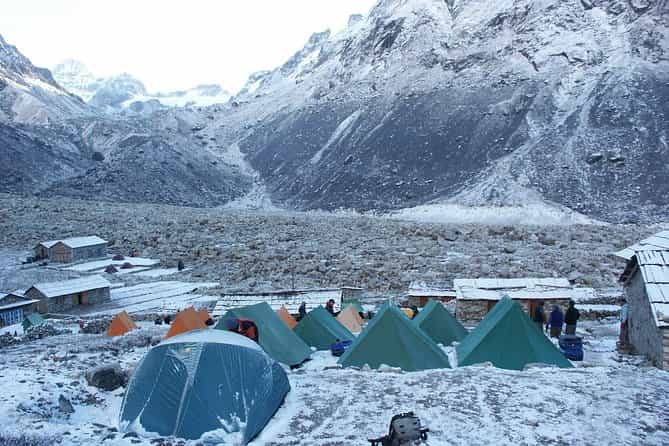
19-day guided expedition to summit Daya Peak (5,500 m) and Mera Peak (6,476 m). Includes Kathmandu arrival, cultural preparation, Lukla flight, multi-day trek through Hinku Valley, climbing clinic, high camps, summit pushes, buffer day, and return to Kathmandu.
In Collaboration with Osho World Adventure - Nepal Tour-Trekking Operator. Updated on February 22, 2026.
This itinerary was created in collaboration with Osho World Adventure - Nepal Tour-Trekking Operator, inspired by the tour 19 Days Mera Peak Climbing & Expedition – One Life-Changing Himalayan Adventure. Please check the tour information during your booking process.
Highlights
- Summit two Himalayan peaks: Daya Peak (5,500 m) and Mera Peak (6,476 m)
- Scenic flight Kathmandu–Lukla and classic Khumbu/Hinku Valley trekking approach
- Comprehensive climbing clinic (rope skills, crampon & ice-axe) in Khare
- High alpine camps with guided glacier travel and rope-team techniques
- Built-in acclimatization and contingency day to improve summit success
Explore all itineraries in Kathmandu.
Itinerary
Day 1
Arrival in Kathmandu, airport pickup, transfer to hotel, briefing and gear check with the Osho World Adventure team.
Arrival in Kathmandu (1,400m) — Transfer, briefing & gear check
Welcome by the Osho World Adventure team. Transfer from Tribhuvan International Airport to your hotel in Kathmandu. Group briefing and initial gear check with the lead guide. Overnight in a 3–5 star hotel (your choice).
Tips from local experts:
- Keep your passport, trekking permit copies, and arrival stamp together in a waterproof sleeve for quick access during pickup.
- Carry a daypack (small bag) with essentials—water bottle, sunblock, a warm layer—so you’re ready for the short transfer and briefing.
- Confirm any rental or borrowed climbing equipment during the gear check; staff can note missing items early for quick resolution.
Day 2
Kathmandu cultural visits and final expedition preparations with the guide.
Kathmandu Sightseeing & Expedition Prep
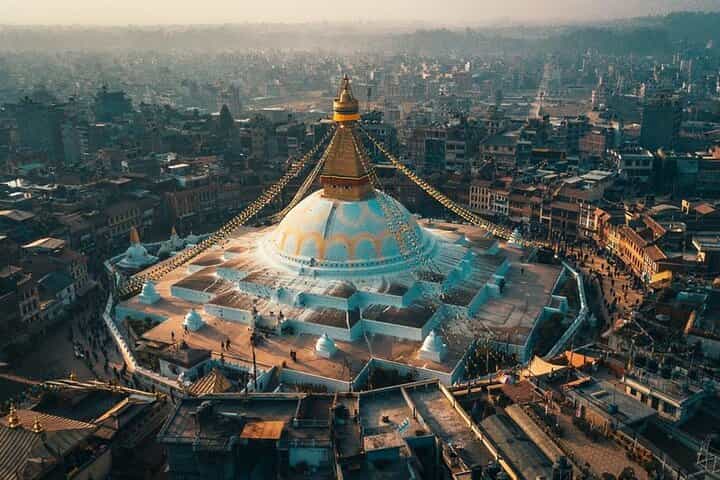
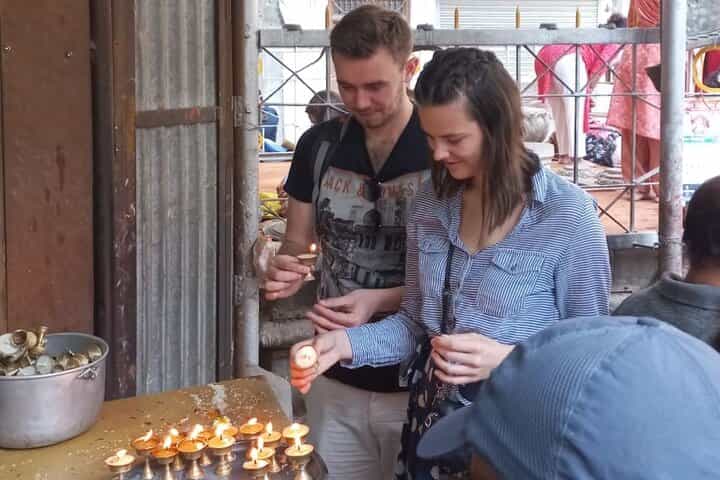
Guided visits to Boudhanath Stupa, Swayambhunath (Monkey Temple) and Pashupatinath for a cultural orientation. Final packing, permit checks and last-minute gear adjustments with your guide. Hotel stay with breakfast.
- MondayOpen 24 hours
- TuesdayOpen 24 hours
- WednesdayOpen 24 hours
- ThursdayOpen 24 hours
- FridayOpen 24 hours
- SaturdayOpen 24 hours
- SundayOpen 24 hours
Tips from local experts:
- Carry small change (Nepalese rupee) for temple donations, bottled water, and small purchases at the stupas.
- Dress respectfully at Pashupatinath—cover shoulders and knees; avoid photography where signage restricts it.
- Use this day to test your trekking boots and sleeping bag liner to ensure a comfortable start to the trek.
Day 3
Early morning flight from Kathmandu to Lukla; warm-up trek to Paiya. First teahouse night in the Khumbu.
Fly to Lukla (2,840m), trek to Paiya (2,730m) — 4 hrs
Scenic mountain flight from Kathmandu to Lukla (Tenzing-Hillary Airport). Warm-up trek through ridges and small Khumbu villages to Paiya. Overnight teahouse stay.
Tips from local experts:
- Flights to Lukla are weather-dependent; keep your schedule flexible and carry essentials in cabin baggage in case luggage is delayed.
- Bring ear protection and a lightweight warm layer for the short but chilly wait at Lukla airstrip.
- Tip porters based on service and load—use local currency and small denominations for convenience.
Day 4
Trek deeper into the Hinku Valley via Panggom, Ningsow and Chhatra Khola; teahouse accommodation.
Trek to Kothe via Panggom, Ningsow & Chhatra Khola
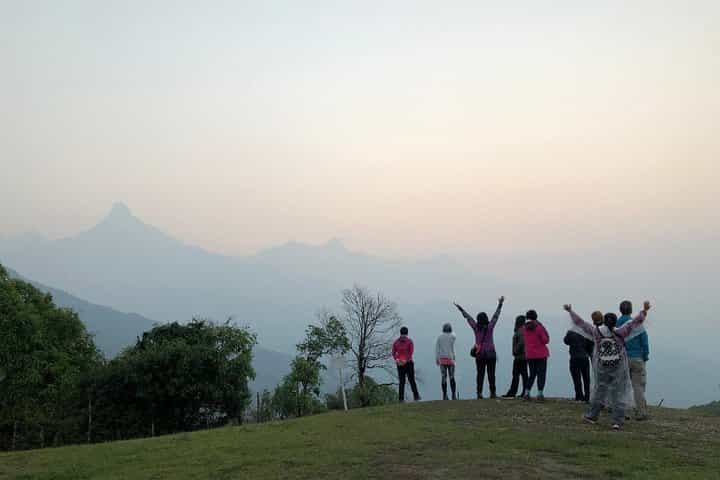
Trek through dense forest, cross small villages and follow trails into the Hinku Valley. Views open gradually to higher peaks and alpine terrain. Teahouse stays along the route.
- Monday9:00 AM – 6:00 PM
- Tuesday9:00 AM – 6:00 PM
- Wednesday9:00 AM – 6:00 PM
- Thursday9:00 AM – 6:00 PM
- Friday9:00 AM – 6:00 PM
- Saturday10:00 AM – 5:00 PM
- Sunday9:00 AM – 5:00 PM
Tips from local experts:
- Breaks are important—drink frequently and eat small snacks to aid acclimatization during long walking sections.
- Carry cash (small bills) for tea stops and snacks; power for charging is limited in remote teahouses.
- Protect feet with blister prevention—use gaiters on dusty sections and dry socks for the afternoon at teahouse stops.
Day 5
Continued trekking day through Hinku Valley; steady ascent and village stops. Teahouse accommodation.
Trek to Kothe via Panggom, Ningsow & Chhatra Khola
Continue trekking through the valley with varied terrain—forest, river crossings and village trails. Overnight at a local teahouse.
Tips from local experts:
- Layer clothing to manage changes in temperature—mornings are cold, afternoons can warm up quickly.
- Ask guides about local drinking-water options and use purification methods provided by the group.
- Keep small items (snacks, lip balm, sunscreen) in an easily reachable pocket for frequent short stops.
Day 6
Further approach into the untouched alpine areas of the Hinku Valley; teahouse accommodation.
Trek to Kothe via Panggom, Ningsow & Chhatra Khola
Approach higher alpine terrain with increasing views of ridgelines and glaciers. Teahouse stays; continue acclimatization.
- Monday9:00 AM – 6:00 PM
- Tuesday9:00 AM – 6:00 PM
- Wednesday9:00 AM – 6:00 PM
- Thursday9:00 AM – 6:00 PM
- Friday9:00 AM – 6:00 PM
- Saturday10:00 AM – 5:00 PM
- Sunday9:00 AM – 5:00 PM
Tips from local experts:
- Follow your guide’s pace; it's normal to feel slower at higher altitudes—conserve energy for steeper sections.
- Avoid alcohol and large meals before sleeping to help acclimatization and digestion.
- Carry a headlamp in your daypack for early starts or late arrivals at teahouses with limited lighting.
Day 7
Final approach within the valley; move closer to the Mera Glacier and higher camps. Teahouse accommodation.
Trek to Kothe via Panggom, Ningsow & Chhatra Khola
Final approach days move you into more remote, high-altitude villages and ridgelines. Prepare for the transition from teahouse to higher-altitude teahouses and camp areas.
- Monday9:00 AM – 6:00 PM
- Tuesday9:00 AM – 6:00 PM
- Wednesday9:00 AM – 6:00 PM
- Thursday9:00 AM – 6:00 PM
- Friday9:00 AM – 6:00 PM
- Saturday10:00 AM – 5:00 PM
- Sunday9:00 AM – 5:00 PM
Tips from local experts:
- Reduce pack weight where possible; porters carry the heavier items—keep a lighter daily pack for personal items.
- Monitor urine color as a simple hydration/acclimatization check; pale yellow indicates good hydration.
- Inform guides promptly about any headache, nausea, or dizziness—early reporting is essential for safety.
Day 8
Trek to Thangnak and Khare; terrain becomes rocky with views of Mera Glacier; teahouse stays.
Trek to Thangnak (4,350m) and Khare (5,000m)
Walk through glacial moraines and icy streams while approaching the Mera Glacier. Overnight teahouse accommodation in the high valley areas.
- MondayOpen 24 hours
- TuesdayOpen 24 hours
- WednesdayOpen 24 hours
- ThursdayOpen 24 hours
- FridayOpen 24 hours
- SaturdayOpen 24 hours
- SundayOpen 24 hours
Tips from local experts:
- Expect rocky sections—use trekking poles for balance and to save knee strain on descents.
- Charge devices when possible; power is limited higher up—bring spare battery banks.
- Keep your permit and identification accessible; checkpoints may verify permits in higher villages.
Day 9
Rest and adapt to higher altitude while staying in Khare; short walks and light activity to aid acclimatization.
Trek to Thangnak (4,350m) and Khare (5,000m)
Shorter day of trekking and rest; continue acclimatization and prepare for technical training. Teahouse stays in Khare.
Tips from local experts:
- Keep activity light and include short acclimatization hikes (up-and-down) rather than a heavy ascent.
- Eat carbohydrate-rich meals in the evening to maintain energy stores for the next day's activities.
- Use sunscreen and sunglasses—the sun is stronger at altitude and snow glare increases risk of sunburn and snow blindness.
Day 10
Further high-altitude approach with light trekking and rest in Khare; prepare for climbing clinic the next day.
Trek to Thangnak (4,350m) and Khare (5,000m)
Final approach/rest in Khare. Check equipment, rest, and hydrate in preparation for the climbing clinic and upcoming high-camp moves.
Tips from local experts:
- Double-check crampon and boot compatibility during packing to avoid issues during the climbing clinic.
- Keep a water bottle insulated to prevent freezing overnight at higher altitudes.
- Limit caffeine and strong diuretics which can interfere with hydration at altitude.
Day 11
Climbing clinic in Khare: hands-on instruction in ropework, crampon use and ice axe techniques.
Climbing Clinic in Khare
Practical training session led by your UIAA-certified climbing guide: rope skills, crampon technique, ice-axe use and basic glacier travel drills to prepare for safe summit pushes.
Tips from local experts:
- Wear your climbing boots and crampons during the clinic to allow guides to adjust fit and give personalized instruction.
- Ask your guide to demonstrate self-arrest and rope-team travel repeatedly until you’re confident—practice builds muscle memory.
- Store personal gear in a single labeled bag to speed transitions to high camp and prevent items from being misplaced.
Day 12
Trek to Daya Peak base camp and establish tented camp beneath the Daya flanks.
Trek to Daya Peak Base Camp (5,200m)
Ascend to Daya Peak base camp, set up tents and review summit plans. Alpine surroundings and high-camp procedures are covered. Tented camp.
Tips from local experts:
- Ensure sleeping bags are zipped into liners and test stove systems with the kitchen team before cold nightfall.
- Label and separate summit-day clothing in a dry bag for a fast early-morning exit.
- Keep a small daypack with snacks, water, and a warm layer ready for the short summit climb and return.
Day 13
Summit Daya Peak (5,500m) early for sunrise views; descend and return to Khare for teahouse rest.
Summit Daya Peak (5,500m), return to Khare
Early alpine start for a non-technical but steep climb to Daya Peak summit for morning views. Descend to Khare for an overnight teahouse stay.
- MondayOpen 24 hours
- TuesdayOpen 24 hours
- WednesdayOpen 24 hours
- ThursdayOpen 24 hours
- FridayOpen 24 hours
- SaturdayOpen 24 hours
- SundayOpen 24 hours
Tips from local experts:
- Start with a well-balanced snack and hydrate before leaving camp; the early hours are the coldest and most demanding.
- Use layered clothing—start very warm and shed layers as you warm during the ascent to avoid overheating.
- Clip into the rope when instructed by guides on exposed sections; maintain steady breathing and pace on the summit push.
Day 14
Trek and climb toward Mera High Camp (5,800m), establishing tented camp with panoramic mountain views.
Trek to Mera High Camp (5,800m)
Alpine approach over scree and glacier slopes to Mera High Camp. Camp is established with views across the high Himalayan range. Tented camp.
Tips from local experts:
- Move slowly and steadily—short frequent breaks help reduce exertion at high altitude.
- Mark your tent and kit clearly; wind and limited camp space make gear organization important.
- Keep a warm, dry layer accessible in your tent for overnight temperatures that can drop quickly.
Day 15
Early summit push on Mera Peak (6,476m) with rope-team glacier travel; descend to Khare for rest.
Summit Mera Peak (6,476m), return to Khare
Pre-dawn start to cross crevassed glaciers, rope up on steeper sections and reach the highest trekking peak in Nepal. Descend to Khare for teahouse accommodation.
Tips from local experts:
- Begin with high-energy, easily digestible food and sip warm fluids to maintain core temperature during the ascent.
- Listen closely to guide instructions for rope-team spacing and glacier travel—follow their commands without hesitation.
- Expect slow paces near the summit; conserve energy for the descent which requires focus on the glacier sections.
Day 16
Buffer/contingency day in Khare for weather or rest; flexibility to ensure safe summit attempts.
Buffer / Contingency Day
Rest or reserve day to accommodate weather delays, extra acclimatization, or recovery. Teahouse or tent depending on location and conditions.
Tips from local experts:
- Use this day to rest, stretch and address any minor niggles so you’re ready for the return trek.
- Keep communication devices charged and check in with guides regarding weather forecasts and next-day plans.
- If you feel unwell at altitude, notify the guide immediately—decisions to descend are made conservatively for safety.
Day 17
Trek back via Kothe and cross Zatrwa La Pass toward Lukla; celebrate summit and overnight at teahouses.
Trek back via Kothe & Zatrwa La Pass to Lukla
Descend through high-alpine terrain, cross the Zatrwa La (high pass) en route to lower ridges and Lukla. Teahouse stays and celebratory moments en route to civilization.
Tips from local experts:
- Descend conservatively to reduce strain on knees—use trekking poles and take shorter steps.
- Pack fragile items securely as trail sections can be rocky and jostling during long descent days.
- Confirm domestic flight times and keep a small change of clothes accessible for the first night back in Lukla or Kathmandu.
Day 18
Flight from Lukla back to Kathmandu. Transfer to hotel or airport; optional farewell dinner and rest.
Fly to Kathmandu & Departure
Morning flight from Lukla to Kathmandu. Transfer to hotel for rest or directly to the international airport for onward departure. Optional farewell dinner with cultural program and team if staying overnight.
Tips from local experts:
- Arrive at Lukla airstrip early with your cabin bag ready—flights operate in narrow weather windows.
- Keep copies of permits and your passport during the transfer; domestic airlines verify identity and documentation.
- Plan light activity on arrival in Kathmandu—massage or a short city walk helps restore circulation after long trekking days.
Itinerary Attributes
| Days | 19 |
| Highlights | 5 |
| Season | - |
| Month | - |
| Persona | Friends |
| Transfers | 3 |
| Restaurants | - |
| Total Activities | 15 |
| Total Places | 15 |
| Activities Types | Transfer, Culture, Outdoor, Experience, Sport, Break |
19-Day Mera Peak Climbing Expedition
Why this experience
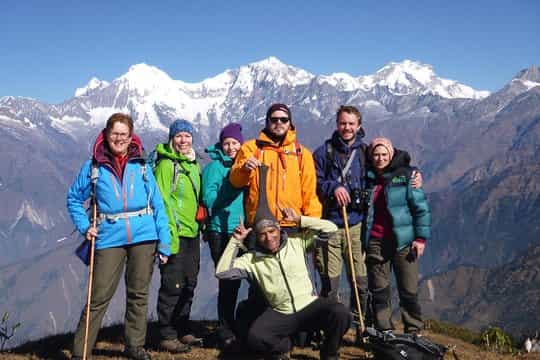
A 19-day Mera Peak climbing expedition (6,476m) is one of Nepal's most accessible high-altitude climbing experiences—challenging enough to test your resolve and fitness, but achievable for determined trekkers without prior ice climbing experience. You'll acclimatize through the Khumbu Valley, climb into the Himalayas, and stand at 21,000 feet with unobstructed views of Everest, Makalu, and Kangchenjunga. This is for climbers and adventurers who want a real summit attempt, mountain medicine education, and the deep satisfaction of reaching extreme altitude. The journey combines spiritual immersion (passing Buddhist monasteries and prayer flags), technical climbing skills learned on the mountain, and the camaraderie of expedition teams.
Before you go
| Aspect | Details |
|---|---|
| Best time | Autumn and spring when weather is stable and skies clear |
| Budget | Expedition fees vary; plan for guide, porter, logistics, equipment hire, and community contributions |
| Difficulty | High—extreme altitude, ice climbing basics, steep terrain, physical conditioning essential, mountain risk inherent |
| What to bring | Technical climbing gear (crampons, ice axes), four-season sleeping bag, high-altitude clothing layers, sunglasses, medications for altitude sickness |
| Getting there | Depart from Kathmandu; fly to Lukla, trek into the Khumbu region to expedition basecamp |
| Accessibility | Not accessible—requires mountaineering fitness, altitude tolerance, and technical climbing ability |
Frequently asked questions
Do I need climbing experience to summit Mera Peak? No prior ice climbing is required, but you must be very fit and prepared for extreme altitude. Training and acclimatization matter more than technical skills.
How many days is the expedition? This is a 19-day journey from Kathmandu. Most time is spent acclimatizing and climbing; plan for 2–3 summit days depending on conditions.
What's included in the expedition? Your itinerary covers the full climbing expedition with guides, porters, and camps. TheNextGuide connects you with verified expedition operators; they'll detail equipment rental, permits, and logistics.
What altitude-related risks should I expect? High altitude sickness (acute mountain sickness, HACE, HAPE) is real. Your operator will employ gradual acclimatization and medical protocols; you'll learn signs and symptoms.
Is there rescue coverage if something goes wrong? Legitimate operators carry rescue insurance and maintain communication with basecamp; confirm insurance and evacuation protocols with your operator before booking.
Complete your trip in Kathmandu
After your expedition, recover and explore Kathmandu's cultural side with a full-day private tour of UNESCO World Heritage sites, or ease back into travel with a gentler 7-day Kathmandu-to-Pokhara tour. For a pre-expedition food experience, try the morning food walking tour.
Browse all Kathmandu itineraries at TheNextGuide.