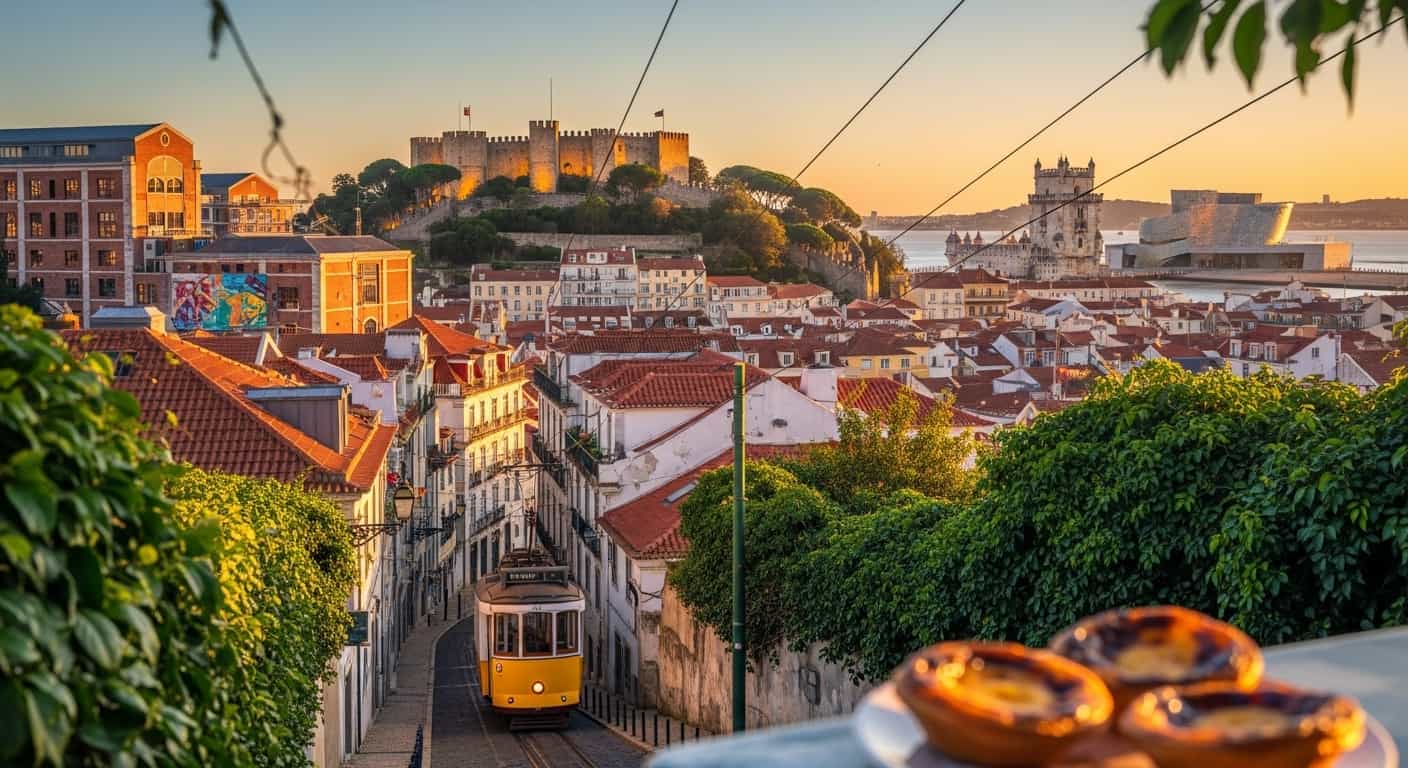
3 Days in Lisbon: The Itinerary I'd Actually Follow
Three days in Lisbon is enough to walk the medieval lanes of Alfama with a local guide, sail the Tagus past an illuminated bridge at night, discover the Gulbenkian's gardens, and ride a tuk-tuk across every hilltop viewpoint at golden hour — if you spend the time well.
If I only had 3 days, this is exactly how I'd do it. Not to check off monuments or squeeze in a Sintra day trip. Just to walk the right streets with someone who knows them, taste what the bakers have been perfecting for a century, and watch the light turn the river to copper from a sailboat deck — feeling the version of Lisbon that lives between the azulejos and the miradouros.
Highlights
- Alfama walking tour with a local guide through castle walls, viewpoints, and cobbled backstreets
- Night sailing on the Tagus past the illuminated 25 de Abril Bridge and Torre de Belém
- Golden-hour tuk-tuk ride across five hilltop miradouros with a pastel de nata stop
- Gulbenkian Museum gardens and Impressionist collection in a morning of quiet culture
- Long dinners from Alfama fado quarter to Príncipe Real's candlelit terraces
At a Glance
Day 1 — On Foot: Alfama guided walk, São Jorge Castle, Mouraria, Baixa, Chiado, Carmo Convent. Alfama → Mouraria → Baixa → Chiado.
Day 2 — By Water: Pastéis de Belém, Jerónimos Monastery, Torre de Belém, MAAT, LX Factory, night sailing on the Tagus. Belém → Alcântara → Tagus River.
Day 3 — By Ride: Gulbenkian Museum and gardens, Príncipe Real, Jardim da Estrela, golden-hour tuk-tuk viewpoint tour. São Sebastião → Príncipe Real → Estrela → citywide viewpoints.
Day 1 — On Foot
In collaboration with AlfacinhaLX
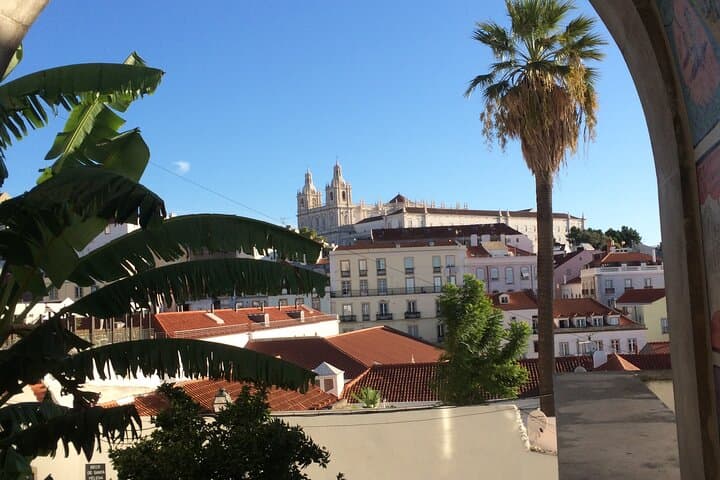
I'd start where Lisbon started — in the oldest quarter, on the hill.
Day 1 covers Alfama, Mouraria, Baixa, and Chiado — the historic core of Lisbon from the castle ridge down to the river. Everything connects on foot and metro green line.
The morning belongs to Alfama, and the best way into it is with someone who grew up in its lanes. AlfacinhaLX runs a private 2.5-hour walking tour that begins at Rossio and climbs gently through the castle neighborhood — past medieval walls that have watched the city rebuild itself three times, terracotta-roofed viewpoints at Largo de Santa Luzia where bougainvillea spills over azulejo panels depicting the waterfront before the 1755 earthquake, and the narrow alleyways where laundry still hangs between tiled facades and fado drifts from open windows on summer evenings. The guide adjusts the route to your curiosity — pausing at uncrowded vantage points, ducking into side streets to explain Moorish architectural details that most visitors walk straight past, stopping at a neighborhood café for a pastel de nata and bica that feel earned after navigating the labyrinth. Even without the tour, Alfama rewards wandering. But the guide is what turns a walk into understanding — the layers of Roman, Moorish, medieval, and earthquake-rebuilt Lisbon that stack invisibly beneath every cobblestone.
After the tour, climb to Castelo de São Jorge. The ramparts give you the widest panorama in the city — the Tagus stretching south, the 25 de Abril Bridge framing the western horizon, the terracotta rooftop sea of Alfama tumbling below. An hour here is enough to orient yourself geographically for the rest of the trip. Then descend through Mouraria — the neighborhood next door that tourists miss. Rua do Benformoso has the multicultural energy that Alfama's postcard perfection can't offer: Cape Verdean restaurants next to Chinese grocers, the sound of kizomba from an open door, the O Velho Eurico tascas where a plate of grilled sardines costs less than a coffee in Chiado.
Lunch at Tasca do Chico in Alfama — small, loud, honest Portuguese food with fado at night but excellent bifanas at midday. Or walk down to Cervejaria Ramiro in Mouraria if the budget allows — garlic prawns, clams in white wine, and a cold Imperial. No need to overthink it.
After lunch, metro from Martim Moniz to Baixa-Chiado. The afternoon unfolds on foot through the elegant grid. Rua Augusta's triumphal arch frames the view south to the river. Elevador de Santa Justa gives you a different angle — the iron-lace tower built by a student of Eiffel that connects Baixa to Largo do Carmo. At the top, the Carmo Convent sits roofless, its Gothic arches open to the sky since the earthquake shook the roof off in 1755. They never rebuilt it. The ruin is more powerful than any restoration would be.
Walk through Chiado — Livraria Bertrand on Rua Garrett (the world's oldest operating bookshop, open since 1732), A Brasileira café where Fernando Pessoa's bronze statue occupies a permanent terrace seat, and the tile-fronted shops along Rua do Carmo. Then Elevador da Glória up to Miradouro de São Pedro de Alcântara for the first sunset of the trip. The castle is lit across the valley, the river catches the last pink, and the city settles into that specific Lisbon evening hum.
Dinner at Taberna da Rua das Flores in Chiado — small plates, Portuguese wines by the glass, the kind of place where the menu changes daily and the waiter knows which cheese came in that morning. That's the rule for every night: end it at a table, no rush.
Day 2 — By Water
In collaboration with PALMAYACHTS
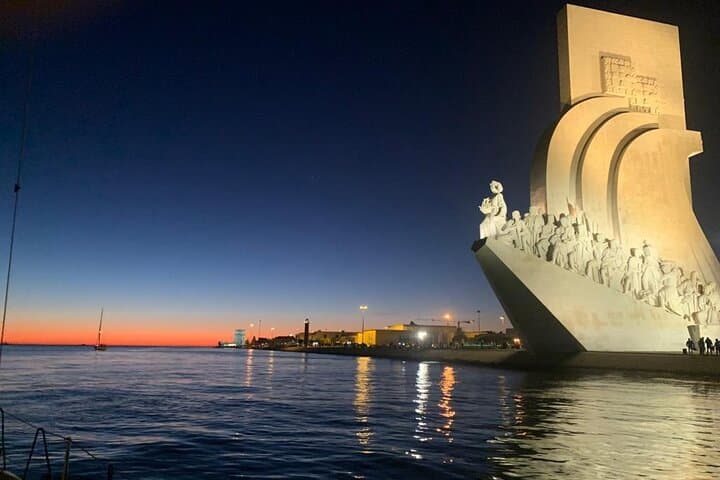
I'd give my second day to the river — Belém's monuments in the morning, the creative west in the afternoon, and the Tagus itself after dark.
Day 2 moves from Belém in the west to Alcântara and back to the riverfront. Tram 15E from Praça do Comércio to Belém connects the start. The evening sailing departs from Doca de Belém, so the day stays geographically tight.
Start at Pastéis de Belém before 09:00 — the original since 1837, where the recipe has never left the building and the custard tarts arrive warm with a dusting of cinnamon that no imitator has matched. Take a table inside the blue-and-white tiled rooms rather than the queue outside. Coffee, two pastéis, and the morning is already justified.
Then Jerónimos Monastery — the Manueline masterpiece that King Manuel I commissioned when Vasco da Gama returned from India. The cloisters are the highlight: two levels of carved limestone so intricate that the stone looks like lacework, maritime motifs woven with tropical plants and armillary spheres. The interior light shifts through the morning — arrive early and you might have the upper gallery to yourself. Allow 90 minutes; the detail rewards slow looking.
Walk the waterfront west. The Padrão dos Descobrimentos stands at the river's edge — the monument to the navigators, controversial in its triumphalism but undeniably dramatic against the water. Torre de Belém is a ten-minute walk further — the fortified tower that once guarded the harbor entrance, its Manueline balconies and watchtowers reflected in the Tagus at low tide. Then MAAT — the Museum of Art, Architecture and Technology — whose undulating rooftop you can walk for free, the curve of white tiles mirroring the river and framing the bridge in the distance.
Lunch at LX Factory — the converted industrial complex under the 25 de Abril Bridge in Alcântara. Landeau Chocolate for the best chocolate cake in Lisbon (no debate), or 1300 Taberna for something more substantial. Browse the independent bookshops, vintage stores, and design studios in the converted factory halls. LX Factory is the creative counterweight to Belém's monumentalism — the same river, a completely different energy.
Afternoon break at the hotel. The evening is the anchor. PALMAYACHTS runs a 2-hour night sailing tour departing from Doca de Belém that traces the entire riverside skyline after dark. Drinks on deck — beer, wine, or soft drinks included — while the city transforms around you. Belém Tower glows against the night sky. The 25 de Abril Bridge lights up like a second Golden Gate. The castle hill of São Jorge rises above Alfama's orange rooftops, and the Praça do Comércio waterfront stretches in illuminated arches. The small-group format keeps the atmosphere intimate, and the crew adjusts the route for light and wind conditions. You board at sunset and disembark two hours later with a night-photography reel that covers landmarks you'd need an entire day to visit on foot. Even without the sailing, the Belém waterfront at night is worth the walk. But the river is what turns Lisbon from a city you visit into one you feel.
Dinner dockside at Ponto Final in Cacilhas if you're feeling adventurous — a five-minute ferry from Cais do Sodré to the south bank, where the grilled fish is legendary and the view back at Lisbon's skyline is the one the postcards use. Or stay in Belém at Ponto9 for modern Portuguese and walk back along the illuminated waterfront. Either way: table, river, no rush.
Day 3 — By Ride
In collaboration with Chico Chico Tours
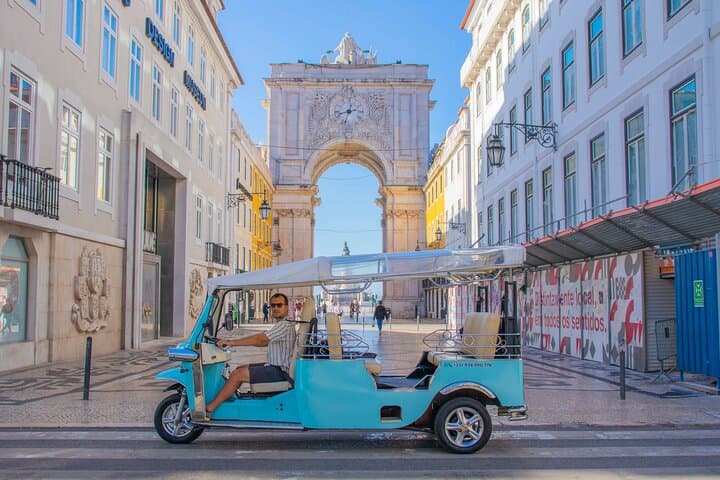
My last day starts in the quietest corner of Lisbon and ends seeing the whole city from above.
Day 3 begins in the São Sebastião area (Gulbenkian), moves south through Príncipe Real and Estrela, then the tuk-tuk ride covers viewpoints across the central hills. Metro blue line to São Sebastião, then everything connects on foot and by ride.
The Gulbenkian is the museum most visitors skip because it's not in the center — and that's exactly why it's worth the morning. The collection spans Egyptian art, Islamic ceramics, Impressionist paintings, and René Lalique jewelry, housed in a modernist building surrounded by gardens so lush they feel like a park in a different climate. The gardens alone — ponds, sculptures, shaded paths under mature trees — are worth the metro ride. Start outside with coffee at the garden café, then work through the collection. Two hours covers the highlights without rush: the Rembrandt portrait room, the Islamic tilework gallery, the Lalique glass cases that catch the morning light.
From the Gulbenkian, walk south through Avenida da Liberdade — Lisbon's Champs-Élysées, wide and tree-lined — to Príncipe Real. The neighborhood has the city's best independent shops, concept stores, and brunch cafés clustered around the garden square. Sit under the massive cedar tree at Jardim do Príncipe Real with a coffee from Copenhagen Coffee Lab, or browse the weekend organic market if timing aligns. Then walk to Jardim da Estrela — the quieter garden with the ornate bandstand, the duck pond, and the families who come here every afternoon. The Basílica da Estrela across the street has a rooftop terrace with views that rival any miradouro, without the crowds.
Lunch at A Cevicheria in Príncipe Real — Peruvian-Portuguese fusion, the giant octopus hanging from the ceiling, ceviche that cuts through two days of Portuguese heavy eating. Or Café de São Bento for a classic steak sandwich in a room of dark wood and old tiles.
Then the day's anchor — and the farewell ride. Chico Chico Tours runs a 2-hour private tuk-tuk tour timed for golden hour that connects five of Lisbon's best viewpoints in a single loop: Jardim do Torel (the hidden terrace with the swimming pool view), São Pedro de Alcântara (the one from yesterday evening, now in different light), Santa Justa (from the moving tuk-tuk rather than the elevator queue), Santa Luzia (the bougainvillea-framed Alfama panorama from Day 1, now seen from above), and the Sé Cathedral as the light fades. A pastel de nata stop at Manteigaria breaks the ride halfway. The guide doubles as photographer, so you come away with both the views and the shots. Two days ago you were lost in Alfama's labyrinth — now you see it all from above, the whole city connected, the river tying it together. It's the kind of perspective that only makes sense at the end.
Dinner at Alma in Chiado — Chef Henrique Sá Pessoa's Michelin-starred dining room in the Chiado warehouse district, where contemporary Portuguese cuisine meets old-building atmosphere. Or, for something more casual, Cervejaria Trindade — Lisbon's oldest brewery restaurant, where the azulejo walls and vaulted ceilings are as much the experience as the seafood. That's the rule: leave Lisbon at a table, wine glass in hand, nobody rushing.
Three days. Three different ways to move through Lisbon — on foot, by water, by ride into the golden hills. Zero wasted time.
What About Sintra?
Every 3-day Lisbon guide includes a Sintra day trip. This one doesn't — and that's intentional.
Sintra is extraordinary — fairytale palaces wrapped in forest mist, underground initiation wells, terraces with Atlantic views. It deserves the visit. But it also demands half a day minimum plus transport logistics, and on a 3-day trip that means losing an entire Lisbon neighborhood.
This itinerary chooses Príncipe Real, the Gulbenkian, and a golden-hour tuk-tuk panorama instead. Those are the Lisbon experiences that most Sintra-day-trippers never reach — and they're what make the city feel like more than its landmarks.
If Sintra is non-negotiable: swap Day 3 morning. Replace the Gulbenkian with an early departure to Sintra — our Sintra Half Day with Pena Palace and Regaleira by Stas Tours gets you there and back by early afternoon, leaving time for the tuk-tuk ride at golden hour. Or better yet, add a fourth day — Sintra deserves the time without cutting anything else.
Sintra isn't missing from this trip. It's saved for when you have the time to do it right.
After Dark
This itinerary ends every day at a restaurant table — long dinners, good wine, no rush. That's a deliberate choice. Lisbon earns its reputation at the table more than at any show.
But if you want a different register for one of the evenings: a Night Sailing Tour on the Tagus by PALMAYACHTS is already built into Day 2. For Day 1, Alfama is the fado heartland — Clube de Fado on Rua São João da Praça has professional performances in an intimate stone-walled room, or Tasca do Chico on Rua do Diário de Notícias in Bairro Alto has impromptu fado from local singers. Arrive early; both fill up.
Bairro Alto after 22:00 is a different city — the narrow grid of streets between Rua da Atalaia and Rua do Norte becomes an open-air bar. Every door is a different scene. No cover charges, no dress codes, just the kind of spontaneous evening that Lisbon does better than anywhere else in southern Europe.
Seasonal Notes
This itinerary is designed for autumn — the season when Lisbon has the best balance of warm days, golden light, manageable crowds, and that specific quality of afternoon sun that turns azulejo tiles into mirrors.
Spring (April–June): The gardens are at their peak — the Gulbenkian's jacarandas bloom in late spring and the Estrela garden explodes with color. Longer daylight means more time at viewpoints before dinner. The Belém waterfront is perfect for walking. Book the night sailing for later departures to catch the longer sunset.
Summer (July–August): Hot. Start the Alfama walk early (before 10:00) and take longer midday breaks. The night sailing is at its best — warm deck, late sunset, the bridge lit against a still-blue sky. Belém monuments and LX Factory get crowded; arrive before 09:00 at Jerónimos. The tuk-tuk's evening breeze is a relief after a hot afternoon.
Winter (December–February): Cooler and quieter. The Gulbenkian is ideal for a rainy morning. Belém's monuments have no queues. The night sailing runs but bring extra layers — Tagus winds are cold after dark. If weather turns, swap the tuk-tuk for the Vintage Jeep Tour with Food and Drink Tastings by GoJoe Experiences — a covered ride that works in any conditions.
Why This Experience
A 3-day Lisbon itinerary that covers the essential neighborhoods, iconic monuments, and unmissable food — without the exhausting day plans and rushed Sintra detour that most guides demand. You'll walk through Alfama's castle quarter with a local guide who grew up in its lanes, taste the original pastéis de nata at the bakery that's been making them since 1837, sail the Tagus after dark past the illuminated bridge and Belém Tower, discover the Gulbenkian — one of Europe's finest private art collections in gardens most visitors never find — and ride a tuk-tuk across five hilltop viewpoints at golden hour as the whole city connects beneath you.
Each day is built around a different way of moving through Lisbon — on foot through medieval streets on Day 1, by water along the monumental riverfront on Day 2, and by ride across the hilltop panoramas on Day 3 — so the energy shifts daily and the city reveals itself in layers rather than landmarks. The pace is realistic: one anchor experience per day, specific restaurants with specific dishes, and enough free time to sit in a garden, browse a market, or just watch the light change over the rooftops.
This itinerary is designed for first-time visitors who want to feel Lisbon, not just photograph it — whether traveling solo, as a couple, or with friends who'd rather walk the right streets than run through a checklist.
Before You Go
Best time: Autumn for golden light and comfortable walking weather; spring for gardens in bloom and longer evenings. Summer works but start early to avoid midday heat.
Budget: Mid-range — guided experiences, museum entries, casual to moderate restaurants, rooftop drinks, and market lunches. Check the booking widget on each tour page for current pricing.
Difficulty: Easy to moderate — cobblestones and hills in Alfama and Bairro Alto, flat waterfront at Belém, gentle gardens on Day 3. Trams, taxis, and the tuk-tuk handle the steepest transitions. Average 3–5 miles per day on foot.
What to bring: Comfortable walking shoes with grip (essential for cobblestones), light layers for rooftop and river breezes, portable charger for photos and navigation, light rain jacket for autumn showers.
Getting there: Arrive at Lisbon Airport (LIS) — metro red line to Alameda, then green line to Baixa-Chiado (~35 min to center). Stay in Baixa or Chiado for easy access to all three days.
Getting around: Metro covers the big transfers (Baixa to Gulbenkian, Praça do Comércio to Belém via Tram 15E). Lines green and blue are the most useful. A Navegante day pass is the best value for unlimited metro, tram, and bus.
Accessibility: Baixa and Belém waterfront are flat. Alfama and Bairro Alto have cobblestones and steep lanes — tuk-tuks and taxis provide alternatives. The Gulbenkian and its gardens are fully accessible. Check individual venues for lift access.
Complete Your Trip in Lisbon
This 3-day itinerary covers Alfama, Belém, the Gulbenkian, and Príncipe Real across three different rhythms — on foot, by water, and by ride. To extend or adjust:
More time in Lisbon:
- Lisbon & Ericeira 4-Day Coastal Trip — Coastal walks, parks, viewpoints, and surf — add the Atlantic edge
- Essential Alfama Walking Tour — Guided deep dive into the castle quarter by AlfacinhaLX
Bookable experiences featured in this itinerary:
- Lisbon by Heart Private Walking Tour by AlfacinhaLX — 2.5-hour private walk through Alfama, castle walls, and hilltop viewpoints (Day 1)
- Night Sailing Tour on the Tagus by PALMAYACHTS — 2-hour evening sail past the illuminated bridge and Belém Tower with drinks included (Day 2)
- Golden-Hour Tuk-Tuk Viewpoint Tour by Chico Chico Tours — 2-hour private ride across five miradouros with pastel de nata stop (Day 3)
Day trips from Lisbon (Day 4+):
- Sintra Half Day: Pena Palace & Regaleira by Stas Tours — Fairytale palaces and Initiation Well, back in Lisbon by early afternoon. Best booked several days ahead.
- Kayak and Snorkel Day Trip to Arrábida — Atlantic coast adventure with crystal-clear water, 45 minutes south of Lisbon. Best in summer.
- Cascais & Estoril — 30 minutes by train from Cais do Sodré. Beach town with a seaside promenade, Boca do Inferno cliffs, and the Casa das Histórias Paula Rego museum. Allow a full day.
By travel style:
- Romantic Day in Lisbon — Alfama to Bairro Alto, fado by candlelight, and a slower evening pace
- Lisbon in 48 Hours for Friends — Bairro Alto nightlife, group-friendly restaurants, flexible evenings
- 2-Day Lisbon for Families — Stroller-friendly routes, parks with space to run, kid-friendly timing
Browse all Lisbon itineraries at TheNextGuide.
Last updated: April 2026