Street-to-Studio: Al Pastor, Maíz & Contemporary Mexican Kitchens — Mexico City (4 days)
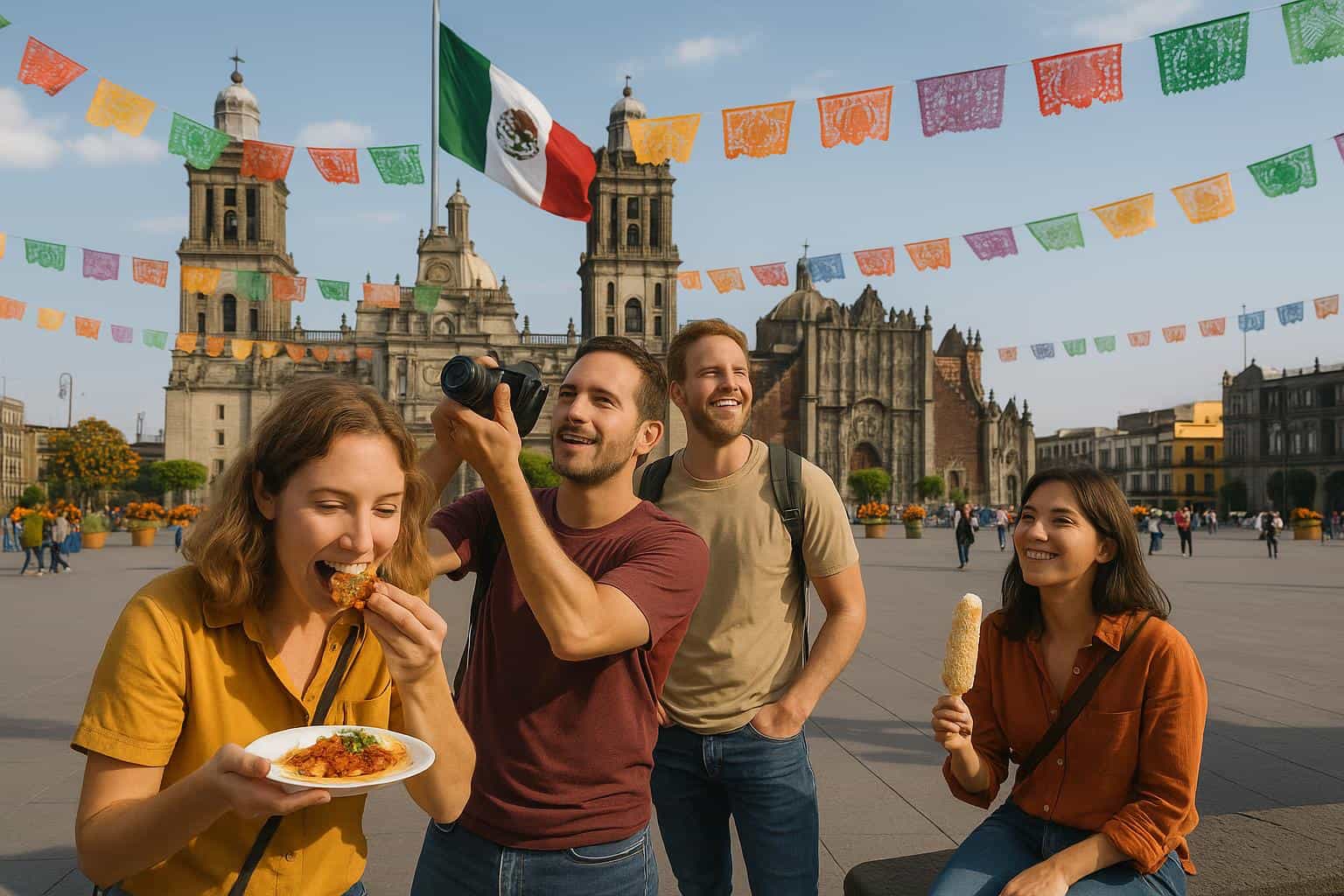
A bold, convivial 4-day food-focused route for curious food lovers: morning markets and street tacos, market-to-table cooking, mezcal and contemporary tasting menus. Balanced pacing with casual stands and two high-end studio kitchens — includes must-try dishes, dietary notes, and insider timing tips to avoid lines.
Highlights
- Night-time al pastor pilgrimage at El Vilsito
- Market deep-dive: Mercado de la Merced, Mercado de San Juan and Mercado Roma — raw ingredients and snacks
- Hands-on market-to-table cooking class with Eat Mexico
- Modern Mexican tasting menus at Quintonil and Pujol (reserve ahead)
- Xochimilco trajinera with pulque/antojitos and Coyoacán street corn
Explore all itineraries in Mexico City.
Itinerary
Day 1
Historic center: dive into central markets and classic taco stands to taste the city's pulse; finish with traditional contemporary dinner.
Morning market sweep: Mercado de la Merced
Start with Mexico City's largest traditional market — fresh corn (maíz), chiles, herbs, and offal counters. Great for seeing the raw ingredients that feed the street cooks.
- Monday5:30 AM – 6:00 PM
- Tuesday5:30 AM – 6:00 PM
- Wednesday5:30 AM – 6:00 PM
- Thursday5:30 AM – 6:00 PM
- Friday5:30 AM – 6:00 PM
- Saturday5:30 AM – 6:00 PM
- Sunday5:30 AM – 2:00 PM
Tips from local experts:
- Go early (08:00) to avoid crowds and see morning deliveries — vendors often receive fresh corn and chiles by 07:00.
- Bring small bills and reusable bags; many stalls accept cash only and will happily weigh produce into a single bag.
- Food-lovers note: ask for nixtamalized maize (nixtamal) samples and try a freshly-made elote or esquite from an on-site stall; tell vendors any corn allergies beforehand.
Specialty ingredients: Mercado de San Juan tasting walk
A compact market famed for artisanal cheeses, exotic proteins, and high-end produce — a must for curious palates.
- Monday8:00 AM – 5:00 PM
- Tuesday8:00 AM – 5:00 PM
- Wednesday8:00 AM – 5:00 PM
- Thursday8:00 AM – 5:00 PM
- Friday8:00 AM – 5:00 PM
- Saturday8:00 AM – 5:00 PM
- Sunday8:00 AM – 5:00 PM
Tips from local experts:
- Try a small tasting of artisanal cheeses or cured meats; vendors will often offer a small sample if you ask.
- If you have dietary restrictions (e.g., vegetarian), flag that at the counter — many stalls will point you to fruit, cheese or prepared-vegetarian options.
- Ask fishmongers about seasonal catches (veracruz-style preparations are often available) and for quick cooking tips if you plan to cook later.
Street taco ritual: Taquería Los Cocuyos lunch
An iconic small stall in Centro — sample suadero, longaniza and offal tacos on handmade tortillas. Crowd moves fast but lines are worth it.
- MondayOpen 24 hours
- TuesdayOpen 24 hours
- WednesdayOpen 24 hours
- ThursdayOpen 24 hours
- FridayOpen 24 hours
- SaturdayOpen 24 hours
- SundayOpen 24 hours
Tips from local experts:
- Visit just after the morning market (around 11:30) to avoid the thickest lunch rush; ask for a mix of suadero + cabeza for a local contrast.
- If you avoid pork or organ meats, request bistec (beef) or pollo; vendors are used to substitutions but say it clearly in Spanish: 'sin vísceras'.
- Carry hand sanitizer and napkins — seating is limited and eating standing up is part of the experience; avoid peak tourist hours if you want a shorter line.
Sweet pause: Churros & chocolate at El Moro
A classic for hot chocolate and churros — a convivial sugar reset after savory market flavors.
- MondayOpen 24 hours
- TuesdayOpen 24 hours
- WednesdayOpen 24 hours
- ThursdayOpen 24 hours
- FridayOpen 24 hours
- SaturdayOpen 24 hours
- SundayOpen 24 hours
Tips from local experts:
- Order a 'churros con chocolate' and request your chocolate 'medio' (medium) if you prefer it less intense; specify dairy alternatives if needed (some branches can use plant milk).
- Sit near the window or counter for people-watching; if the queue is long, ask for churros to go and enjoy nearby plaza seating.
- Ideal for pairing with a small café de olla for a spiced contrast — ask staff for the regional recommendation.
Cultural stroll: Palacio de Bellas Artes & Zócalo
Digest with a stroll past murals and the main square — food-loving travelers will appreciate the traditional markets and cantinas nearby for future stops.
Tips from local experts:
- Check mural highlights quickly (outside guided hours) and note nearby cantinas for later casual stops — great for a late-afternoon paleta or an agua fresca.
- Wear comfortable shoes; the plaza is cobbled and large — good for stretching after a big lunch.
- If mobility is a concern, the plaza and surrounding sidewalks are generally wheelchair-accessible but expect some uneven stones near the oldest buildings.
Dinner: Azul Histórico — contemporary traditional Mexican
A convivial sit-down that highlights classic moles and regional specialties with polished presentation — a great bridge from street to studio kitchens.
- Monday9:00 AM – 12:00 PM, 1:00 – 10:30 PM
- Tuesday9:00 AM – 12:00 PM, 1:00 – 10:30 PM
- Wednesday9:00 AM – 12:00 PM, 1:00 – 10:30 PM
- Thursday9:00 AM – 12:00 PM, 1:00 – 10:30 PM
- Friday9:00 AM – 12:00 PM, 1:00 – 10:30 PM
- Saturday9:00 AM – 12:00 PM, 1:00 – 10:30 PM
- Sunday9:00 AM – 12:00 PM, 1:00 – 10:30 PM
Tips from local experts:
- Reserve ahead (many diners book a week or more in advance); request 'mesa tranquila' if you want a quieter table for tasting conversation.
- Must-try: any seasonal mole or the 'enchiladas' tasting; tell the staff of allergies or spice sensitivities — they accommodate vegetarians with advance notice.
- Ask the server for local mezcal pairings from small Oaxaca palenques to round out the meal; they often rotate interesting bottles.
Day 2
Coyoacán and Xochimilco: corn-forward street snacks, Frida's neighborhood, and a festive trajinera ride with local antojitos and pulque.
Market morning: Mercado de Coyoacán
A neighborhood market known for tostadas, tamales, pan dulce and authentic street maíz preparations — great for a casual breakfast of local corn-based snacks.
Tips from local experts:
- Try a tostada de ceviche or a fresh tamal; vendors will know which corn variety is used — ask for 'maíz criollo' if you want traditional kernels.
- Bring cash for small stalls and consider splitting several small items across a few vendors to taste more flavors.
- For dietary restrictions: many stalls can prepare a vegetarian tamal or a cheese-and-epazote quesadilla — mention 'sin carne' (without meat).
Cultural stop: Museo Frida Kahlo (La Casa Azul)
A culturally rich visit — an aesthetic counterpoint to food — reserve entry online and pair with nearby cafés for a light snack.
- MondayClosed
- Tuesday10:00 AM – 6:00 PM
- Wednesday11:00 AM – 6:00 PM
- Thursday10:00 AM – 6:00 PM
- Friday10:00 AM – 6:00 PM
- Saturday10:00 AM – 6:00 PM
- Sunday10:00 AM – 6:00 PM
Tips from local experts:
- Book tickets in advance (time slots fill up fast), and arrive 10–15 minutes early to clear entry lines.
- There are small food stalls nearby for a post-visit snack; if you have mobility needs, check the museum’s accessibility notes before arrival.
- Combine with a café visit for a light corn-based snack (e.g., tamal or tlacoyo) to keep the day food-focused without a heavy sit-down right away.
Regional lunch: Los Danzantes — Oaxacan-influenced plates
A convivial sit-down with strong mole and mezcal-focused pairing options — a good chance to taste southern Mexican maize preparations with a refined touch.
- Monday12:30 – 10:00 PM
- Tuesday12:30 – 11:00 PM
- Wednesday12:30 – 11:00 PM
- Thursday12:30 – 11:00 PM
- Friday9:00 AM – 12:00 AM
- Saturday9:00 AM – 12:00 AM
- Sunday9:00 AM – 10:00 PM
Tips from local experts:
- Order one mole and ask for a mezcal flight pairing if you're curious about Oaxaca producers — servers are used to guiding tasting choices.
- Vegetarian options exist but call ahead if you require a fully plant-based tasting; they can usually adapt plates.
- Try ordering family-style plates to sample maize-forward sides and ask for the kitchen’s recomended portion sizes to avoid waste.
Afternoon trajinera: Xochimilco with snacks & pulque
Float canals on a decorated trajinera while savoring antojitos (tamales, tlacoyos) and sampling pulque or aguas frescas — festive and relaxed.
- Monday8:00 AM – 7:00 PM
- Tuesday8:00 AM – 7:00 PM
- Wednesday8:00 AM – 7:00 PM
- Thursday8:00 AM – 7:00 PM
- Friday8:00 AM – 8:00 PM
- Saturday8:00 AM – 9:00 PM
- Sunday8:00 AM – 9:00 PM
Tips from local experts:
- Book an embarcadero launch (aim for 15:00) to avoid morning crowding and to enjoy golden-hour light later in the afternoon.
- Bring sun protection and a light jacket — the boat ride can be breezy; ask the trajinera operator about vendors who paddle by with snacks to avoid overpaying.
- If you avoid alcohol, ask for aguas frescas or non-alcoholic seasonal drinks instead of pulque; vendors are used to offering alternatives.
Evening: casual tasting dinner in Coyoacán
Relaxed dinner back in Coyoacán — sample more street-style maíz dishes and regional small plates in a convivial setting.
- Monday12:30 – 10:00 PM
- Tuesday12:30 – 11:00 PM
- Wednesday12:30 – 11:00 PM
- Thursday12:30 – 11:00 PM
- Friday9:00 AM – 12:00 AM
- Saturday9:00 AM – 12:00 AM
- Sunday9:00 AM – 10:00 PM
Tips from local experts:
- Aim for an early seating (around 19:30) to avoid the busiest dinner crowd and to get quicker service.
- Ask servers for regional specialties you haven’t tried yet (Oaxacan cheeses, black mole, tlayudas-style dishes) and request smaller portions to share.
- If you have gluten sensitivities, ask about masa-based items (most corn dishes are gluten-free) but confirm cross-contact with vendors.
Day 3
Roma & Condesa: hip markets, a hands-on cooking class that turns market finds into a meal, and an evening mezcal crawl or high-end tasting option.
Brunch & browsing: Mercado Roma
A modern food hall with stalls highlighting new-wave Mexican snacks — tortillas, esquites, craft coffee and desserts.
- Monday12:00 – 10:30 PM
- Tuesday12:00 – 10:30 PM
- Wednesday10:00 AM – 10:30 PM
- Thursday10:00 AM – 12:00 AM
- Friday10:00 AM – 1:30 AM
- Saturday10:00 AM – 1:30 AM
- Sunday10:00 AM – 7:30 PM
Tips from local experts:
- Sample small plates from multiple stalls rather than committing to one stand — great for comparative tasting of maize-based items.
- If you have dietary needs, Mercado Roma stalls are generally flexible; ask for ingredient lists at each counter.
- Go mid-morning (09:00–10:30) to avoid brunch peak; seating is easier earlier in the day.
Neighborhood lunch: Máximo Bistrot Local
A much-loved Roma studio kitchen showcasing seasonal Mexican produce — an excellent mid-trip refined meal that still honors local ingredients.
- Monday1:00 – 10:00 PM
- Tuesday1:00 – 10:00 PM
- Wednesday1:00 – 10:00 PM
- Thursday1:00 – 10:00 PM
- Friday1:00 – 10:00 PM
- Saturday1:00 – 11:00 PM
- SundayClosed
Tips from local experts:
- Reserve in advance; mention any allergies and ask for the daily tasting or a la carte options if you prefer lighter portions.
- Ask the server which dishes highlight heirloom corn or nixtamal-based elements — the kitchen changes often and staff can guide choices.
- If you want a more casual pace, request a late lunch seating (12:30–13:00) to avoid the busiest service periods.
Hands-on Market Tour + Cooking Class with Eat Mexico
A chef-led market tour followed by a hands-on class that transforms chosen market ingredients into a multi-course meal — deep dive into nixtamal, salsas and mole basics.
- Monday8:30 AM – 6:30 PM
- Tuesday8:30 AM – 6:30 PM
- Wednesday8:30 AM – 6:30 PM
- Thursday8:30 AM – 6:30 PM
- Friday8:30 AM – 6:30 PM
- Saturday8:30 AM – 6:30 PM
- Sunday8:30 AM – 6:30 PM
Tips from local experts:
- Book this class in advance and let the provider know any dietary restrictions (vegetarian, gluten-free) so recipes are adjusted before you arrive.
- Wear comfortable, closed-toe shoes for the market portion; bring a small backpack for any takeaway ingredients.
- This is a great place to learn practical tips about making masa and perfecting salsas — take photos of ingredient labels and ask for written recipes if provided.
Park break: Parque México (Condesa) — digest & people-watch
A shady park to digest and relax after the class — good for reading tasting notes or wandering to nearby coffee shops.
Tips from local experts:
- Ideal for a slow post-class cooldown — benches near the fountain are shaded and popular; bring bottled water.
- If you're traveling with a stroller or limited mobility, the park paths are relatively flat but can be crowded on weekends.
- Nearby bakeries and coffee shops offer light corn-based pastries if you want a second snack later in the afternoon.
Evening options: Mezcal bar crawl in Roma or Tasting menu at Quintonil
Choose an intimate mezcal crawl through Roma's bars or a polished tasting menu at Quintonil in Polanco — both showcase contemporary approaches to Mexican flavors.
- Monday1:00 AM – 12:00 AM
- Tuesday1:00 PM – 12:00 AM
- Wednesday1:00 PM – 12:00 AM
- Thursday1:00 PM – 12:00 AM
- Friday1:00 PM – 12:00 AM
- Saturday1:00 PM – 12:00 AM
- SundayClosed
Tips from local experts:
- For mezcal: start early (around 20:00) and ask bartenders for mezcal from small palenques; vendors are happy to suggest milder options for new drinkers.
- For Quintonil: reserve weeks ahead and note dietary requirements; it's a studio-style tasting that leans on huitlacoche, corn, and locally foraged items.
- If avoiding alcohol, many mezcalerías offer artesanal aguas frescas and non-alcoholic pairings — request these when you arrive.
Day 4
Polanco & Narvarte: museum morning, a studio tasting kitchen in Polanco, and a late-night al pastor pilgrimage to El Vilsito.
Morning: Mercado de Medellín — Latin American specialties
A smaller neighborhood market known for regional produce and street snacks — great for coffee and a corn-based pastry before museum time.
- Monday8:00 AM – 6:00 PM
- Tuesday8:00 AM – 6:00 PM
- Wednesday8:00 AM – 6:00 PM
- Thursday8:00 AM – 6:00 PM
- Friday8:00 AM – 6:00 PM
- Saturday8:00 AM – 6:00 PM
- Sunday8:00 AM – 5:00 PM
Tips from local experts:
- Sample small bakeries or empanadas early to pair with coffee; the vendor-lined aisles are compact and lively.
- If you have food allergies, point them out — many stall-owners will prepare something fresh and simple for you.
- Ask about Central and South American corn varieties sold here — ideal for those tracking terroir of maíz.
Midday culture: Museo Nacional de Antropología
Digest culinary history with a visit to Mexico’s world-class anthropology museum — key exhibits cover indigenous maize cultivation and pre-Hispanic foodways.
- MondayClosed
- Tuesday9:00 AM – 6:00 PM
- Wednesday9:00 AM – 6:00 PM
- Thursday9:00 AM – 6:00 PM
- Friday9:00 AM – 6:00 PM
- Saturday9:00 AM – 6:00 PM
- Sunday9:00 AM – 6:00 PM
Tips from local experts:
- Plan 1.5–2 hours for highlights; the museum has excellent exhibits on maize domestication that deepen appreciation for contemporary dishes.
- Head to the mezzanine and ask staff about sections on food and agriculture for concise context; mobility accommodations are available at entry.
- Combine museum learning with a light snack at the museum café if you want to stay fuelled for the afternoon.
Polanco tasting: Pujol lunch (studio menu)
A contemporary Mexican studio kitchen exploring nixtamal, mole, and modern technique — book ahead for the tasting menu and request adjustments for dietary needs.
- Monday1:00 – 9:30 PM
- Tuesday1:00 – 9:30 PM
- Wednesday1:00 – 9:30 PM
- Thursday1:00 – 9:30 PM
- Friday1:00 – 9:30 PM
- Saturday1:00 – 9:30 PM
- SundayClosed
Tips from local experts:
- Reserve weeks (or months) in advance and confirm dietary restrictions; Pujol's tasting is best experienced without surprises, so communicate allergies clearly.
- If the tasting menu is too long, ask about a reduced menu or an à la carte option; many kitchens in Polanco can accommodate lighter preferences.
- Ask sommelier or server for non-alcoholic pairings or a mezcal recommendation to complement corn- and mole-forward courses.
Afternoon stroll & shopping: Avenida Presidente Masaryk (Polanco)
Walk off the tasting with a stroll along Mexico City's upscale Polanco avenue — pop into specialty food shops or artisanal chocolate stores.
Tips from local experts:
- Look for artisanal chocolate or mezcal boutiques as take-home souvenirs; ask staff for origin notes on cacao or agave.
- If you need a low-energy break after a large lunch, sit at a café patio and sample a local agua fresca instead of another heavy snack.
- If traveling with luggage or purchases, many shops will hold items while you continue exploring; ask politely at the register.
Late-night al pastor pilgrimage: El Vilsito (Narvarte)
End the trip with a beloved night-shift taquería: spit-roasted al pastor carved on trompo — an essential street-food finale (opens late).
- Monday1:00 PM – 3:00 AM
- Tuesday1:00 PM – 3:00 AM
- Wednesday1:00 PM – 3:00 AM
- Thursday1:00 PM – 3:00 AM
- Friday1:00 PM – 5:00 AM
- Saturday1:00 PM – 5:00 AM
- Sunday1:00 PM – 1:00 AM
Tips from local experts:
- Go after 21:30 but before midnight to balance heat-of-the-night authenticity with shorter lines; vendors start late (often around 22:00) and can be busy around 23:00.
- Order 'al pastor con piña' and ask for 'tortilla recién hecha' (fresh tortilla); if you avoid pork, ask for 'pollo al pastor' if available or choose a nearby longaniza stand as alternative.
- Bring cash and prepare for standing or limited seating; many locals eat standing up — keep napkins and hand sanitizer handy.
Itinerary Attributes
| Days | 4 |
| Highlights | 5 |
| Season | Autumn |
| Month | November |
| Persona | Food Lovers |
| Transfers | - |
| Restaurants | 7 |
| Total Activities | 21 |
| Total Places | 21 |
| Activities Types | Attraction, Restaurant, Meal, Culture, Outdoor, Experience, Nightlife, Shopping |
Why this experience
Four days that bridge street food knowledge and hands-on kitchen technique. You'll begin at El Vilsito, an iconic nighttime al pastor stand that's been perfecting trompo since 1967. There's something about standing at a counter at midnight, watching meat spin and char, talking with vendors who see more diners than any fine restaurant. Day two is a deep mercado dive—you'll walk Mercado de la Merced and San Juan with someone who sources for restaurants, learning which vendors have what, how to read freshness, how chefs think about ingredients. Day three is the hands-on moment: you'll take a market-to-table cooking class at Eat Mexico (or a private kitchen), where an instructor teaches you to build dishes from what you found in the mercados. You'll cook, eat what you made, understand the technique. Day four graduates you to contemporary Mexican kitchens—Barro Negro, Humo Negro, or similar establishments where chefs use street food techniques in refined settings. You'll taste how your Day 3 skills show up in professional kitchens.
This is the progression from midnight al pastor master to student cook to diner at restaurants that honor that learning.
Before you go
- Best time: Dry season (November to April) for comfortable mercado walking and cooking class comfort. Rainy season makes mercado conditions less ideal and cooking class spaces cramped.
- Budget: Check the booking widget for current tour pricing. Add: El Vilsito al pastor and coffee, mercado guide, market lunch, cooking class instruction and ingredients, chef's tasting menu dinner.
- Difficulty: Moderate to Challenging. You'll be on your feet for 4–6 hours daily. Cooking class requires standing at stove and active participation. Some early mornings (7–8 AM starts).
- What to bring: Comfortable walking shoes, light layers, cooking clothes (apron preferred), cash for mercado vendors, water bottle, small notebook for recipes and vendor names.
- Getting there: Meet at El Vilsito (Coyoacán area, accessible via metro Line 3, Coyoacán stop, then local transport) or your accommodation for pickup. Cooking class location varies by operator.
- Accessibility: El Vilsito is a standing-room-only counter bar. Mercados are crowded and have stairs. Cooking class spaces are commercial kitchens with heat and activity. All require comfort in active, standing-intensive environments.
Frequently asked questions
Why go to a night stand instead of daytime al pastor spots? El Vilsito has a completely different energy and clientele than daytime stands—locals, night workers, people for whom this is a ritual. The meat is often fresher because of continuous cooking throughout the night.
Do we need cooking experience for the class? No. The class is designed for curious eaters, not trained cooks. You'll learn basic technique and how to build flavors, not advanced culinary skills.
Can we take leftovers from the cooking class? Usually, yes. You'll eat what you cook, and often take containers of extra dishes home or to your accommodation.
What's included in this itinerary? This itinerary on TheNextGuide is free to read and follow at your own pace. Al pastor tastings, mercado guide, cooking class, and tasting menu dinner are booked and paid separately through the widget.
Complete your trip in Mexico City
Want to extend your culinary education? Combine with other food-focused routes or deeper market dives.
- Masa to Mezcal: Street Bites and Chef's Tables in Mexico City - 4 Days — Similar journey without the cooking class; focus on tasting and learning from vendors.
- From Madrugada al Pastor to Milpa-Driven Tasting Menus - 4 Days — Deepen ingredient knowledge with focus on milpa traditions and dawn market access.
- Mexico City in 4 Days - Neighborhood Food Crawl — Expand beyond al pastor to neighborhood-by-neighborhood food progression.
Browse all Mexico City itineraries at TheNextGuide.
Last updated: April 2026