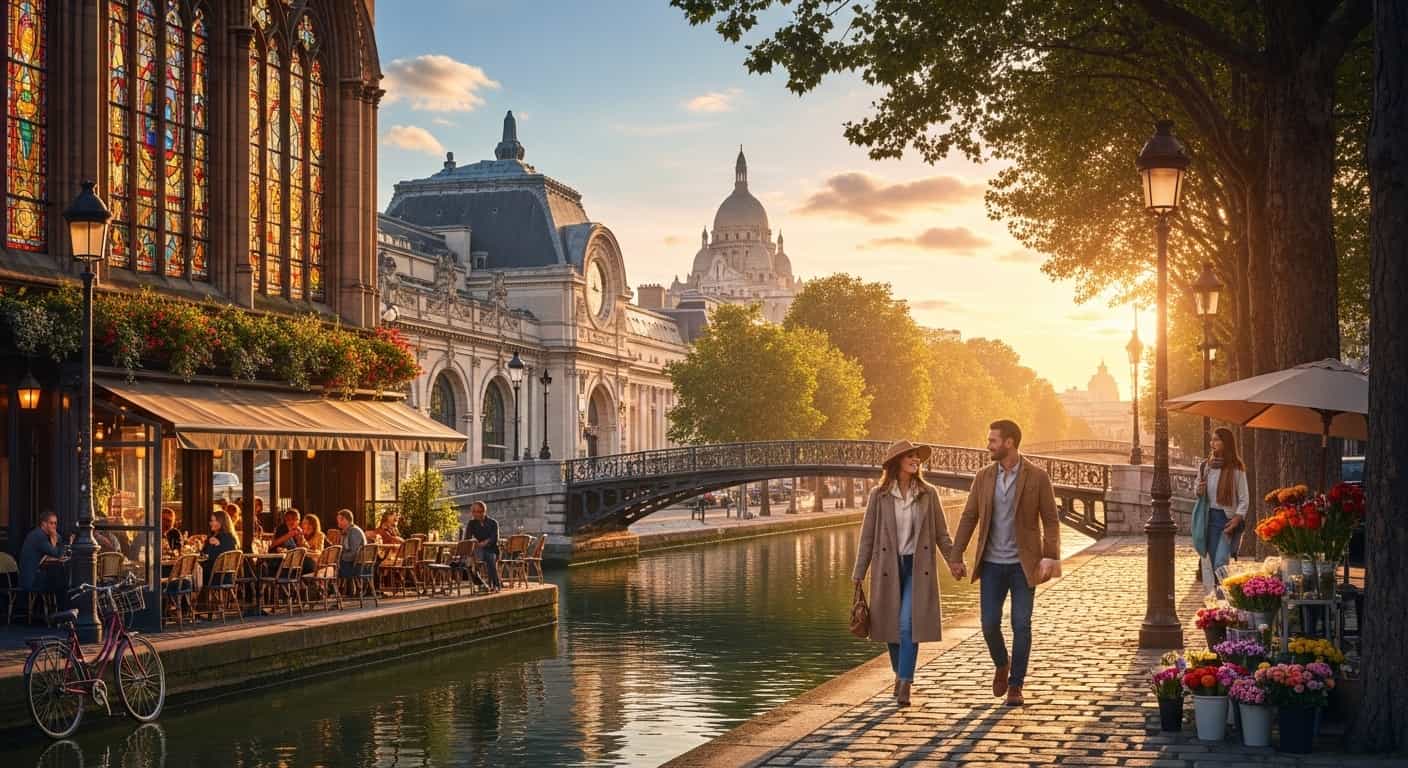
3 Days in Paris: The Itinerary I'd Actually Follow
Three days in Paris is enough to walk the Gothic islands, taste your way through Montmartre, climb the Eiffel Tower, and discover neighborhoods that most visitors never reach — if you spend the time well.
If I only had 3 days, this is exactly how I'd do it. Not to check off monuments. Not to squeeze in every museum. Just to walk the right streets with someone who knows them, taste what the bakers pull from the oven that morning, and climb the one structure that defines the skyline — feeling the version of Paris that lives between the landmarks.
Highlights
- Sainte-Chapelle stained glass and Notre-Dame interior with a licensed guide
- Montmartre pastry trail with nine tasting stops across cobbled lanes
- Eiffel Tower climbing tour — stairs to the second floor, elevator to the summit
- Musée d'Orsay Impressionists and golden hour at Trocadéro
- Long bistro dinners from Saint-Germain to Le Marais
At a Glance
Day 1 — On Foot: Sainte-Chapelle, Notre-Dame guided walk, Musée d'Orsay, Jardin du Luxembourg, Eiffel Tower from Trocadéro. Islands → Left Bank → 7th arrondissement.
Day 2 — By Taste: Sacré-Cœur, Montmartre pastry tour (9 stops), Le Marais on foot, Place des Vosges, Musée Picasso. 18th → 3rd and 4th arrondissements.
Day 3 — The Climb: Eiffel Tower climbing tour with summit access, Rue Cler market street, Canal Saint-Martin walk, Buttes-Chaumont park. 7th → 10th and 11th arrondissements.
Day 1 — On Foot
In collaboration with Connecting France
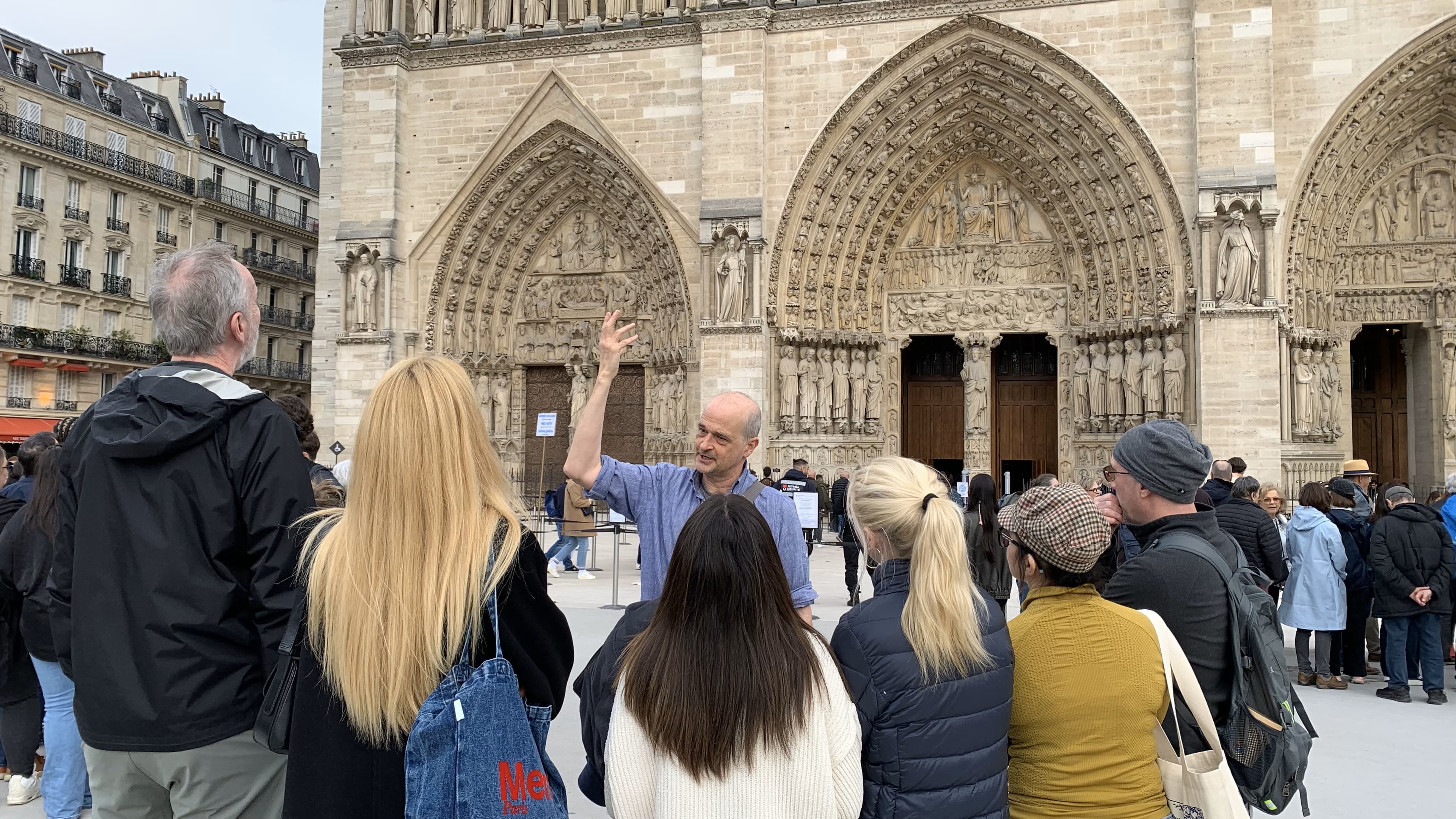
I'd start where Paris started — on the island.
Day 1 covers the 1st, 4th, 6th, and 7th arrondissements — the historic core of Paris, from the islands to the Eiffel Tower. Everything connects on foot and metro line 4 and 6.
Sainte-Chapelle first, before the queues form. The upper chapel is one of the most extraordinary rooms in Europe — thirteen floor-to-ceiling stained glass panels, each one fifteen meters tall, filtering the morning light into blues and reds that haven't faded since 1248. It takes fifteen minutes to see and stays with you for years. Arrive before 09:30 and you might have the room nearly to yourself.
Then across to Notre-Dame, which reopened its interior in late 2024 after five years of reconstruction. This is where the day's anchor changes everything. Connecting France runs a two-hour guided walk through the cathedral interior and Île de la Cité with a licensed local guide — someone who knows which chapels were rebuilt, which gargoyles survived the fire, and which angles reveal details that most visitors walk past. The group is small enough to feel intimate, the pace is unhurried, and the storytelling brings the Gothic architecture to life in a way that reading a plaque never does. The guide connects Sainte-Chapelle's royal chapel to Notre-Dame's public cathedral — the sacred geography of a single island across eight centuries. Even without the tour, the island and the riverside from Pont Saint-Louis are worth the stop. But the guide is what turns a visit into understanding.
Lunch at Le Comptoir du Relais in Saint-Germain — a classic bistro with a daily special and a half-bottle of wine. The terrace faces Carrefour de l'Odéon and the people-watching is half the meal. No need to overthink it.
After lunch, I'd walk along the Seine past the bouquinistes — the riverside booksellers whose green stalls have been here since the sixteenth century — toward Musée d'Orsay. The Impressionists live on the top floor: Monet's water lilies, Renoir's dancing couples, Degas's ballerinas caught mid-step. The building itself — a Beaux-Arts train station from 1900, with iron arches and a glass clock that frames the Sacré-Cœur across the river — makes the visit worth it even if you never look at a painting. Two hours here is enough to see the best rooms without museum fatigue settling in.
Then slow the afternoon down. Jardin du Luxembourg for a pause — the green metal chairs by the Medici Fountain are the most civilized seats in Paris. Then metro line 6 from Saint-Michel to Trocadéro as the light starts turning golden. This is the Eiffel Tower moment that costs nothing and delivers everything — the full silhouette framed across the esplanade, the Champ de Mars stretching behind it, the sky doing the work. No tickets, no lines. Just the view. Stroll down to the grass, let the evening settle in.
Dinner at Café Constant, a few blocks from the tower in the 7th — warm bistro fare, a seasonal menu, the kind of neighborhood restaurant where the staff remembers regulars and the wine list has enough personality to keep you there an extra glass. That's the rule for every night: end it at a table, no rush.
Day 2 — By Taste
In collaboration with EchoesofCultures
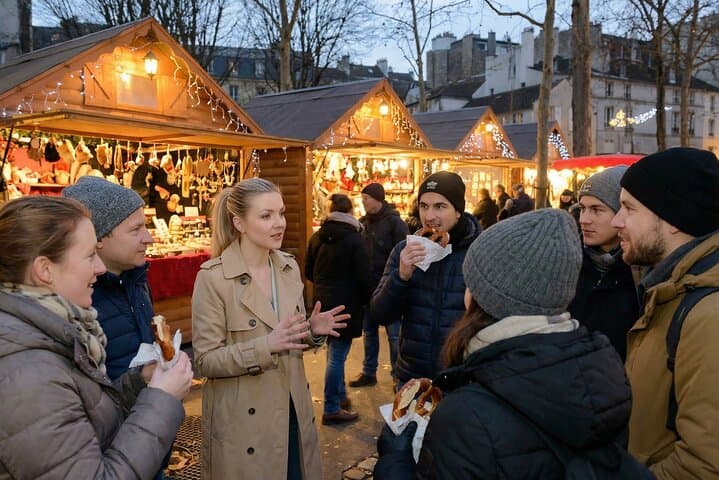
I'd give my second day to Montmartre in the morning and Le Marais in the afternoon — two neighborhoods, two completely different energies, connected by the kind of food that makes Paris unforgettable.
Day 2 moves from the 18th arrondissement (Montmartre) in the morning to the 3rd and 4th (Le Marais) in the afternoon. Metro line 12 from Abbesses to Hôtel de Ville connects them in 15 minutes.
Start early at Sacré-Cœur before the crowds fill the steps — the panoramic view over Paris from the terrace is the widest in the city, stretching from the Eiffel Tower to the towers of La Défense, and the basilica interior is free and quiet at that hour. Then the day's anchor: EchoesofCultures runs a chocolate and pastry walking tour through Montmartre that turns the whole neighborhood into a tasting menu. Nine stops across two hours and fifteen minutes — éclairs on Rue d'Orsel, macarons on Rue Tardieu, artisanal ice cream on Place des Abbesses near the Je t'aime wall, warm madeleines paired with a hilltop viewpoint, a hidden patisserie on Rue Durantin that's been open since the 1920s, a fresh crêpe from a crêperie the tourists haven't mapped, and a merveilleux meringue on Rue Lepic as the finale. The guide knows every baker by name and weaves stories of Montmartre's bohemian past — Picasso's studio, the Moulin de la Galette, the vineyard that still produces wine — through the cobbled lanes between stops. It's the kind of morning where a neighborhood becomes a story told in sugar.
After the tour, metro south to Le Marais. Lunch at Breizh Café — buckwheat galette, cider, done. The afternoon unfolds on foot. Place des Vosges first — the oldest planned square in Paris, built in 1612, perfect for a bench pause under the linden trees. Then the narrow streets: galleries tucked behind heavy doors on Rue de Turenne, concept shops and vintage boutiques on Rue des Francs-Bourgeois, and the quiet courtyard of Musée Picasso in the Hôtel Salé. Smaller than the big museums, quieter, and the seventeenth-century mansion housing the collection is itself a work of art.
Dinner at Le Mary Celeste in the upper Marais — small plates, natural wines, no reservations needed, the kind of place where the neighborhood crowd actually goes on a weeknight. Le Marais after dark is moody and intimate — the old Jewish quarter folds into the fashion district, and every street has a different tempo. That's the point of this day: Paris as a neighborhood, not a monument.
Day 3 — The Climb
In collaboration with Cleva Getaways

My last day starts with the one thing every Paris visitor thinks about — and then finds a side of the city most of them never see.
Day 3 begins in the 7th arrondissement (Eiffel Tower), moves through the Rue Cler market street, then heads north to the 10th (Canal Saint-Martin) and 11th (Bastille / Oberkampf) for the afternoon and evening.
There are two ways to experience the Eiffel Tower: from below, looking up — or from inside, climbing it. Day 1 gave me the view from Trocadéro. Day 3 gives me the structure itself. Cleva Getaways runs a small-group climbing tour that takes the stairs to the second floor — 674 steps up the iron lattice, close enough to touch the rivets Eiffel's workers hammered in 1889 — then elevator to the summit at 276 meters. The guide keeps the pace steady and focuses on construction secrets and engineering firsts rather than the standard facts you'd read on a plaque. From the second floor, Paris unfolds in every direction — Sacré-Cœur to the north, Montparnasse to the south, the Seine curving west — and at the summit the scale of the city finally makes sense. The climb is physical (allow 30–60 minutes through security, then the ascent) but it transforms the Eiffel Tower from a photo op into a genuine experience. Even without the tour, the climb is worth it — but the guide is what turns the engineering into a story.
Back at ground level, Rue Cler is a ten-minute walk south — one of the last authentic Parisian market streets where the fishmonger, the fromagerie, and the fruit seller still operate side by side. Coffee and a croissant at a terrace table, then browse the stalls. This is where the 7th arrondissement lives its daily life, away from the monuments.
After Rue Cler, metro line 8 from École Militaire to République, and the energy shifts completely. Canal Saint-Martin stretches north from République — iron footbridges, working locks, plane trees leaning over the water, and a series of converted warehouses that now house cafés, design studios, and independent bookshops. This is the canal that appears in every Paris film you've seen but that most first-time visitors never walk. The towpath runs flat for two kilometers, and the pace is slower here — locals reading on the banks, the occasional barge gliding through a lock. Ten Belles Boulangerie for coffee and a pastry to take away, then sit by the water at Quai de Jemmapes. Or Chez Prune, the neighborhood bistro that faces the canal, for something more substantial.
If there's energy left, Parc des Buttes-Chaumont is a twenty-minute walk northeast — dramatic cliffs, a suspension bridge, and one of the best hidden viewpoints in Paris from the Temple de la Sibylle perched on the island rock. Otherwise, metro to Bastille or Oberkampf for the afternoon. Browse the Viaduc des Arts underneath the Promenade Plantée — artisan workshops in the old railway arches — or just sit in a café on Rue Oberkampf and let the last afternoon settle.
Dinner at Le Chateaubriand in the 11th — inventive tasting menu, the kind of place where the chef is still cooking and the wine list has personality. Book ahead. That's the rule: leave Paris at a table, wine glass in hand, nobody rushing.
Three days. Three different ways to move through Paris — on foot, by taste, by climbing into the iron sky. Zero wasted time.
What About the Louvre?
Every 3-day Paris itinerary includes the Louvre. This one doesn't — and that's intentional.
The Louvre is one of the great museums in the world. It's also enormous — if you spent 30 seconds in front of every piece, it would take 200 days to see the collection. Even a focused visit — Mona Lisa, Winged Victory, the French painting rooms — needs 3 to 4 hours minimum, plus the time to queue, orient, and recover.
On a 3-day trip, that's an entire neighborhood lost. And the neighborhoods are what make Paris feel like Paris — not the inside of a museum.
This itinerary chooses Musée d'Orsay instead: smaller, more focused, housed in a former train station that's worth the visit on its own. The Impressionists — Monet, Renoir, Degas — are all here, and you can see the best rooms in two hours without feeling like you've run a marathon.
If the Louvre is non-negotiable: swap Day 2 afternoon. Instead of Picasso + Le Marais browsing, do a morning Louvre visit (arrive 30 minutes before opening, head straight for the highlights). You'll still have the Montmartre pastry tour and dinner at Le Mary Celeste — the day holds together. Or better yet, add a fourth day — the Louvre deserves the time without cutting anything else.
The Louvre isn't missing from this trip. It's saved for when you have the time to do it right.
After Dark
This itinerary ends every day at a bistro table — long dinners, good wine, no rush. That's a deliberate choice. Paris earns its reputation at the table more than at any show.
But if you want a different register for one of the evenings: a Private Evening Seine Cruise by Boat in Paris gives you the city from the water — bridges lit gold, Notre-Dame floodlit on the island, the Eiffel Tower sparkling on the hour. It pairs naturally with a Day 1 that's already in the 7th arrondissement.
Montmartre also comes alive after dark — but skip Moulin Rouge unless it's genuinely on your list. The quieter wine bars along Rue des Abbesses and Rue Lepic are where the neighborhood actually spends its evenings.
Seasonal Notes
This itinerary is designed for autumn and early winter — the season when Paris has the best balance of comfortable weather, smaller crowds, and that particular golden light that hangs over the Seine in the late afternoon.
Spring (April–June): Swap the Jardin du Luxembourg bench pause for a longer stay — the chestnuts are in blossom and the Medici Fountain garden is at its best. The Champ de Mars after the Eiffel Tower climb becomes a picnic, not just a stroll. Longer daylight means more time at Trocadéro before dinner. Canal Saint-Martin's banks fill with readers and picnickers.
Summer (July–August): Parisians leave, tourists arrive. Book museums and the Eiffel Tower climb in advance — Orsay and Sainte-Chapelle queues double. Start the climbing tour as early as the operator allows to avoid midday heat. Take longer midday breaks, and plan dinner later (21:00 is normal in summer). The canal walk is best in the early morning or late afternoon.
Winter (December–February): The Eiffel Tower climb is more exposed to wind — dress in layers and check weather before booking. Extend museum time at Orsay. Add a chocolat chaud stop at Angelina on Rue de Rivoli. Buttes-Chaumont closes earlier in winter (check hours). If the weather turns, swap the canal afternoon for the Montmartre rickshaw tour by Turtle — a covered ride that works in any conditions.
Why This Experience
A 3-day Paris itinerary that covers the essential landmarks, iconic neighborhoods, and unmissable food — without the museum marathons and exhausting day plans that most guides demand. You'll walk the Gothic interior of Notre-Dame with a licensed guide, taste your way through nine pastry shops in Montmartre with a local who knows every baker, climb the Eiffel Tower stairs with a small group and see the city from 276 meters, watch the Impressionists at Musée d'Orsay, photograph the tower from Trocadéro at golden hour, and discover Canal Saint-Martin — the creative, local Paris that most first-time visitors miss entirely.
Each day is built around a different type of guided experience — a walking tour on Day 1, a food tour on Day 2, and a climbing experience on Day 3 — so the energy shifts daily and the city reveals itself in three completely different ways. The pace is realistic: one anchor experience per day, one museum, real restaurants with specific names, and enough free time to sit in a park, browse a street market, or just watch the light change over the rooftops.
This itinerary is designed for first-time visitors who want to feel Paris, not just see it — whether traveling solo, as a couple, or with friends who'd rather walk the right streets than run through a checklist.
Before You Go
Best time: Autumn through early winter for fewer crowds and golden light; spring for longer days and gardens in bloom.
Budget: Mid-range — guided experiences, museums, casual to moderate bistros, cafés, and markets. Check the booking widget on each tour page for current pricing.
Difficulty: Easy to moderate — mixed walking and metro transfers, one day involving a 674-step stair climb (with elevator for the summit). Average 2–4 miles per day on foot.
What to bring: Comfortable walking shoes (essential for the Eiffel Tower climb and cobblestone neighborhoods), light layers for variable weather, water bottle, small backpack or tote, phone for metro navigation.
Getting there: Arrive at CDG (RER B, ~35 min to center) or Orly (Orlyval + RER B). Latin Quarter or Marais recommended for easy access to all three days.
Getting around: The Métro covers everything on this itinerary. Lines 1, 4, 6, 8, and 12 are the most useful. A Navigo day pass is the best value for 2+ days and also covers the RER to Versailles if you extend your trip.
Accessibility: Mixed — Sainte-Chapelle has limited elevator access; Musée d'Orsay and Musée Picasso have good access; many metro stations lack elevators; neighborhoods have cobblestones and uneven surfaces. The Eiffel Tower climbing tour involves 674 stairs with no elevator alternative to the second floor — discuss specific needs with the operator. Elevator-only access is available separately.
Complete Your Trip in Paris
This 3-day itinerary covers art, food, and neighborhoods across three different rhythms — on foot, by taste, and by climbing into the sky. To extend or adjust:
More time in Paris:
- 4 Days Romantic Paris — Bistros, bouquinistes, and moonlit Seine — deeper exploration with a slower pace
- Essential Montmartre Walking Tour — Guided deep dive into bohemian history by Black Cat Tours
Bookable experiences featured in this itinerary:
- Notre-Dame Interior & Île de la Cité Guided Tour by Connecting France — 2-hour licensed guided walk through the cathedral and historic island (Day 1)
- Chocolate and Pastry Walking Tour in Montmartre by EchoesofCultures — 2h15 tasting walk with nine sweet stops across the neighborhood (Day 2)
- Eiffel Tower Climbing Tour with Summit Access by Cleva Getaways — Stairs to the second floor + elevator to the summit with a local guide (Day 3)
Day trips from Paris (Day 4+):
- Versailles — 40 minutes by RER C from Musée d'Orsay station. Arrive before 9:00, go to the gardens first (skip the palace queue), allow a full day. Closed Mondays, busiest on Sundays and Tuesdays.
- Epernay & Reims Champagne Day Trip — Two champagne houses, the Gothic cathedral at Reims, and a full day in wine country. Best booked several days ahead.
- Giverny — Monet's gardens, April through October only. 75 minutes by train from Gare Saint-Lazare. Worth it if you're visiting in spring or summer and the water lilies are in bloom.
By travel style:
- Romantic November in Paris — A curated couples day with candlelit bistros and Seine-side strolls
- Eiffel Tower Family Visit — Fast-pass access, kid-friendly timing, parks with space to run
Browse all Paris itineraries at TheNextGuide.
Last updated: April 2026