One Delicious Day in Rome — Markets, a Cooking Class & Classic Roman Plates
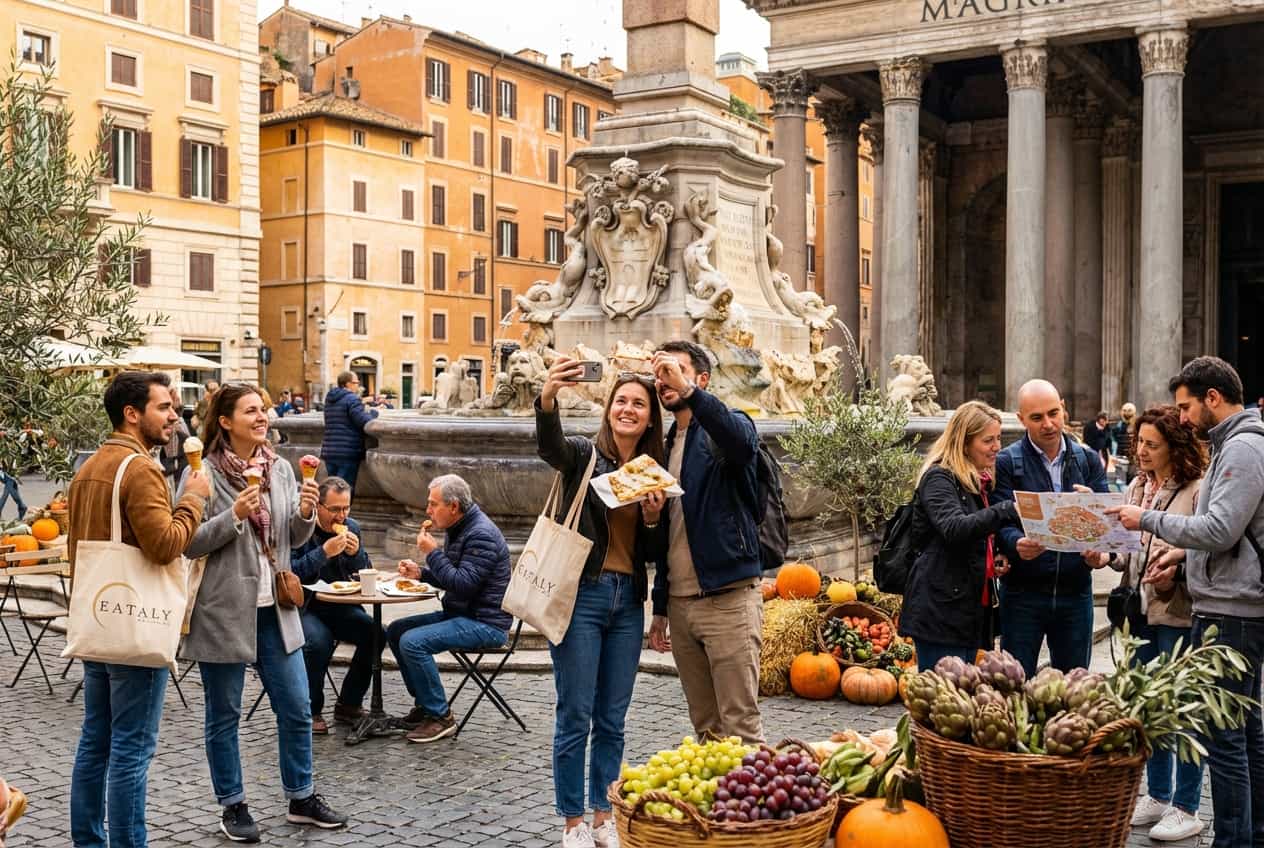
A winter (February) food-focused day in Rome for lovers of local flavors: a market-start breakfast, hands-on pasta class at Eataly, market tastings in Testaccio, aperitivo in Trastevere, and a refined dinner at Roscioli. Seasonal winter specialties (blood oranges, hearty Roman stews) and a mix of casual and fine dining are highlighted. Plan includes realistic transfers, breaks, and reservation/alt
Highlights
- Must-try dishes: supplì, cacio e pepe, carbonara, porchetta panino, pizza al taglio, gelato
- Winter produce: blood oranges, chicory, cavolo nero — perfect in February
- Hands-on pasta-making class (Eataly) — learn cacio e pepe or classic carbonara technique
- Markets: Campo de' Fiori for pastries and produce; Mercato Testaccio for classic Roman street food
- Balance of casual bites (Pizzarium/Testaccio stalls) and fine dining (Salumeria Roscioli)
Explore all itineraries in Rome.
Itinerary
Day 1
A focused food day across central Rome: bakery & market breakfast, cooking class, lunchtime market tastings in Testaccio, aperitivo in Trastevere, and a fine-dining Roman dinner with late gelato.
Breakfast — Forno Campo de' Fiori: warm pastry & coffee
Start with a classic Roman breakfast: a cornetto (cream or jam) and espresso at a beloved neighborhood bakery next to the morning market.
- Monday8:00 AM – 2:30 PM, 4:30 – 7:30 PM
- Tuesday8:00 AM – 2:30 PM, 4:30 – 7:30 PM
- Wednesday8:00 AM – 2:30 PM, 4:30 – 7:30 PM
- Thursday8:00 AM – 2:30 PM, 4:30 – 7:30 PM
- Friday8:00 AM – 2:30 PM, 4:30 – 7:30 PM
- Saturday8:00 AM – 2:30 PM, 4:30 – 7:30 PM
- SundayClosed
Tips from local experts:
- Try a warm cornetto alla crema or maritozzo if available — in February the bakery will have fresh, comforting creams.
- Ask for a 'caffè espresso' at the bar (standing) to save time; bring small change — the bakery can be busy early.
- If you have dietary restrictions (dairy/egg), ask staff about plain 'brioscia' or a simple biscotti; many bakeries can point to vegan options or plain bread.
Browse the stalls — Campo de' Fiori Market
Explore the lively market square: seasonal citrus, winter greens, cured meats and local cheeses — great for tasting and shopping small food gifts.
Tips from local experts:
- February highlights: look for blood oranges, winter chicories and local citrus that make excellent food souvenirs (pack in cushioned bags).
- Talk to vendors about quick samples (many will offer slices of pecorino or cured salumi) — vendors appreciate polite interest.
- If avoiding crowds, move to the southern side of the square where specialty food stalls and delis are quieter mid-morning.
Transfer — travel to Eataly (Ostiense) for the cooking class
Make your way to Eataly Roma for a hands-on pasta class (public transport or taxi recommended).
Tips from local experts:
- Take a taxi or tram (depending on your luggage) to save time; peak winter traffic can slow buses, so allow buffer time.
- If you prefer public transport, catch tram line 8 or the Metro to Piramide and walk — bring a light scarf for the February wind along the river.
- Confirm your cooking-class booking time and dietary needs before leaving; Eataly will accommodate vegetarian requests if informed in advance.
Hands-on cooking class at Eataly — make pasta & eat what you cook
A 2.5-hour practical workshop focused on classic Roman pasta (choose a session that includes cacio e pepe or carbonara), ending in a shared tasting.
- Monday9:00 AM – 12:00 AM
- Tuesday9:00 AM – 12:00 AM
- Wednesday9:00 AM – 12:00 AM
- Thursday9:00 AM – 12:00 AM
- Friday9:00 AM – 12:00 AM
- Saturday9:00 AM – 12:00 AM
- Sunday9:00 AM – 12:00 AM
Tips from local experts:
- Book a class that specifically lists Roman dishes (cacio e pepe, carbonara) and notify them of allergies (especially egg or gluten) — many classes offer alternatives.
- Wear comfortable clothes and bring a lightweight reusable bag for any recipe notes or small takeaways; kitchens are warm so layer accordingly in February.
- Ask the chef for local variations and seasonal tweaks (e.g., using winter greens) — they often share market-sourcing tips you can replicate at home.
Transfer — head to Mercato Testaccio
Short transfer to Testaccio, Rome’s traditional food quarter — home to market stalls and authentic Roman street food.
Tips from local experts:
- A short taxi or a brisk 20–30 minute walk (depending on your pace) brings you to Testaccio; in February bring a warm layer for outdoor walks.
- Save room after the class — Testaccio is famed for porchetta sandwiches and small plates, perfect for tasting.
- If you're gluten-free, tell vendors up front; many stalls will happily point to naturally gluten-free options like roasted meats or salads.
Lunch & tastings — Mercato Testaccio (casual Roman classics)
Spend an hour sampling regional specialties: porchetta panino, supplì (fried risotto croquette), and winter stews or rosticceria offerings.
- Monday7:00 AM – 3:30 PM
- Tuesday7:00 AM – 3:30 PM
- Wednesday7:00 AM – 3:30 PM
- Thursday7:00 AM – 3:30 PM
- Friday7:00 AM – 3:30 PM
- Saturday7:00 AM – 3:30 PM
- SundayClosed
Tips from local experts:
- Try a porchetta panino or a few small plates to sample — Testaccio vendors specialize in slow-roasted meats and classic Roman recipes.
- Supplì are a must: ask for one freshly fried. If you avoid pork, ask vendors about other savory options like fish or vegetable-based rosticceria.
- Bring cash for smaller stalls and ask vendors which items are made that morning — winter menus often feature hearty braises that are at their best in February.
Transfer — cross to Trastevere (Ponte Sisto route)
Head to Trastevere for a picturesque afternoon aperitivo and neighborhood stroll — cross the river over Ponte Sisto for easy entry.
Tips from local experts:
- Ponte Sisto is an easy-footed crossing and gives a lovely view — in February it’s crisp but romantic; wear comfortable shoes.
- If you want to avoid the busiest bridges, cross a little earlier on the northern side where photos are quieter.
- Carry a small umbrella or warm hat — February weather can be changeable; many Trastevere bars have indoor seating but limited space.
Aperitivo & cicchetti — Freni e Frizioni in Trastevere
Enjoy an informal aperitivo — small plates (cicchetti) and a spritz or Italian wine to sample local flavors in a lively neighborhood hub.
- Monday6:30 PM – 2:00 AM
- Tuesday6:30 PM – 2:00 AM
- Wednesday6:30 PM – 2:00 AM
- Thursday6:30 PM – 2:00 AM
- Friday6:30 PM – 2:00 AM
- Saturday6:30 PM – 2:00 AM
- Sunday6:30 PM – 2:00 AM
Tips from local experts:
- Arrive slightly before typical aperitivo hour to avoid long lines; Freni e Frizioni has generous aperitivo platters at reasonable prices.
- Ask the bartender for local wine or a classic Roman aperitivo; pair with small fried snacks or marinated vegetables if you want lighter bites.
- If vegetarian or vegan, point it out — the aperitivo buffet often includes vegetable-forward options; staff can guide you to the best choices.
Break & digest — relax in Piazza di Santa Maria in Trastevere
Slow down in one of Trastevere’s prettiest squares: sit, people-watch, and digest before the evening. Use this time to freshen up and check dinner reservations.
Tips from local experts:
- Sit at the steps of Santa Maria for a classic Roman moment; in February it’s quieter so you can linger without crowds.
- If you need to freshen up, nearby cafés or your accommodation (if close) can provide restrooms; carry wet wipes for quick refreshes.
- Use this break to call ahead or confirm your 19:00–19:30 dinner reservation (Roscioli fills quickly) — staff appreciate reconfirmation.
Transfer — head to Salumeria Roscioli area (central Rome)
Travel back toward Campo de' Fiori / Jewish Ghetto area for a refined Roman dinner at one of the city’s most respected delis/restaurants.
Tips from local experts:
- Allow about 20–40 minutes for travel depending on traffic; a taxi is quickest in the evening — aim to arrive 10–15 minutes before your reservation.
- If you’d like to browse specialty shops beforehand, arrive earlier to sample cheese and cured meats on display around Roscioli.
- Mention any dietary restrictions when you arrive; Roscioli’s staff can suggest pasta alternatives and vegetarian plates, though their classic carbonara is pork-and-egg based.
Dinner — Salumeria Roscioli: fine Roman classics
Savor a seated dinner of elevated Roman dishes — recommended: carbonara or cacio e pepe, paired with regional wines and a cheese/cured meat course if you like.
- Monday9:00 AM – 11:30 PM
- Tuesday9:00 AM – 11:30 PM
- Wednesday9:00 AM – 11:30 PM
- Thursday9:00 AM – 11:30 PM
- Friday9:00 AM – 11:30 PM
- Saturday9:00 AM – 11:30 PM
- Sunday9:00 AM – 11:30 PM
Tips from local experts:
- Reserve in advance (at least a few days ahead in high season; in February still advisable) and request the classic pasta specialties early — they are popular.
- Must-try: Roscioli’s carbonara or cacio e pepe; if avoiding pork or eggs, ask for a seasonal vegetarian plate and a guided wine pairing.
- Finish with a tasting of their cheeses and a glass of local red; ask the sommelier for a small pour to try a Lazio varietal.
Late-night gelato — Giolitti near the Pantheon
Wrap up the evening with one of Rome’s classic gelaterias — try pistachio, stracciatella or seasonal citrus sorbet made with winter blood oranges.
- Monday7:30 AM – 12:00 AM
- Tuesday7:30 AM – 12:00 AM
- Wednesday7:30 AM – 12:00 AM
- Thursday7:30 AM – 12:00 AM
- Friday7:30 AM – 12:00 AM
- Saturday7:30 AM – 12:00 AM
- Sunday7:30 AM – 12:00 AM
Tips from local experts:
- Giolitti is iconic and can be busy; go for a classic flavor (pistachio or Gianduia) or a refreshing blood orange sorbet in February.
- If you want a quieter option, ask for a 'cono piccolo' to eat nearby and avoid long lines; eating near the Pantheon late at night is atmospheric and less crowded in winter.
- For dietary needs, sorbets are naturally dairy-free — ask the server which flavors are sorbets and which contain milk.
Itinerary Attributes
| Days | 1 |
| Highlights | 5 |
| Season | Winter |
| Month | February |
| Persona | food-lovers |
| Transfers | 4 |
| Restaurants | 4 |
| Total Activities | 8 |
| Total Places | 8 |
| Activities Types | Meal, Attraction, Transfer, Experience, Nightlife, Break, Restaurant |
Why this experience
You'll begin your day as Romans do—with a warm cornetto and espresso at a centuries-old bakery as Campo de' Fiori wakes up around you. Then you'll stand in a kitchen at Eataly and make cacio e pepe from scratch, your hands working the pasta as a chef explains the secrets that make a simple dish legendary. By afternoon, you'll be tasting porchetta and supplì straight from vendors in Testaccio, washing it down with a spritz in Trastevere, and finishing with a seated dinner of the same dishes you tried—but elevated, carefully plated, at Roscioli. Late at night, gelato flavored with Roman blood oranges. This is food Italy—real, unpretentious, then refined—all in a single unforgettable day.
Before you go
- Best time: Winter (February) captures Rome's food season. February features seasonal citrus (blood oranges), winter greens, and hearty Roman stews.
- Budget: Check the booking widget for current pricing. Includes cooking class, market tastings, aperitivo, and fine-dining dinner.
- Difficulty: Easy. Mostly walking and eating, with breaks built in. Comfortable shoes for market strolls and neighborhood wandering.
- What to bring: Comfortable walking shoes, light layers (February is crisp), cash for market stalls, small reusable bag for market purchases.
- Getting there: Meet at Forno Campo de' Fiori in central Rome. Easy public transport access; metro and tram lines nearby.
- Accessibility: Campo de' Fiori is a large outdoor piazza; some walking between neighborhoods required. Speak to the operator about pacing if needed.
Frequently asked questions
What if I have dietary restrictions (vegan, gluten-free, etc.)? Tell vendors and restaurants up front—Roman markets and modern restaurants are increasingly skilled at accommodating restrictions. Sorbets, many vegetables, and some preparations are naturally vegan. Eataly can suggest gluten-free pasta alternatives in advance.
Do I need to bring cash for the markets? Recommended. Smaller market stalls in Testaccio prefer cash. Card-friendly cafés and restaurants are available, but carry 50–100 EUR for flexibility.
Is the cooking class physically demanding? No. You'll stand at a counter with hands-on instruction for 2.5 hours, but there's no heavy lifting. Comfortable, loose clothing and kitchen-friendly shoes are ideal.
Can I skip the fine-dining dinner and stay casual? The itinerary is balanced casual-to-fine. If you prefer, you can skip Roscioli and grab a quieter pizza or pasta near your accommodation after the aperitivo. Flexibility is built in.
How much eating is involved? Significant—breakfast, cooking class (which includes eating what you made), market tastings, aperitivo, and dinner. Build it as a leisurely progression, not a race.
Complete your trip in Rome
Build your day around food or add other experiences:
- Couples, 1 day — Romantic day including Trastevere dinner and sunset views
- Families, 1 day — Family-friendly day with gelato and parks
- Food lovers, 3 days — Extend this food focus across multiple days
Browse all Rome itineraries at TheNextGuide.
Last updated: March 2026