Warsaw for WWII Buffs - private tour with hotel pickup
Private 3-hour WWII history tour of Warsaw by retro Żuk minibus. Explore the invasion of Poland, Nazi and Soviet occupation, the Warsaw Ghetto and the 1943 Ghetto Uprising, the 1944 Warsaw Uprising, preserved wartime ruins and memorials. English-speaking guide; hotel/apartment pickup and drop-off within a 3 km radius of the city centre.
In Collaboration with Warsaw Behind the Scenes. Updated on March 20, 2026.
This itinerary was created in collaboration with Warsaw Behind the Scenes, inspired by the tour Warsaw for WWII Buffs - private tour with hotel pickup. Please check the tour information during your booking process.
Highlights
- Private World War II tour of Warsaw with a local expert
- Learn about Nazi occupation and Soviet terror in Poland
- Explore the Jewish Ghetto, Ghetto Uprising, and Warsaw Uprising sites
- See preserved WWII ruins, memorials, and bullet-marked buildings
- Use archival photos to compare past and present locations during the tour by vintage minibus
Explore all itineraries in Warsaw.
Itinerary
Day 1
Hotel/apartment pickup (within 3 km of Warsaw city centre)
Driver picks you up from your hotel or apartment within a 3 km radius of central Warsaw. Driver and guide introduce the tour plan and safety information for the vintage minibus.
Tips from local experts:
- Have your hotel name and full pickup address visible on your phone to speed boarding.
- If a passenger needs step-free access or assistance boarding, notify the operator before the tour start time.
- Child booster seats are mandatory for children under 150 cm by Polish law – notify the operator in advance if required.
1939–1940: Shock of Nazi terror — central Warsaw introduction
Chronological introduction in central Warsaw covering the 1939 invasion, early Nazi and Soviet actions, and the emergence of the Polish Underground State. Guide uses archival photos to show the pre-war city and wartime damage still visible in the streets and buildings.
Tips from local experts:
- This stop includes standing and short walks; use the provided seating on the minibus between stops if you need to rest.
- Keep a small notebook or device handy if you wish to note names and dates mentioned by the guide.
- Restrooms may not be available at this outdoor stop; use hotel facilities before pickup if possible.
Transfer by retro minibus to the former Ghetto area (Żelazna)
Short drive in the vintage Żuk minibus toward the zones that formed the Warsaw Ghetto; guide continues narration en route with archival photographs.
Tips from local experts:
- Vintage minibuses may have limited ventilation; dress in layers appropriate to the season.
- If you use a walking aid, keep it accessible during transfers for short walking segments at stops.
- Ask the guide during the transfer if you prefer a slower walking pace at the next stop.
1940 Jewish Ghetto — preserved traces and context
Visit surviving traces of the Warsaw Ghetto boundary and learn about life inside the ghetto, forced relocations, and conditions imposed by the occupation authorities.
Tips from local experts:
- The area includes narrow pavements and uneven surfaces; wear sturdy, non-slip shoes and take care on cobbles.
- This stop is outdoors and partly exposed to sun or rain; bring a hat and water in warm weather or a raincoat if needed.
- Large bags may be cumbersome during short walking segments — carry only essentials for comfort.
Fragment of the Ghetto Wall (Sienna 53)
See one of the preserved fragments of the pre-war wall that marked the Ghetto boundary, with the guide explaining its significance and occasional access limitations.
Tips from local experts:
- The fragment is adjacent to residential buildings; keep voices low and respect private property.
- Some parts may be temporarily inaccessible; follow the guide's directions for the accessible viewing point.
- Benches are limited—plan brief visits and use the minibus for seated rest between stops.
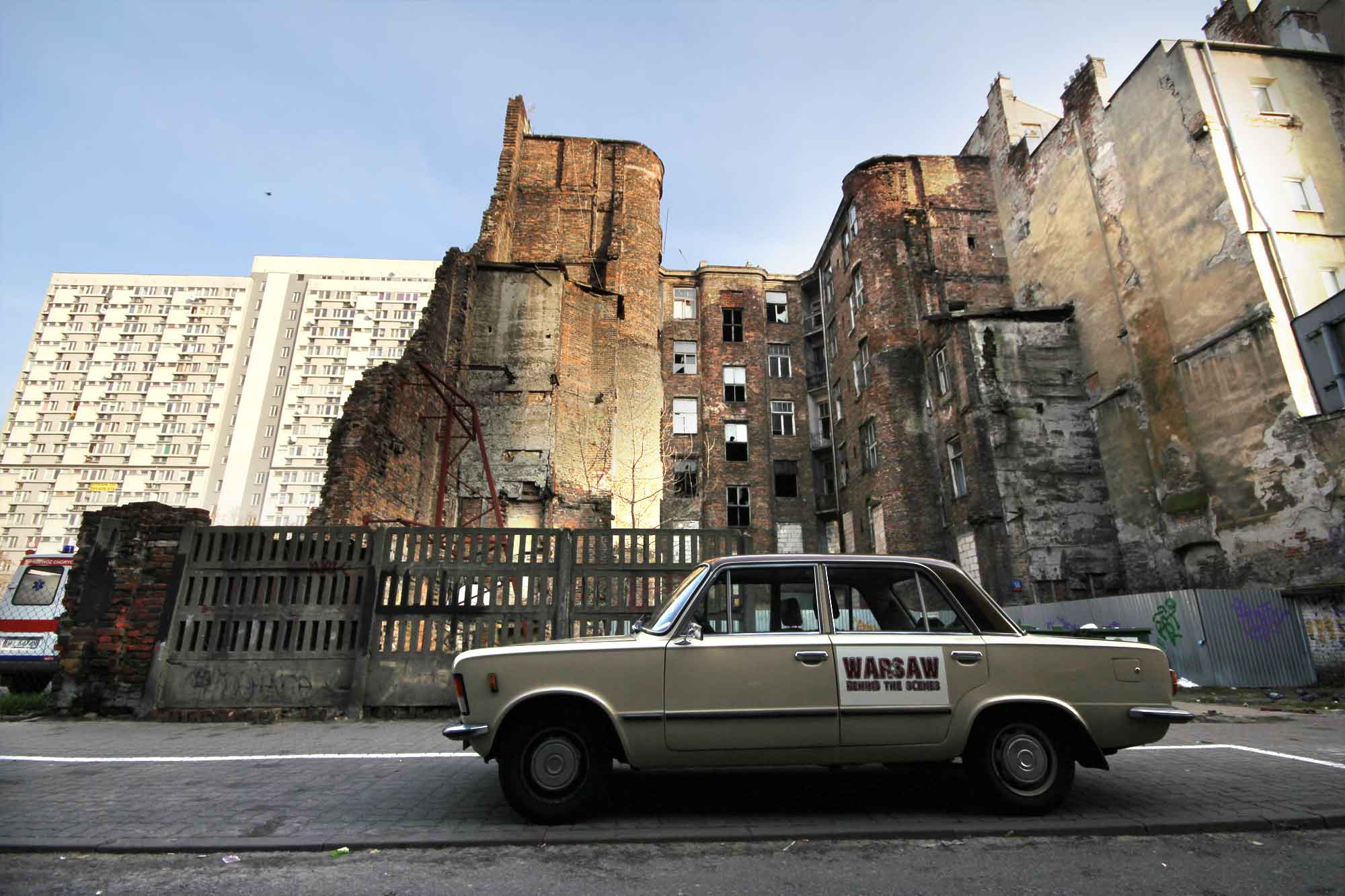
Derelict tenement house at Waliców
Short walk to a deliberately unrestored building on Waliców Street — a physical remnant of wartime destruction and ghetto-era damage.
Tips from local experts:
- Viewing is from the street; do not attempt to enter restricted or unsafe structures.
- The immediate area may have uneven ground and rubble — move carefully and use provided handrails where present.
- If you require seating, ask the guide to schedule extra time at the next transfer for a rest.
The wooden ghetto bridge over Chłodna Street
Visit the site of the famous elevated wooden bridge that once connected two parts of the sealed ghetto; guide explains its role and shows archival images comparing past and present.
Tips from local experts:
- The viewpoint is roadside; stand behind the guide to avoid obstructing pedestrian traffic.
- Traffic on Chłodna can be busy—keep a close hold on small personal items and mobility aids.
- Photography is allowed from public pavements; avoid stepping into the roadway for a better angle.
Transfer to Muranów / Nowolipki area (site of 1943 Ghetto Uprising)
Short minibus transfer into the Muranów district while the guide outlines the 1943 Ghetto Uprising and the wartime layout now hidden beneath post-war redevelopment.
Tips from local experts:
- Expect a 10–15 minute drive; remain seated while the minibus is moving for safety.
- If you need a slower pace during walking segments in Muranów, tell the guide before disembarking.
- Carry a small bottle of water, especially in warm months; the guide can suggest a place to refill at the end of the tour.
1943 Jewish Ghetto Uprising — Muranów neighbourhood visit
Guided walk in Muranów highlighting sites related to the 1943 Uprising and the post-war rebuilding of the district on wartime rubble.
Tips from local experts:
- Muranów includes open squares and pedestrian streets; choose comfortable shoes and take advantage of benches.
- The guide will point out memorial plaques — read inscriptions slowly and ask for translations if needed.
- This stop includes standing while the guide speaks; request a seat if standing for longer is difficult.
Monument to the Ghetto Heroes and POLIN Museum area (Muranów)
Visit the area around the Monument to the Ghetto Heroes and the POLIN Museum; guide covers the first armed clashes of the 1943 Uprising and the memorial landscape today.
Tips from local experts:
- There are public benches and paved surfaces around the monument; it's relatively step-free but can be busy on weekends.
- If you wish to enter POLIN Museum afterwards, note that admission and time are not included in this tour.
- Keep respectful silence at the memorial sites; visitors often lay flowers — follow any local observance etiquette.
Monument to the Fallen and Murdered in the East (Soviet crimes commemoration)
Short visit to the memorial commemorating deportations and victims of Soviet repression; the guide explains post-war Soviet policies and their local impact.
Tips from local experts:
- This is an outdoor monument in a small square — seating is limited; plan short visits and rest on the minibus if needed.
- Audio levels are kept low at memorials; if you use a hearing aid, ask the guide to position you for best audibility.
- Photos are permitted from public areas; avoid stepping onto planted areas or memorial plinths.
1944 Warsaw Uprising — Plac Krasińskich and final chapter
Concluding stop focused on the 1944 Warsaw Uprising: the guide recounts the uprising, the systematic destruction that followed, and the arrival of the Soviet army in 1945.
Tips from local experts:
- Plac Krasińskich is adjacent to memorials and museums; plan for a short, calm reflection rather than extensive walking.
- If you need a restroom or a seat after this stop, let the guide know and they will arrange a short extra break at the drop-off.
- Be mindful of traffic when moving between viewpoints at the square; use marked crossings and follow the guide's instructions.
Return drop-off within central 3 km radius
Minibus returns you to your hotel or apartment within the agreed 3 km central radius; brief debrief and opportunity to ask follow-up questions to the guide.
Tips from local experts:
- Confirm your preferred drop-off address with the guide before leaving the minibus to ensure a smooth return.
- If you require additional assistance exiting the vehicle due to mobility needs, request help from the guide or driver.
- Keep any personal items with you when leaving the minibus; check seat pockets and overhead areas.
Itinerary Attributes
| Days | 1 |
| Highlights | 5 |
| Season | - |
| Month | - |
| Persona | Seniors |
| Transfers | 4 |
| Restaurants | - |
| Total Activities | 9 |
| Total Places | 13 |
| Activities Types | Transfer, Culture, Attraction |
Why this experience
You step into a Żuk minibus, a retro Polish icon, and your guide begins to peel back Warsaw's most profound layer—its wartime history. Over three hours, you'll stand where the Ghetto once confined 400,000 souls, walk past the Fragment of Ghetto Wall at Sienna 53, and see the preserved derelict tenement on Waliców where residents hid during the Uprising. At the Monument to Ghetto Heroes and the Muranów memorial, archival photographs place the destruction you see in context—the Warsaw of 1943 superimposed over the rebuilt city of today. This is not a tour glossing over history; it's a guided reckoning with one of the 20th century's darkest chapters, delivered with the intimacy of a private vehicle and the expertise of a local who knows every corner's story.
The final stop—Plac Krasińskich and the Monument to Fallen and Murdered in the East—frames the broader 1944 Warsaw Uprising and the city's collective trauma. Hotel pickup and dropoff mean no navigation required; just presence and reflection.
Before you go
- Best time: Spring through autumn; winter offers quieter contemplation but more limited daylight
- Budget: Check the booking widget for current tour pricing
- Difficulty: Easy; mostly driving with short walking segments; suitable for seniors and those with mobility constraints
- What to bring: Comfortable walking shoes, water, jacket (weather-dependent), notepad for personal reflection
- Getting there: Hotel pickup within 3 km of city centre included
- Accessibility: Private vehicle with hotel dropoff; confirm specific accessibility needs when booking
Frequently asked questions
How long is the tour and what's the pace? The tour runs 3 hours total, including driving and walking segments. Pace is leisurely—your guide is a historian, not a speed-walker. There are frequent stops for photos and reflection.
What if I'm not a history buff but interested in WWII context? This tour works for anyone curious about Warsaw's past. Your guide translates academic history into human stories: what families experienced, how the city survived, what rebuilding meant. No prior knowledge required.
Is this appropriate for seniors or those with mobility challenges? Yes. The private vehicle eliminates walking between distant sites, and stops are chosen for accessibility. Discuss any specific needs with your operator when booking.
Will I see actual wartime ruins? Yes—the Waliców tenement and the Fragment of Ghetto Wall are preserved original structures. Other sites are memorials and rebuilt areas with archival photos providing historical context.
Complete your trip in Warsaw
Pair this deep historical dive with other perspectives on the city:
- Gentle accessible 3-day Warsaw for seniors — Explore cultural landmarks and parks at a slower pace
- Family-friendly 3-day Warsaw: parks, science, and gentle pacing — Combine history with activities for all ages
- Vibrant 2-day friends trip to Warsaw (summer) — A lighter itinerary balancing culture and nightlife
Browse all Warsaw itineraries to find your perfect fit.
Last updated: April 2026