From Lucy to Today: Addis Ababa’s Living History Tour
Explore Addis Ababa’s history, skyline and markets with a local guide. This private, driver-led day tour visits the National Museum of Ethiopia (home of "Lucy"), Mount Entoto for panoramic city views and the sprawling Mercato market. Private transport, an in-person guide, bottled water, hotel and airport pick-up/drop-off and all fees & taxes are included. Meals and alcoholic beverages are not incl
In Collaboration with Vowland Ethiopia tour . Updated on February 13, 2026.
This itinerary was created in collaboration with Vowland Ethiopia tour , inspired by the tour From Lucy to Today: Addis Ababa’s Living History Tour. Please check the tour information during your booking process.
Highlights
- See the fossilised remains of 'Lucy' at the National Museum of Ethiopia
- Panoramic city views and historic churches on Mount Entoto
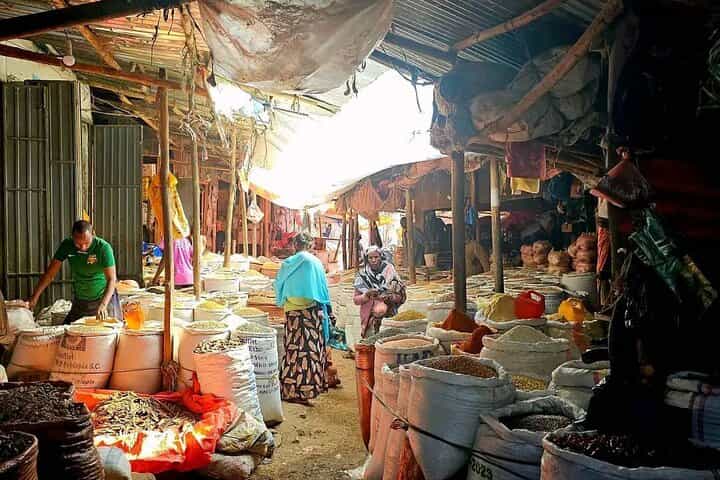
- Walk through Merkato, one of Africa’s largest open markets
Explore all itineraries in Addis Ababa.
Itinerary
Day 1
A paced, accessible day covering Ethiopia’s ancient and modern history, a hilltop panorama and a guided walkthrough of Merkato.
National Museum of Ethiopia — see "Lucy"
Visit the National Museum of Ethiopia to view the hominid fossil "Lucy" and related paleoanthropological exhibits. The visit is timed to allow comfortable movement through the galleries with seating breaks as needed.
- MondayClosed
- Tuesday9:00 AM – 5:00 PM
- Wednesday9:00 AM – 5:00 PM
- Thursday9:00 AM – 5:00 PM
- Friday9:00 AM – 5:00 PM
- Saturday9:00 AM – 5:00 PM
- Sunday9:00 AM – 5:00 PM
Tips from local experts:
- Plan to arrive 10–15 minutes before the scheduled start to collect tickets and use restrooms; allow a little extra time for museum security checks.
- Carry a lightweight day bag only; larger bags are often asked to be left at a cloak area for security reasons.
- If you require step-free access or an elevator, tell your guide on booking so they can assist with the most accessible route within the museum.
Mount Entoto — panoramic views and historic churches
Drive to Mount Entoto for elevated views over Addis Ababa and visit celebrated churches such as Saint Raguel and Saint Mary. Time at the summit includes short, level walking and seated photo stops; travel is by private vehicle along steep roads.
Tips from local experts:
- Expect cooler temperatures at altitude—bring a light layer even if the city is warm.
- The road to Entoto is steep and reached by vehicle; if you use a mobility aid, notify the operator ahead so transfers and stopping points can be arranged.
- Respect active church services: wear modest clothing and follow the guide's instructions about entering religious buildings.
Merkato — guided market walk
Explore Merkato, Addis Ababa’s large open market, with a local guide who will lead a safe route through the stalls and explain traditional goods, textiles and spices. The guide will manage the pace and meeting points to keep the group together.
- Monday9:00 AM – 6:00 PM
- Tuesday9:00 AM – 6:00 PM
- Wednesday9:00 AM – 6:00 PM
- Thursday9:00 AM – 6:00 PM
- Friday9:00 AM – 6:00 PM
- Saturday9:00 AM – 6:00 PM
- Sunday9:00 AM – 6:00 PM
Tips from local experts:
- Merkato is busy and tightly packed; keep valuables in a front pocket or inside a zipped bag and follow the guide’s recommended meeting point and time.
- Wear comfortable, flat shoes for walking on uneven ground and allow time for short, seated breaks during the market walk.
- Ask your guide’s permission before photographing vendors or people; many sellers expect to be asked first and your guide can assist with introductions.
Itinerary Attributes
| Days | 1 |
| Highlights | 3 |
| Season | - |
| Month | - |
| Persona | Seniors |
| Transfers | - |
| Restaurants | - |
| Total Activities | 3 |
| Total Places | 3 |
| Activities Types | Culture, Outdoor, Shopping |
From Lucy to Today: Addis Ababa's Living History Tour
A walking and museum-based tour through Addis Ababa's profound historical layers—from the 3.2-million-year-old skeleton of Lucy (Dinkinesh) at the National Museum, through Ethiopia's imperial history, to the city's modern role as Africa's diplomatic capital. You'll move between centuries in hours, held together by a guide who contextualizes how Ethiopia's ancient past shapes its present.
This is anthropology, archaeology, and contemporary history braided together.
Why this experience
Lucy is perhaps the most famous fossil in the world—a 3.2-million-year-old hominin skeleton that fundamentally changed our understanding of human origins. She's held at the National Museum in Addis Ababa, in a modest climate-controlled room that deserves hours of your time. Seeing Lucy in person—understanding that you're looking at actual bone from three million years ago—shifts something psychologically.
But Lucy is only the entry point. The National Museum also holds Ethiopian imperial regalia, crowns, manuscripts in Ge'ez (ancient ecclesiastical language), and religious art spanning centuries. The Red Terror Martyrs' Memorial documents the violence of the Derg regime in the 1980s—necessary and difficult history. The Ethnological Museum, housed in Emperor Haile Selassie's former palace, shows how traditional Ethiopian cultures organized themselves across regions and centuries.
Then you move into Addis Ababa itself—founded in 1886 by Emperor Menelik II. The Piazza neighbourhood preserves Italian colonial architecture (reminder of the attempted Italian occupation). The Holy Trinity Cathedral is Ethiopia's most sacred church. Merkato market is where the city's economic life pulses. Unity Park represents contemporary Ethiopia's aspirations.
A guided historical tour contextualizes these sites—how Lucy matters not just to science but to Ethiopian identity, how Menelik's victory over Italy shaped independence, how Christianity held Ethiopia's culture through centuries of external pressure, how modern Addis Ababa balances tradition and development.
Before you go
- Best time: October to February (cool, dry, clear visibility in museums). March to May is warm; June to September brings afternoon rains.
- Budget: Museum entry, guide fees, and modest meals are the primary costs. Plan for tips and any photography permits at museums.
- Difficulty: Low to moderate. Walking moves at a pace that allows museum time. Altitude (2,400 metres) affects some visitors the first day. Comfortable walking shoes and water are essential.
- What to bring: Water bottle, sun protection, comfortable walking shoes, modest clothes (shoulders and knees covered for churches), notebook for taking notes, and intellectual curiosity about systems different from your own.
- Getting there: Museums and historical sites are centrally located in Addis Ababa, accessible by Ride app, taxi, or on foot from central hotels.
- Accessibility: Walking-based with museum time is generally accessible. Museums have varying levels of accessibility—ask about elevators, seating, and pacing options. Most sites are ground-floor accessible.
Frequently asked questions
How long is a typical history tour? Usually a full day (7–8 hours) to do museums and historical sites justice. Half-day options focus on the National Museum and Lucy. Full-day tours expand to include multiple museums, churches, and Piazza walking.
Can I see Lucy? Yes. Lucy is displayed at the National Museum in Addis Ababa, in a climate-controlled case with detailed labeling. Many guides specialize in explaining what you're looking at—the significance of specific bones, how anthropologists date and interpret them, why Lucy matters to Ethiopian identity.
What's the difference between the National Museum and the Ethnological Museum? The National Museum focuses on Ethiopian history broadly—archaeology (including Lucy), imperial history, religious art, and contemporary art. The Ethnological Museum, housed in Haile Selassie's palace, focuses on traditional Ethiopian cultures—clothing, tools, weapons, household items across the country's many ethnic groups. The palace itself is worth seeing.
Is the Red Terror Martyrs' Memorial appropriate to visit? It documents a difficult period—torture, executions, political violence in the 1980s. It's sobering but important for understanding modern Ethiopian history. Come prepared for heaviness, but don't skip it. Your guide will provide context that makes the difficulty meaningful.
What's included in the experience? Your guide throughout the day, interpretation of museums and historical sites, and the operator's knowledge of Addis Ababa's history. Museum entry fees vary; ask what's included. TheNextGuide's partnership ensures knowledgeable guides and fair pricing.
Will I learn about contemporary Ethiopian history as well as ancient history? Yes. A good historical guide moves between scales—Lucy to empire to modern Addis Ababa. You'll understand how ancient history shapes contemporary identity and politics. This isn't just a museum tour; it's a conversation about how history lives.
Can I photograph inside museums? Photography policies vary by museum. Some allow it freely; others ask for permission or charge a fee. Some restrict photography near Lucy or sensitive materials. Ask your guide—they know current policies and can navigate appropriately.
Complete your trip in Addis Ababa
Pair this history tour with other Addis Ababa experiences to build a complete picture. Visit Explore Addis Ababa City Tour with Half or Full Day to walk neighbourhoods and understand the city's contemporary geography. Learn food culture with Addis Ababa Cooking: Injira Class to understand how Ethiopian identity connects to cuisine. Get outside the city with Nature Escape with Wenchi Crater Lake Day Tour. And if you want to go deeper into Ethiopia's cultural diversity and history, consider 4 Days Cultural Omo Valley Tribe Tour or Day Trip Debre Libanos Blue Nile Gorge and Portugal Bridge for regional history and culture.
Browse all Addis Ababa itineraries at TheNextGuide.