Cinematic Christmas in New York — 4-Day Photographer's Itinerary
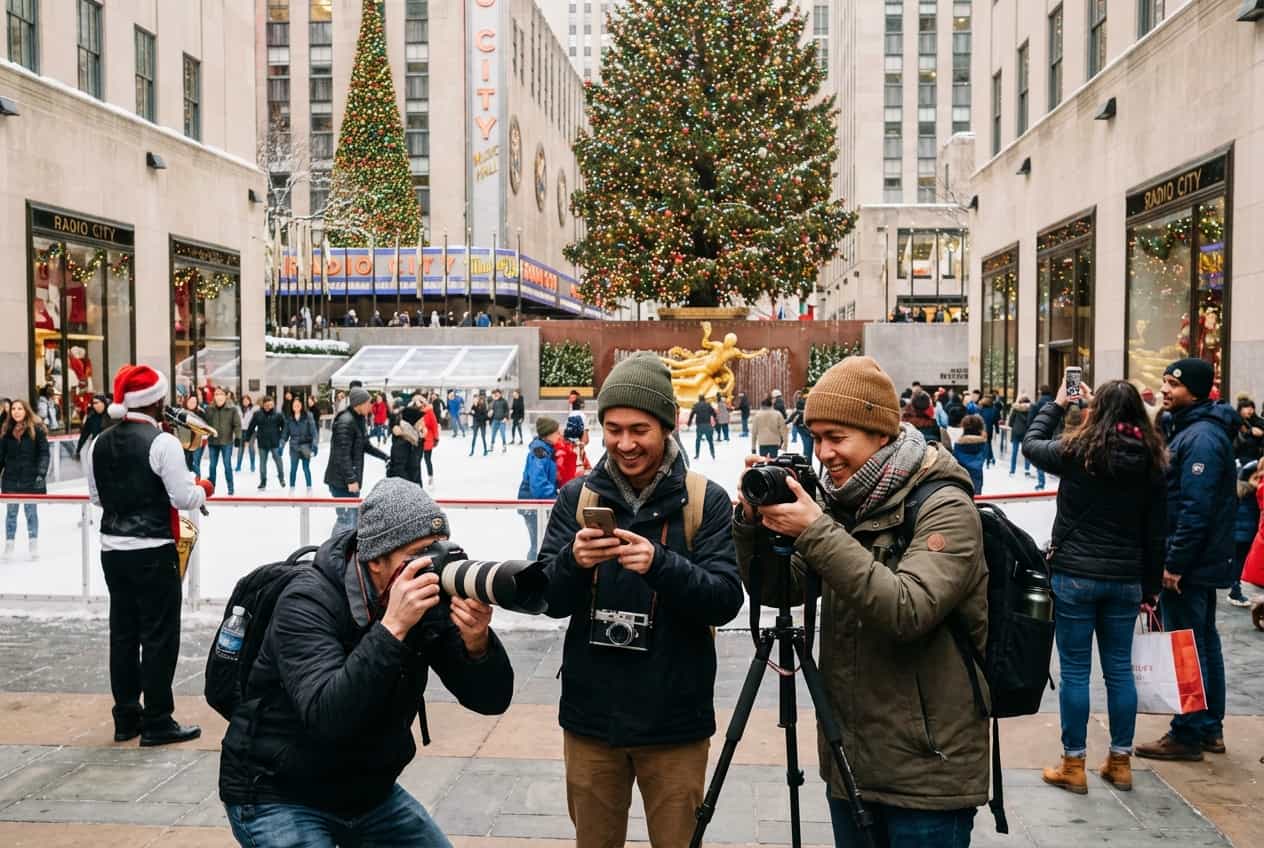
A glittering, photographer-focused 4-day winter plan through New York's holiday highlights and hidden visual gems. Balanced pacing for golden-hour skyline shots, quiet sunrise viewpoints, festive window displays, and cozy indoor breaks to warm gear and batteries. Notes on permits, tripod rules and alternative viewpoints included.
Highlights
- Sunrise skyline from DUMBO / Brooklyn Bridge Park
- Top of the Rock golden-hour views over the Rockefeller tree
- Central Park's Bow Bridge & Wollman Rink under winter light
- High Line and Hudson Yards at golden hour plus The Edge at sunset
- Saks Fifth Avenue holiday light show and Fifth Avenue windows
Explore all itineraries in New York.
Itinerary
Day 1
Midtown's glitter: festive markets, St. Patrick's details, Top of the Rock golden hour, and Rockefeller Center at night.
Bryant Park Winter Village — market & ice rink (morning light)
Start amid artisan stalls and the rink for low-crowd, backlit vendor portraits and crisp winter textures.
Tips from local experts:
- Arrive just after opening (usually 10:00–11:00) to avoid the biggest crowds; shoot vendor stalls with a shallow depth of field for a cinematic bokeh.
- Tripods for handheld-light scenes: small tabletop tripods work well on vendor tables; larger tripods in the park may need a NYC Parks permit for commercial shoots — bring an ND or fast prime instead.
- Battery & warmth hack: there's a heated seating area near the lawn; warm batteries there and swap quickly to avoid cold drain.
Lunch / warmup at Bryant Park Grill (window seat for plaza views)
Cozy mid-day meal with large windows overlooking the park — good for capturing candids and reflections.
- Monday11:30 AM – 10:00 PM
- Tuesday11:30 AM – 10:00 PM
- Wednesday11:30 AM – 10:00 PM
- Thursday11:30 AM – 10:00 PM
- Friday11:30 AM – 10:00 PM
- Saturday11:30 AM – 10:00 PM
- Sunday11:30 AM – 10:00 PM
Tips from local experts:
- Request a window table facing the rink/market for editorial-style portraits with holiday bokeh.
- Indoor tripod use: restaurants sometimes restrict tripods—ask staff first; an assistant can handhold for longer exposures.
- Quick-charge tip: staff will usually let you plug in briefly if you explain you're on a shoot; ask politely during a less-busy minute.
St. Patrick's Cathedral — architectural details and stained glass
Capture the Gothic façade and interior detail shots; contrast the cathedral's stillness with Midtown's bustle.
Tips from local experts:
- For interior shots, bring a fast lens (f/1.8–f/2.8); interior light is dim and handheld ISOs can stay lower for cleaner files.
- Respect services and wedding schedules; commercial tripod use inside often requires permission from the cathedral administration.
- Polaroid-style detail frames: medium telephoto (85–135mm) isolates carvings and gargoyles against bokeh-lit traffic.
Coffee break & gear check near Rockefeller Center
Short break to download quick selects, warm up, and tune gear before golden hour.
- Monday7:00 AM – 7:00 PM
- Tuesday7:00 AM – 7:00 PM
- Wednesday7:00 AM – 7:00 PM
- Thursday7:00 AM – 7:00 PM
- Friday7:00 AM – 7:00 PM
- Saturday8:00 AM – 7:00 PM
- Sunday8:00 AM – 7:00 PM
Tips from local experts:
- Use this window to change lenses and swap memory cards—outdoor winter shoots drain batteries fast.
- Find a corner seat where you can keep your camera in view; avoid placing gear on cold stone which accelerates battery drain.
- If shooting with assistants, assign one to scope exact Top of the Rock entry time and tripod policies.
Top of the Rock — golden hour & skyline composition
Timed for late-afternoon golden hour and blue hour overlap; frame the Empire State and Rockefeller tree for cinematic panoramas.
- Monday8:00 AM – 12:00 AM
- Tuesday8:00 AM – 12:00 AM
- Wednesday8:00 AM – 12:00 AM
- Thursday8:00 AM – 12:00 AM
- Friday8:00 AM – 12:00 AM
- Saturday8:00 AM – 12:00 AM
- Sunday8:00 AM – 12:00 AM
Tips from local experts:
- Buy timed tickets in advance and aim to be in line 30–45 minutes before your slot; tripods are generally not allowed on observation decks without explicit permission.
- Golden hour in December is early (around 16:00–16:30); scout the exact deck level for the Empire State composition beforehand.
- Bring a mid-range zoom (24–70) and a wide (16–35) for both compressed skyline and wide contextual shots; use high-ISO with IBIS or stabilization for handheld blue-hour frames.
Rockefeller Plaza & Rink — night-tree and plaza lights
After sunset capture the iconic tree, rink reflections, and theatrical lighting on surrounding façades.
- Monday9:00 AM – 11:00 PM
- Tuesday9:00 AM – 11:00 PM
- Wednesday9:00 AM – 11:00 PM
- Thursday9:00 AM – 11:00 PM
- Friday9:00 AM – 11:00 PM
- Saturday9:00 AM – 11:00 PM
- Sunday9:00 AM – 11:00 PM
Tips from local experts:
- For less crowded shots, step to side streets (like 50th St. toward 5th Ave) for alternate tree angles and skyline frames with fewer people.
- Long exposures: a small travel tripod or bean bag on a bollard helps; be mindful of staff and security near the rink—ask if you plan to set up.
- Saks' projection shows (nearby) are synced with Rockefeller lighting — coordinate sequences to capture synchronized light drama.
Dinner with skyline views — Bar SixtyFive (reservation recommended)
A rooftop/indoor dinner to edit, rest, and capture night skyline frames from a nearby vantage.
Tips from local experts:
- Reserve a table in advance and mention you're shooting for creative work—some venues allow short tripod setups if not blocking service.
- Bar SixtyFive has limited space outdoors; for extended equipment setups, request permission ahead of time from management.
- Use this quieter meal to back up images to two separate devices and swap cold batteries for warm spares before the next day's sunrise.
Day 2
Brooklyn sunrise, DUMBO & Brooklyn Bridge walk, then Financial District and sunset views from One World area.
Sunrise skyline at DUMBO — Pebble Beach / Washington Street alley
Classic framed Manhattan Bridge shot and dawn skyline reflections with soft winter light; arrive pre-dawn for empty foregrounds.
Tips from local experts:
- Arrive 30–45 minutes before sunrise for sky color progression and to stake a low-angle foreground spot on the cobblestones.
- If you need quieter compositions, shift east along the waterfront for reflective water shots — the Main Street frame is iconic but can fill quickly.
- Warm-up: carry hand warmers and keep lenses in a zip bag to reduce condensation when moving from cold outdoors to warm cafes.
Coffee & pastries in DUMBO — Almondine Bakery
Quick warm-up, scout nearby alleys and mural walls for editorial street portraits.
- MondayClosed
- TuesdayClosed
- Wednesday8:30 AM – 6:00 PM
- Thursday8:30 AM – 6:00 PM
- Friday8:30 AM – 6:00 PM
- Saturday8:30 AM – 6:00 PM
- Sunday8:30 AM – 6:00 PM
Tips from local experts:
- Almondine has a small baking light that makes for great indoor natural-light portraits; ask for permission for staged shots.
- Store a spare memory card in a warm pocket while having coffee so it's ready and condensation-free when you head back out.
- Scout nearby garage doors and mural walls for colorful, low-traffic backdrops when the main bridge spot is congested.
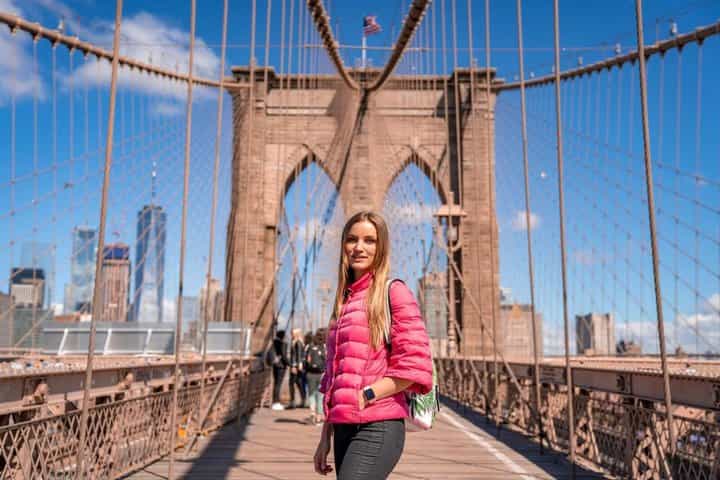
Brooklyn Heights Promenade and walk across Brooklyn Bridge
Promenade offers skyline panorama; early walk across the bridge captures cables & geometry with soft side light.
- Monday6:00 AM – 1:00 AM
- Tuesday6:00 AM – 1:00 AM
- Wednesday6:00 AM – 1:00 AM
- Thursday6:00 AM – 1:00 AM
- Friday6:00 AM – 1:00 AM
- Saturday6:00 AM – 1:00 AM
- Sunday6:00 AM – 1:00 AM
Tips from local experts:
- For bridge shots, use a longer lens (70–200) to compress the Manhattan skyline behind the cables, and a wide lens for leading-lines compositions.
- Mid-morning is best for pedestrian traffic balance — too early is quiet but colder; too late can be crowded with tourists and cyclists.
- Keep an eye on the pedestrian lane markers and plan quick setups—security will ask if you block pathways with stands during busy times.
Battery Park & Financial District — winter light on waterfront monuments
Capture low winter sun glancing off glass towers, memorials, and subtle holiday installations.
- Monday6:00 AM – 12:00 AM
- Tuesday6:00 AM – 12:00 AM
- Wednesday6:00 AM – 12:00 AM
- Thursday6:00 AM – 12:00 AM
- Friday6:00 AM – 12:00 AM
- Saturday6:00 AM – 12:00 AM
- Sunday6:00 AM – 12:00 AM
Tips from local experts:
- Bring polarizers to tame reflections on skyscraper glass and to deepen blue skies — winter air is crisp, so polarizers help a lot.
- For intimate portraits among the architecture, use focal lengths 35–85mm and position subjects to get rim light from low sun.
- Be mindful of security perimeters near memorials; tripods in high-traffic zones can prompt requests to move—have a handheld fallback ready.
Lunch / recharge at Eataly Downtown
Indoor market with varied light sources — great for editorial food and moody interior textures.
- Monday7:00 AM – 11:00 PM
- Tuesday7:00 AM – 11:00 PM
- Wednesday7:00 AM – 11:00 PM
- Thursday7:00 AM – 11:00 PM
- Friday7:00 AM – 11:00 PM
- Saturday7:00 AM – 11:00 PM
- Sunday7:00 AM – 11:00 PM
Tips from local experts:
- The market lighting is mixed; use custom white balance and shoot RAW to correct warm tungsten tones later.
- Find a second-floor vantage for overhead food frames and candid vendor shots without blocking aisles.
- Plug-in policy: Eataly staff will often allow a quick emergency recharge if you explain you're on assignment.
The Oculus (Westfield World Trade Center) — architectural interiors
Capture the cathedral-like white ribs and repeating geometry for high-contrast compositions.
- MondayOpen 24 hours
- TuesdayOpen 24 hours
- WednesdayOpen 24 hours
- ThursdayOpen 24 hours
- FridayOpen 24 hours
- SaturdayOpen 24 hours
- SundayOpen 24 hours
Tips from local experts:
- The Oculus is bright and reflective — expose for highlights and recover shadows in RAW; lens hood helps with flare.
- Mid-afternoon (after lunch) balances light with fewer commuter crowds than morning rush; handheld ISOs usually suffice.
- Tripods: handheld preferred — large tripods can be discouraged in busy concourses; ask security if you need a static setup.
One World Observatory — sunset skyline & harbor views
Use this elevated vantage for wide harbor panoramas at golden hour; dramatic cloudscapes and evening transition photos.
- Monday9:00 AM – 9:00 PM
- Tuesday9:00 AM – 9:00 PM
- Wednesday9:00 AM – 9:00 PM
- Thursday9:00 AM – 9:00 PM
- Friday9:00 AM – 9:00 PM
- Saturday9:00 AM – 9:00 PM
- Sunday9:00 AM – 9:00 PM
Tips from local experts:
- Book timed-entry tickets in advance; observation decks often prohibit tripods without prior permission — a monopod is sometimes more acceptable.
- Sunset in December is early; plan to be in position ~45 minutes before to secure a preferred window and bracket exposures for sky detail.
- Security screening is thorough — avoid metal tripods in carry bags unless you've confirmed rooftop permissions ahead of time.
Day 3
Central Park's winter charms, museum steps, and Lincoln Center for a blend of natural and cultural holiday imagery.
Gapstow Bridge & The Pond — soft morning light
Classic Central Park winter shots: reflective water, bridge arches, and muted winter palettes.
- Monday6:00 AM – 1:00 AM
- Tuesday6:00 AM – 1:00 AM
- Wednesday6:00 AM – 1:00 AM
- Thursday6:00 AM – 1:00 AM
- Friday6:00 AM – 1:00 AM
- Saturday6:00 AM – 1:00 AM
- Sunday6:00 AM – 1:00 AM
Tips from local experts:
- Early morning yields glassy water for mirror reflections; aim for just after sunrise if you can for cleaner compositions.
- Use a circular polarizer to increase contrast between water and the sky; in winter the sun is low and reflections behave differently.
- If snow is present, expose slightly higher (+1/3 to +2/3) to retain bright white detail without clipping highlights.
Wollman Rink & Bow Bridge loop — ice, skaters, and romantic frames
Capture the rink's motion blur, candid skater portraits, and Bow Bridge's graceful silhouette.
- Monday10:00 AM – 2:30 PM
- Tuesday10:00 AM – 2:30 PM
- Wednesday10:00 AM – 9:00 PM
- Thursday10:00 AM – 9:00 PM
- Friday10:00 AM – 10:00 PM
- Saturday10:00 AM – 10:00 PM
- Sunday10:00 AM – 9:00 PM
Tips from local experts:
- Shutter-speed play: try 1/15–1/60s panning on slower lenses for graceful motion blur of skaters while keeping subjects sharp.
- Bow Bridge is narrow; for quiet frames use a longer lens from a little distance to compress the background into a cinematic glow.
- Park rules: commercial tripod use in Central Park requires a permit; for editorial personal work, smaller tripods and quick setups reduce friction with rangers.
Lunch at Tavern on the Green — iconic park dining
Historic setting ideal for editorial portraits and window-lit portraits facing the park.
- Monday11:00 AM – 10:00 PM
- Tuesday11:00 AM – 10:00 PM
- Wednesday11:00 AM – 10:00 PM
- Thursday11:00 AM – 10:00 PM
- Friday11:00 AM – 11:00 PM
- Saturday9:00 AM – 11:00 PM
- Sunday9:00 AM – 10:00 PM
Tips from local experts:
- Request a corner table with natural light for warm portrait lighting; reservations are highly recommended during the holidays.
- Indoor tripod use is subject to restaurant discretion — ask host and propose short setups between courses.
- Post-lunch: use the restaurant's sheltered porch areas for quick staged portraits with park backgrounds.
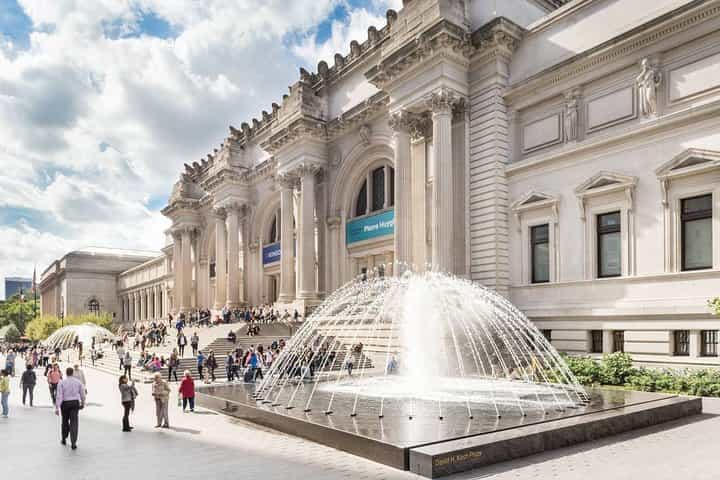
The Met steps & museum façade — editorial urban portraits
The museum steps and columns offer elevated framing; holiday displays inside may be limited but the steps are an enduring backdrop.
- Monday10:00 AM – 5:00 PM
- Tuesday10:00 AM – 5:00 PM
- WednesdayClosed
- Thursday10:00 AM – 5:00 PM
- Friday10:00 AM – 9:00 PM
- Saturday10:00 AM – 9:00 PM
- Sunday10:00 AM – 5:00 PM
Tips from local experts:
- For iconic Met steps shots, use mid-afternoon light to avoid harsh shadows and to allow for flattering side-light portraits.
- The Met has a photography policy for interiors; small personal photography is allowed but tripods and commercial shoots need department approval.
- Look for side-alleys and stone balustrades near the entrance for quieter alternative compositions away from the main crowd.
Golden hour at Lincoln Center — architectural light & reflective pools
Capture the plaza, fountains, and lit facades for cinematic evening frames as holiday lights come alive.
Tips from local experts:
- Arrive ~45 minutes before sunset to compose with the plaza's reflecting pools and to capture transition light on the façades.
- Tripod/standby: public plazas often permit quick tripods but avoid blocking walkways; have an assistant monitor passersby.
- For portraits, use the low-angle theater lights for rim-lighting; shoot tethered if you want instant review on a laptop.
Dinner at Lincoln Ristorante — Italian with views of the plaza
A relaxed evening meal where you can edit selects and plan the final day's rooftop shots.
- MondayClosed
- Tuesday4:00 – 9:00 PM
- Wednesday4:00 – 9:00 PM
- Thursday4:00 – 9:00 PM
- Friday4:00 – 9:00 PM
- Saturday4:00 – 9:00 PM
- SundayClosed
Tips from local experts:
- Reserve a table with a window or terrace view if possible to continue shooting casual night scenes between courses.
- Use this dinner to finalize prints or selects to send to clients; many restaurants are accommodating to creatives editing quietly.
- Confirm any rooftop or terrace access if you'd like an after-dinner rooftop shot—some restaurant managers allow short setups for photographers.
Day 4
Chelsea & the High Line stroll, Hudson Yards and The Edge for sunset panoramas, Fifth Avenue holiday windows, and a rooftop finale.
Morning walk on the High Line — elevated winter compositions
The High Line offers unique perspectives on street-level holiday scenes and architectural juxtapositions.
- Monday7:00 AM – 10:00 PM
- Tuesday7:00 AM – 10:00 PM
- Wednesday7:00 AM – 10:00 PM
- Thursday7:00 AM – 10:00 PM
- Friday7:00 AM – 10:00 PM
- Saturday7:00 AM – 10:00 PM
- Sunday7:00 AM – 10:00 PM
Tips from local experts:
- Morning walk avoids large weekend crowds; low winter sun creates long shadows for dramatic leading lines along the path.
- Look for small details — industrial textures, planted winter arrangements, and window reflections — for intimate frames.
- The High Line is narrow; large tripods are discouraged — use high-ISO handheld techniques or monopods for stability.
Chelsea Market — indoor textures, vendors & warm light
A great mid-morning stop for warm portraits, editorial food photography, and to escape winter wind.
- Monday7:00 AM – 10:00 PM
- Tuesday7:00 AM – 10:00 PM
- Wednesday7:00 AM – 10:00 PM
- Thursday7:00 AM – 10:00 PM
- Friday7:00 AM – 10:00 PM
- Saturday7:00 AM – 10:00 PM
- Sunday7:00 AM – 10:00 PM
Tips from local experts:
- Shoot from the mezzanine or upper walkways for interesting overhead compositions of stalls and crowds.
- Use natural window light near the food vendors for flattering portraits; ask vendors for permission to photograph up close.
- Store a second camera body or lenses in a warm area of the market to prevent condensation when moving back outside.
Free afternoon / transit to Hudson Yards & quick scout
Buffer/transfer time to rest, cull selects, and prep gear before the golden hour at The Edge.
Tips from local experts:
- Use this block to review shots and create a short shot list for The Edge — plan at least two compositions: skyline and foreground detail.
- Check weather and ticket times for The Edge; winter winds can affect rooftop comfort and lens stability.
- Warm clothes: bring layers and a windproof shell — Hudson Yards rooftop is exposed and colder than street level.
The Edge at Hudson Yards — golden hour & sunset panoramas
Dramatic angled views over the Hudson and midtown skyline; ideal for evening gradients and city lights coming alive.
- Monday9:00 AM – 10:00 PM
- Tuesday9:00 AM – 10:00 PM
- Wednesday9:00 AM – 10:00 PM
- Thursday9:00 AM – 10:00 PM
- Friday8:00 AM – 10:00 PM
- Saturday8:00 AM – 10:00 PM
- Sunday9:00 AM – 10:00 PM
Tips from local experts:
- Purchase timed-entry tickets and confirm tripod policy; many observation decks restrict tripods — use a monopod or brace against railings for stability.
- Golden hour in winter is early; be in position ~45 minutes prior and bracket exposures for dramatic skies and city lights.
- Lens-swap plan: start wide (16–35) for panoramas, then switch to a 70–200 for compressed river/bridge shots as light fades.
Hudson Yards public plaza scouting (alternate angles & reflective surfaces)
Quick stroll around the plaza for architectural details, reflective façades and quieter holiday lighting angles.
Tips from local experts:
- Avoid the main Vessel area (closed) and instead focus on reflective glass panels and staircases for abstract frames.
- Look for vertical compositions using escalators and stair lines to create cinematic motion in stills.
- Evening window reflections across Hudson Yards create layered shots—use manual focus for precise control on reflective planes.
Fifth Avenue holiday windows & Saks Fifth Avenue light show (evening)
Classic New York holiday spectacle — capture the storytelling window displays and the Saks façade projection show.
- Monday11:00 AM – 7:00 PM
- Tuesday11:00 AM – 7:00 PM
- Wednesday11:00 AM – 7:00 PM
- Thursday11:00 AM – 7:00 PM
- Friday11:00 AM – 7:00 PM
- Saturday11:00 AM – 7:00 PM
- Sunday12:00 – 6:00 PM
Tips from local experts:
- For the Saks light show, find elevated curb spots slightly off the main throng to reduce foreground clutter and tripod obstruction.
- Use a medium telephoto for window details and a wider lens with longer exposure for the façade projection shows to capture motion and light trails.
- Expect crowds — scout side streets (like 50th–52nd) for alternate window angles and reflective puddles after any light rain for extra mood.
Rooftop finale — 230 Fifth Rooftop Bar for empire-lined night panoramas
End with classic Empire State views from a famous rooftop; a cinematic finish to the holiday shoot.
- Monday12:00 PM – 2:00 AM
- Tuesday12:00 PM – 2:00 AM
- Wednesday12:00 PM – 2:00 AM
- Thursday12:00 PM – 2:00 AM
- Friday12:00 PM – 3:00 AM
- Saturday11:00 AM – 4:00 AM
- Sunday11:00 AM – 2:00 AM
Tips from local experts:
- Reserve in advance and confirm rooftop access/time; some rooftops charge a cover or reservation fee for photographer setups.
- Tripod rules: many rooftop bars disallow full tripods during service hours — a small travel tripod or monopod is safer and less intrusive.
- Night exposures: use a remote release and expose for highlights on the skyline; be mindful of bar lighting which can introduce mixed-color casts.
Itinerary Attributes
| Days | 4 |
| Highlights | 5 |
| Season | - |
| Month | - |
| Persona | Photographers |
| Transfers | 1 |
| Restaurants | 6 |
| Total Activities | 26 |
| Total Places | 26 |
| Activities Types | Attraction, Restaurant, Culture, Break, Meal, Outdoor, Neighborhood, Shopping, Transfer, Nightlife |
Why this experience
Four days in New York designed for photographers chasing holiday light — golden-hour skyline compositions, pre-dawn DUMBO reflections, festive window displays, and the kind of cinematic winter frames that only happen when Christmas dresses Manhattan in projection shows and rink glow. This self-guided itinerary curated on TheNextGuide gives Day 1 to Midtown's glitter: Bryant Park Winter Village in morning backlight, St. Patrick's Cathedral details, Top of the Rock at golden hour with the Rockefeller tree below, and night shooting at the plaza. Day 2 starts with a DUMBO sunrise over the Manhattan Bridge, crosses Brooklyn Bridge in soft side-light, then works the Financial District, the Oculus interior, and One World Observatory at sunset. Day 3 moves through Central Park — Gapstow Bridge reflections, Wollman Rink motion blur, Bow Bridge silhouettes — before the Met steps and Lincoln Center's reflecting pools at dusk. Day 4 threads the High Line, Chelsea Market textures, The Edge at Hudson Yards for sunset panoramas, Fifth Avenue holiday windows and the Saks light show, and a rooftop finale at 230 Fifth with Empire State night frames.
Every stop is timed to winter light windows. Winter sunsets arrive early — around four in the afternoon — so the schedule compresses golden hour and blue hour into tight, productive windows with warm indoor breaks between them for gear checks and battery swaps.
Before you go
- Best time: December as designed — early sunset creates compressed golden-hour windows, holiday installations add layered light sources, and cold air sharpens skyline clarity. Works November through January for holiday content; spring and autumn offer longer golden hours but no festive lighting.
- Budget: This is a self-guided itinerary curated on TheNextGuide — no booking required. Observation deck tickets, meals, and all activities are arranged and paid independently. Book timed-entry tickets for Top of the Rock, One World Observatory, and The Edge in advance. Bryant Park Winter Village, the High Line, and Central Park are free.
- Difficulty: Moderate — the days are full with early sunrise starts and evening shoots. Walking is substantial but broken into segments with indoor warm-up breaks. All observation decks have elevators. The Brooklyn Bridge crossing is about forty-five minutes on foot.
- What to bring: Camera body with weather sealing, fast wide-angle lens (16–35mm), mid-range zoom (24–70mm), telephoto (70–200mm), spare batteries (cold drains them fast), hand warmers, memory cards, portable charger, lens cloth, small travel tripod or monopod. Warm layers, windproof shell, gloves with touchscreen tips, and comfortable walking shoes. December averages zero to five degrees Celsius.
- Getting there: Day 1 starts at Bryant Park Winter Village, near Sixth Avenue and 42nd Street, at 10 AM. Subway: B/D/F/M to 42nd Street–Bryant Park.
- Accessibility: Bryant Park, the High Line (elevator access), and Central Park have paved paths. Top of the Rock, One World Observatory, and The Edge have elevator access. Chelsea Market, the Oculus, and all restaurants are accessible. The Brooklyn Bridge pedestrian path is flat but narrow — plan for cyclist traffic. The Met has elevators. Lincoln Center plaza is step-free.
Frequently asked questions
Are tripods allowed at the observation decks?
Generally no — Top of the Rock, One World Observatory, and The Edge restrict full-size tripods without prior commercial permission. Monopods and small tabletop tripods are sometimes accepted. Use high-ISO handheld techniques with image stabilization, or brace against railings for sharp blue-hour frames. Contact each venue in advance if you need a tripod for a specific project.
What's the best day if I only have one?
Day 2 — the DUMBO sunrise, Brooklyn Bridge crossing, and One World Observatory sunset give you the widest range of iconic compositions in a single arc from dawn to dusk, with warm indoor breaks at Eataly and the Oculus between shoots.
How does this differ from the nocturnal photography itinerary?
This itinerary is built around golden-hour and blue-hour windows with daytime warm-up breaks. The nocturnal version focuses on after-dark shooting — neon, long exposures, light trails, and late-night street scenes. They complement each other: shoot this one for sunrise-to-sunset holiday light, add the nocturnal route for night-only sessions.
Do I need permits for photography in New York?
Personal and editorial photography in public spaces generally requires no permit. NYC Parks requires permits for commercial shoots using tripods or equipment that obstructs paths. Observation decks, museums, and restaurants have individual policies — confirm tripod and commercial-use rules when booking. Interior shoots at the Met and St. Patrick's Cathedral require permission for commercial work.
Complete your trip in New York
This four-day route covers Midtown, Brooklyn, Lower Manhattan, Central Park, Chelsea, and Hudson Yards — these itineraries add different photographic angles.
- Nocturnal Christmas Photography: New York City in 4 Days — An after-dark companion route with neon, long exposures, and late-night street scenes.
- Skyline Romances: Rooftop, Art & Candlelit Bars — Adds rooftop and intimate bar scenes for a different visual texture.
- Cozy Family Christmas in New York: 4-Day Holiday Itinerary — A family holiday version visiting the same seasonal landmarks with a different pace.
Browse all New York itineraries at TheNextGuide.
Last updated: March 2026