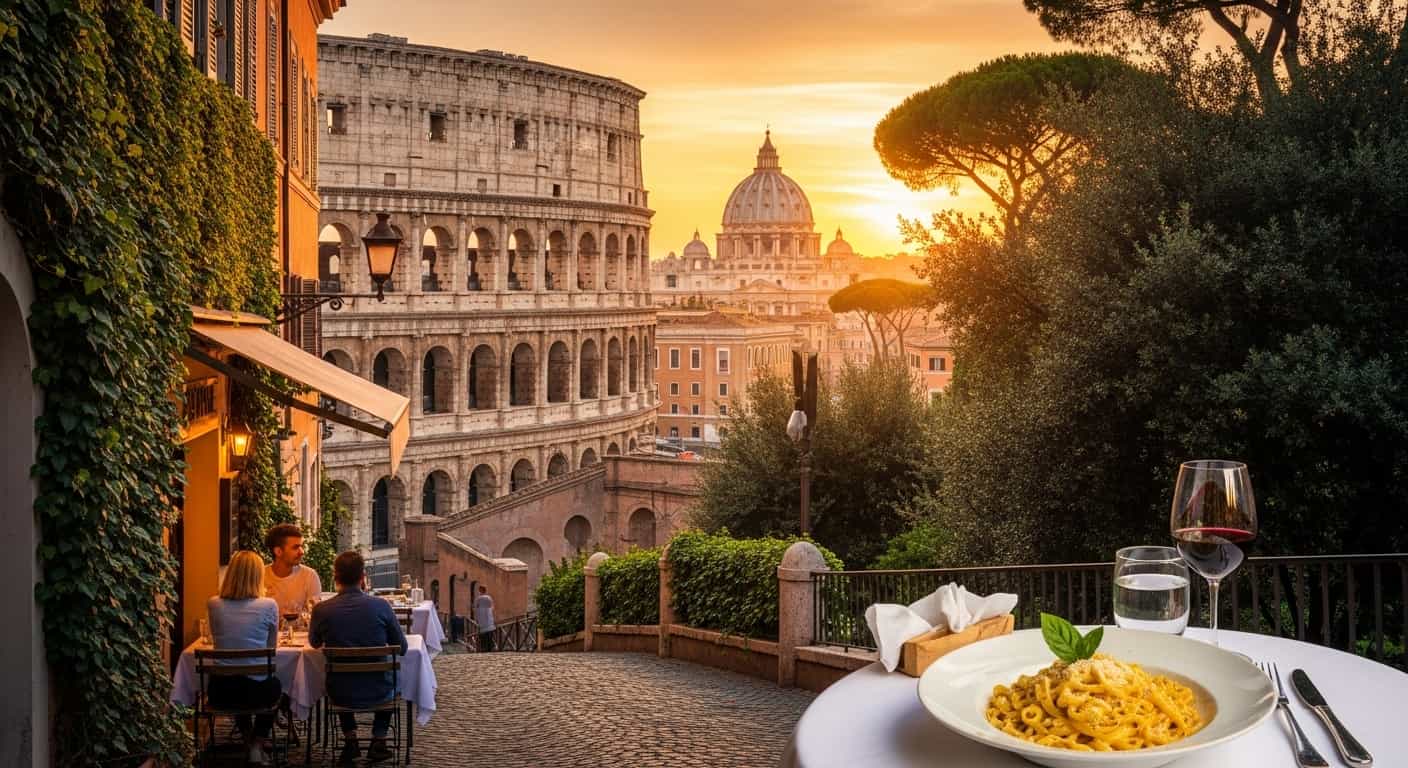
3 Days in Rome: The Itinerary I'd Actually Follow
Three days in Rome is enough to walk the Colosseum's arena floor, taste your way through Trastevere at sunset, bike the ancient Appian Way into underground catacombs, and discover neighborhoods where the ruins aren't behind a fence — they're just part of the street.
If I only had 3 days, this is exactly how I'd do it. Not to check off a list of monuments. Not to queue at every museum. Just to feel the city the way it works best — one neighborhood at a time, one meal at a time, with enough space between the big moments to sit in a piazza and watch Rome happen around me.
Highlights
- Colosseum and Roman Forum guided walk with skip-the-line access
- Trastevere sunset food tour with cacio e pepe, supplì, and local wine
- Appian Way bike ride through ancient ruins and underground catacombs
- Pantheon interior at morning light and Trevi Fountain without the crush
- Long dinners from Monti's wine bars to Testaccio's trattorias
At a Glance
Day 1 — On Foot: Colosseum guided walk, Roman Forum, Palatine Hill, lunch in Monti, Trevi Fountain, Pantheon, Piazza Navona. Centro Storico → Monti → 1st and 2nd rioni.
Day 2 — By Taste: St. Peter's Basilica, Vatican Museums and Sistine Chapel, lunch in Prati, Trastevere sunset food tour. Vatican → Prati → Trastevere.
Day 3 — By Bike: Appian Way cycling tour with catacombs and lunch, Aventine Hill keyhole, Testaccio neighborhood. Appian Way → Aventine → Testaccio.
Day 1 — On Foot
In collaboration with The Empireverse
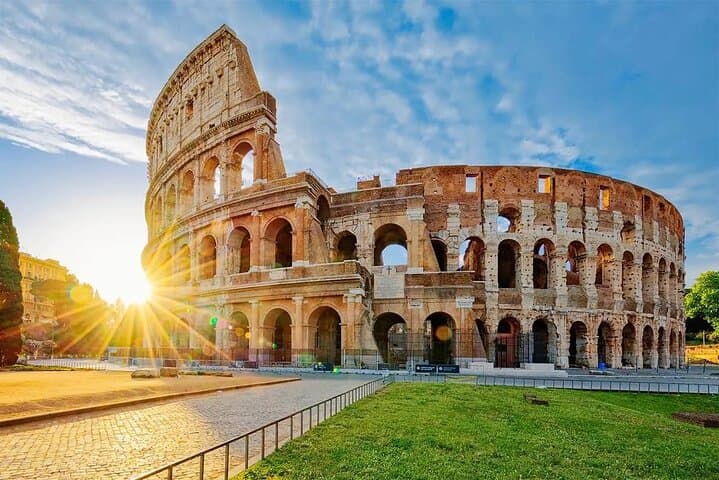
I'd start where Rome started — at the arena.
Day 1 covers the ancient core and the centro storico — from the Colosseum through the Forum, up to Monti for lunch, then west through the historic center to Piazza Navona. Everything connects on foot and metro line B.
The Colosseum first, before the midday sun turns the travertine into a furnace. The Empireverse runs a guided walk that includes skip-the-line entry, the arena floor, and the Roman Forum — a licensed guide who knows which archways were rebuilt by Mussolini, which stones still carry the marks of the medieval lime kilns that nearly destroyed the place, and which corridor the gladiators walked before stepping into the light. The group is small enough to hear without straining, the pace is unhurried, and the guide connects the Colosseum's engineering to the Forum's politics in a way that turns two thousand years of history into a story you can follow. Even without the tour, the Colosseum at first light is worth the early alarm. But the guide is what turns a ruin into a place where things happened.
After the Forum, climb the Palatine Hill for the view — the imperial palaces are mostly foundations now, but the cypress-lined gardens and the panorama over the Forum and Circus Maximus are the reward. Then down the back side toward Monti, Rome's oldest residential neighborhood. Lunch at Ai Tre Scalini on Via Panisperna — a neighborhood trattoria with polpette al sugo that hasn't changed in decades, the kind of place where the tables spill onto the cobblestones and the carafe of house wine is the correct choice. No need to overthink it.
After lunch, walk west toward Trevi Fountain. Since early 2026, a small access fee keeps the crowd manageable — for the first time in years, you can actually stand at the basin and hear the water. Toss the coin, take the photo, move on. Then five minutes south to the Pantheon. The interior is the engineering miracle — the oculus open to the sky, the coffered concrete dome that's stood for nearly two thousand years, the rain that falls through and drains through invisible channels in the marble floor. Arrive in the morning and the light beam tracks across the interior like a sundial. Ten minutes is enough to feel it. An hour isn't too many.
From the Pantheon, walk north to Piazza Navona — Bernini's Fountain of the Four Rivers, the long oval of the old stadium, the painters setting up easels in the late afternoon light. This is where Rome's baroque confidence is at its loudest. Then wander the streets between Navona and Campo de' Fiori as the evening settles — the flower market packs up, the aperitivo crowds arrive, and the cobblestones glow in the last light.
Dinner at Roscioli, a few steps from Campo de' Fiori — part salumeria, part restaurant, entirely Roman. The carbonara is precise, the wine list is deep, and the staff knows the producers behind every bottle. Book ahead. That's the rule for every night in Rome: end it at a table, no rush.
Day 2 — By Taste
In collaboration with Walkingourmet
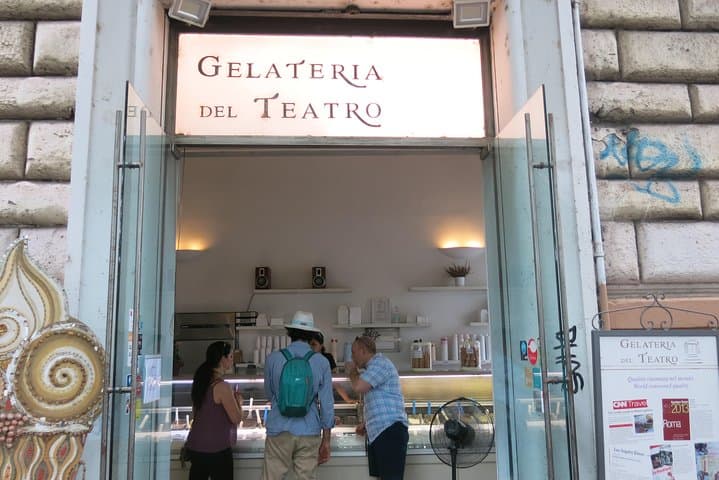
I'd give my second day to the sacred and the profane — the Vatican in the morning, Trastevere's kitchen in the evening, and the kind of lunch break in between that makes Rome feel like a city built for eating.
Day 2 starts at the Vatican (west bank of the Tiber), moves south through Prati for lunch, then crosses into Trastevere for the evening food tour. Metro line A to Ottaviano, then everything on foot.
Start early at St. Peter's Basilica — the entrance is free, the queue moves fast before 09:00, and the interior is overwhelming in the best way. Michelangelo's Pietà is in the first chapel on the right, protected behind glass but still close enough to see the detail in the marble folds. The dome — if you're willing to climb 551 steps — offers a view down into the basilica and out across the city that justifies every stair. Then the Vatican Museums and Sistine Chapel. Book timed entry in advance; this is non-negotiable in any season. Two to three hours through the galleries — the Raphael Rooms first, then the long corridor of maps that's worth the visit on its own, and finally the Sistine Chapel. Michelangelo's ceiling is the moment. Stand near the back wall, look up, let the crowd around you dissolve. The Creation of Adam is smaller than you expect and more powerful than any photograph has ever captured.
After the museums, walk south through Prati for lunch. This is the Vatican's residential neighborhood — wide streets, local bakeries, none of the tourist pricing of the streets immediately outside St. Peter's. Lunch at Sciascia Caffè for a quick plate of pasta and proper Roman coffee, or sit down at Osteria dell'Angelo if the morning left you properly hungry — their fixed menu is generous and entirely traditional.
Then cross the Tiber. The walk from Prati to Trastevere takes twenty-five minutes along the river, or bus 23 covers it faster. The day's anchor waits on the other side. Walkingourmet runs a three-hour sunset food tour through Trastevere's cobblestone lanes — stopping at family-run restaurants, artisan food shops, and neighborhood squares where the locals actually eat. The guide introduces you to cacio e pepe made the way the nonnas taught it, supplì with a molten mozzarella heart, carciofi alla romana in season, and wines from the Castelli Romani — tasting as you go, learning the stories behind each dish. This isn't a restaurant crawl. It's a neighborhood revealing itself through its kitchen — the kind of evening where you turn a corner and find a piazza with no tourists, just someone's grandmother watching the world from a folding chair. By the end, you'll have walked two kilometers, tasted six or seven things, and understood why Romans consider Trastevere the soul of the city. The food tour effectively becomes dinner — you'll finish satisfied, with wine in hand, and Trastevere's lantern-lit alleys as the backdrop.
If you're not quite done, a nightcap at Freni e Frizioni on Via del Politeama — a former mechanic's garage turned cocktail bar that spills onto the piazza. Trastevere after dark is Rome at its most cinematic.
Day 3 — By Bike
In collaboration with Roma STARBIKE
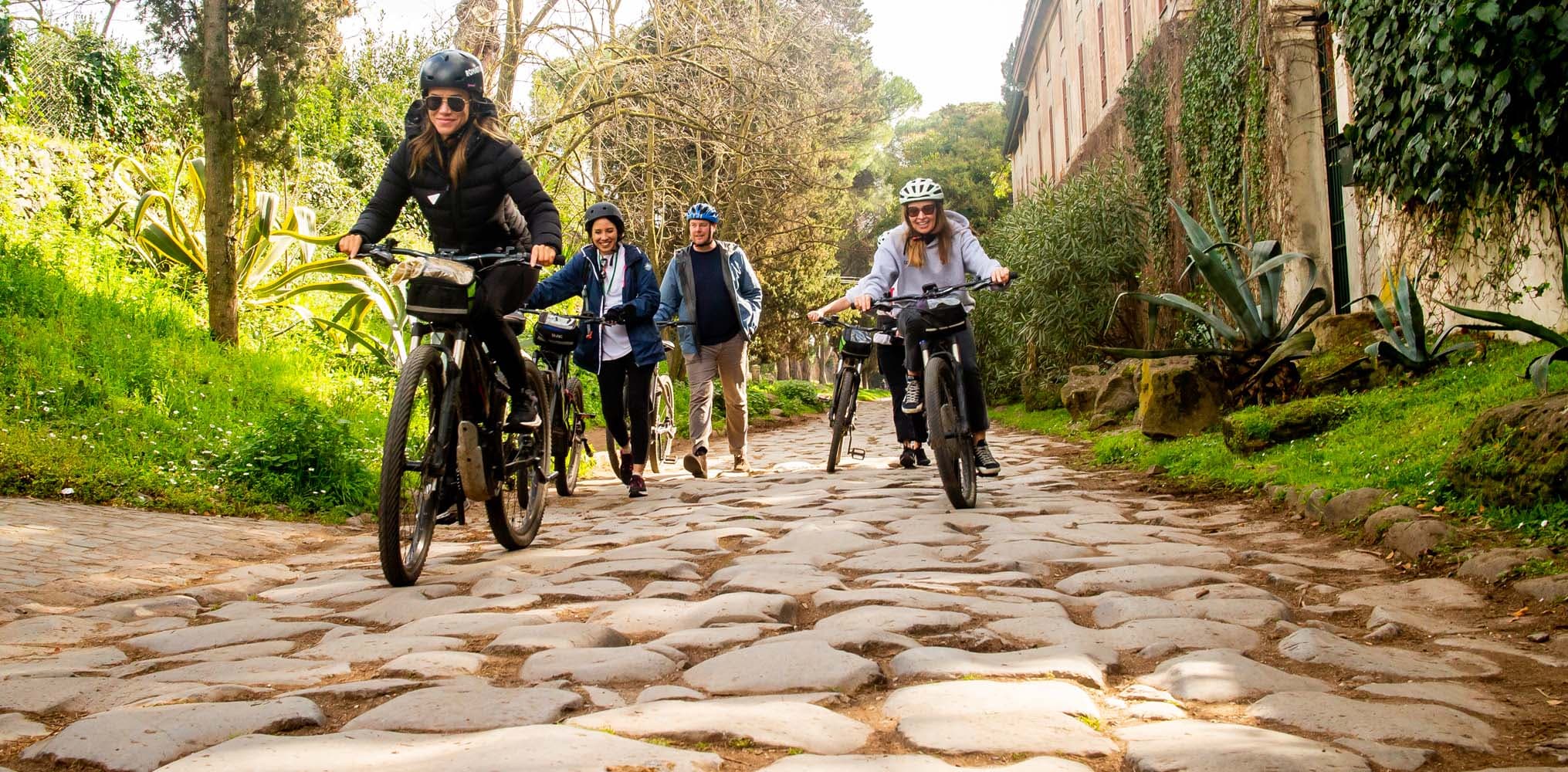
My last day swaps the city center for the road that built the empire — and then comes back to a neighborhood most visitors never find.
Day 3 begins south of the center at the Appian Way (bike tour departure near Terme di Caracalla), then returns to the Aventine Hill and Testaccio for the afternoon and evening. Metro line B to Circo Massimo.
There are two ways to experience ancient Rome — inside the museums, or outside on the road. Day 1 gave me the Colosseum and Forum. Day 3 gives me the Appian Way, the two-thousand-year-old road that connected Rome to Brindisi and carried legions, emperors, and merchants south toward the Mediterranean. Roma STARBIKE runs a bike tour that follows the ancient paving stones through a landscape that hasn't changed much since Spartacus — umbrella pines, crumbling tombs, aqueduct ruins crossing the fields, and the Parco degli Acquedotti stretching into the distance. The route is flat and unhurried, with stops at roadside ruins where the guide explains what stood here when the stones were new. Then the tour descends underground into the catacombs — early Christian burial galleries carved into the volcanic rock, cool and silent, with frescoes that predate every church in Rome. The catacombs are the part of Rome that most visitors skip, and they shouldn't — the galleries stretch for kilometers, the silence is absolute, and the experience of walking where Romans buried their dead two millennia ago puts everything above ground into perspective. The tour includes lunch — a proper sit-down meal with wine at a trattoria along the route, the kind of pause that makes the day feel like a journey rather than an activity.
Back in the city by mid-afternoon, take metro line B one stop from Circo Massimo to Piramide and walk up the Aventine Hill. The Orange Garden — Giardino degli Aranci — has the most photographed view in Rome: St. Peter's dome framed perfectly between umbrella pines across the Tiber. Then fifty meters down the street, the Knights of Malta keyhole: a small bronze keyhole in a heavy green door that frames St. Peter's dome at the end of a perfectly aligned garden path. It's absurd and wonderful and takes thirty seconds.
Then down to Testaccio — Rome's working-class neighborhood that's become the city's best food district without losing any of its character. The old slaughterhouse is now a contemporary art space. Monte Testaccio, the hill made entirely of ancient Roman pottery shards, anchors one end of the neighborhood. The market hall — Mercato Testaccio — is where Romans buy their produce, their cheese, their trapizzino (the triangular pizza-pocket filled with Roman stews that was invented here).
Dinner at Flavio al Velavevodetto, built into the side of Monte Testaccio itself — the terracotta shards visible through a glass panel in the dining room wall. The cacio e pepe is textbook. The abbacchio is slow-braised until it falls apart. The house wine is from the Castelli. End the trip the way Rome ends everything — at a table, unhurried, with two thousand years of history visible through the wall beside you.
Three days. Three different ways to move through Rome — on foot through the empire, by taste through the neighborhoods, by bike into the ancient countryside. Not a single wasted hour.
What About the Borghese Gallery?
Every Rome guide mentions the Borghese Gallery. This itinerary doesn't include it — and here's why.
The Galleria Borghese is extraordinary — Bernini's Apollo and Daphne, Caravaggio's Boy with a Basket of Fruit, Canova's Pauline Bonaparte. It's one of the finest small museums in the world. It also requires timed-entry reservations that sell out weeks in advance, admits visitors in two-hour windows only, and sits in the middle of Villa Borghese park — a twenty-minute walk or taxi ride from the nearest metro station. On a 3-day trip, that's a full morning committed to one collection.
This itinerary trades the Borghese for a full day on the Appian Way — a different kind of art, carved into stone and buried underground. The trade-off is intentional: three days in Rome should feel like Rome, not like a gallery schedule.
If the Borghese is non-negotiable: book the earliest morning slot (check availability weeks ahead) and swap the Day 3 morning. You'll lose the Appian Way bike ride but keep the Aventine and Testaccio afternoon. Or better yet, add a fourth day — the Borghese and Villa Borghese park deserve a full morning without cutting anything else.
The Borghese isn't missing from this trip. It's waiting for when you can give it the time it demands.
After Dark
This itinerary closes every day at a table — long dinners, house wine, no rush. Rome earns its reputation between the courses, not after them.
But if one evening wants a different register: a night golf cart tour through hidden Rome covers floodlit piazzas, empty side streets, and the monuments without the daytime crowds — pairs naturally with a Day 1 that ends near the centro storico. Or the Aliens in Rome evening walk — a guided stroll through Rome's stranger legends and hidden corners after dark.
Trastevere also comes alive past midnight — but skip the tourist bars on the main square. The quieter wine bars along Vicolo del Cinque and Via della Scala are where the neighborhood actually spends its evenings.
Seasonal Notes
This itinerary is designed for autumn — the season when Rome has the best balance of warm days, golden light, manageable crowds, and outdoor dining that stretches past midnight without the summer heat.
Spring (March–May): The Orange Garden on the Aventine is at its most fragrant — orange blossoms scent the whole terrace. Wisteria covers facades in Trastevere. Book Vatican Museums and Colosseum tours further in advance; Easter week and late April are the busiest periods. The Appian Way is green and the catacombs are pleasantly cool.
Summer (June–August): Start every day early — the Colosseum at 08:30 before the heat builds, the Appian Way bike ride in early morning. Midday breaks are mandatory. Trastevere's food tour works better as a late evening experience. Plan dinner after 21:00. Carry water everywhere. The payoff: longer golden hours and quieter evenings as Romans leave for the coast.
Winter (December–February): Shorter days but fewer crowds. The Pantheon's oculus lets in rain — which is its own spectacle. Vatican Museums are nearly empty on weekday mornings. The Appian Way ride is more exposed to wind; dress in layers and confirm weather with the operator. Swap the Aventine garden for an extended Testaccio market lunch. Rome at Christmas adds nativity scenes in every church and roasted chestnuts on every corner.
Why This Experience
A 3-day Rome itinerary that covers the Colosseum, Vatican, Pantheon, and Trastevere — plus the Appian Way and neighborhoods that most guides skip entirely. You'll walk the arena floor with a licensed guide who brings the gladiators back to life, taste your way through Trastevere's family-run kitchens at sunset, bike an ancient Roman road into underground catacombs, photograph St. Peter's dome through a secret keyhole on the Aventine, and end every night at a Roman table with carbonara, cacio e pepe, and house wine from the Castelli.
Each day is built around a different type of guided experience — a walking tour on Day 1, a food tour on Day 2, and a cycling tour on Day 3 — so the energy shifts daily and the city reveals itself from three completely different angles. The pace is realistic: one anchor experience per day, specific restaurants with specific dishes, and enough free time to sit in a piazza, browse a market, or watch the light change over the Forum.
This itinerary is designed for first-time visitors who want to feel Rome, not just see it — whether traveling solo, as a couple, or with friends who'd rather eat well and ride the Appian Way than queue for another museum.
Before You Go
Best time: Autumn for golden light and manageable crowds; spring for gardens in bloom and warm evenings.
Budget: Mid-range — guided experiences, museums, casual to excellent trattorias, cafés, and markets. Check the booking widget on each tour page for current pricing.
Difficulty: Easy to moderate — mixed walking and metro transfers, one day involving a full-day bike ride on mostly flat terrain. Average 3–5 miles per day on foot, plus cycling on Day 3.
What to bring: Comfortable walking shoes (cobblestones everywhere), layers for variable weather, water bottle, sunscreen, small backpack, phone for metro navigation. Cycling-appropriate clothing on Day 3 — the bike tour provides helmets and bikes.
Getting there: Arrive at FCO (Leonardo Express train, 32 min to Termini) or CIA Ciampino (bus or taxi). Centro Storico or Monti recommended for easy access to all three days.
Getting around: Metro lines A and B cover the key areas. Line B for the Colosseum, Aventine, and Testaccio; Line A for Vatican and Piazza di Spagna. A 48-hour travel pass covers metro, bus, and tram. Day 1 and Day 2 evenings are walkable without metro.
Accessibility: Mixed — the Colosseum has elevator access to upper levels but the arena floor involves stairs and uneven surfaces; Vatican Museums have good access with elevators; cobblestones are constant across all neighborhoods; the Appian Way bike ride involves unpaved sections of ancient road. Discuss specific needs with operators when booking. The Pantheon and St. Peter's Basilica are fully accessible.
Complete Your Trip in Rome
This 3-day itinerary covers ancient Rome, Vatican, Trastevere, and the Appian Way across three different rhythms — on foot, by taste, and by bike. To extend or adjust:
More time in Rome:
- 2-Day Romantic Rome — A condensed couples version with rooftop sunsets and evening strolls
- 1 Day Family-Friendly Rome — Colosseum, Capitoline, Pantheon, and Villa Borghese in a single day
Bookable experiences featured in this itinerary:
- Colosseum Guided Tour with Ancient Rome Entry by The Empireverse — Skip-the-line guided walk through the Colosseum and Roman Forum (Day 1)
- Trastevere Romantic Walking Food Tour by Walkingourmet — 3-hour sunset food tour with tastings across Trastevere's best spots (Day 2)
- Appian Way Bike Tour with Catacombs and Lunch by Roma STARBIKE — Full-day cycling tour through ancient ruins, underground galleries, and a trattoria lunch (Day 3)
Day trips from Rome (Day 4+):
- Pompeii — 2.5 hours by high-speed train to Naples, then Circumvesuviana. Allow a full day. Arrive early, bring water, the scale of the excavation is staggering.
- Pompeii and Positano Day Trip — Private transport, guided Pompeii tour, and an afternoon in Positano. Full day with hotel pickup.
- Abruzzo Day Trip from Rome — Mountains, medieval villages, and regional food an hour east of Rome. A different Italy entirely.
By travel style:
- 3 Days in Rome for Couples — Rooftop sunsets, intimate dinners, and a slower romantic pace
- 3 Days in Rome for Families — Kid-friendly timing, parks between museums, gelato strategy
- 3 Days in Rome for Friends — Bikes, food markets, aperitivo bars, and late nights
Browse all Rome itineraries at TheNextGuide.
Last updated: April 2026