3‑Day Reveillon Photography Itinerary — Sydney (December, Summer)
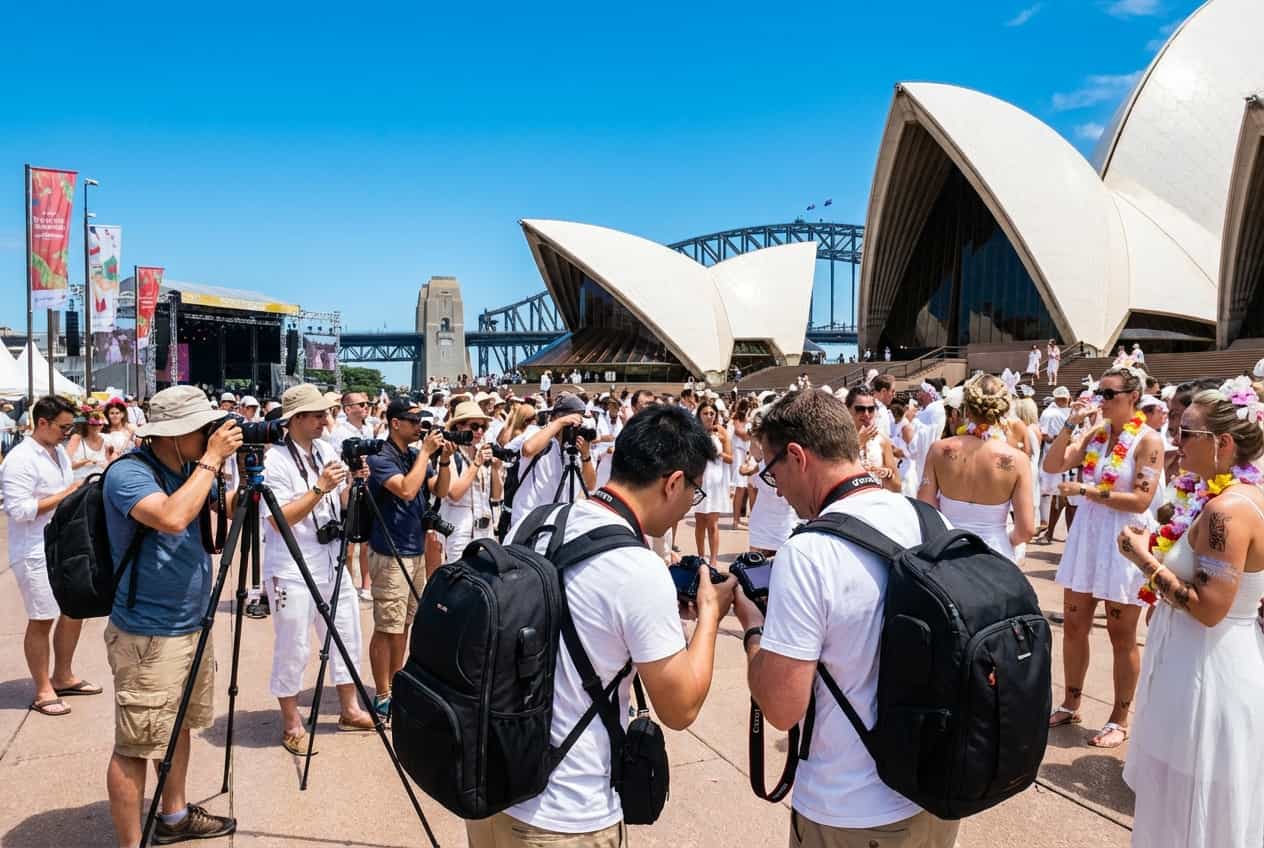
A crisp, vantage‑obsessed 3‑day plan for photographers focused on Sydney's harbour Reveillon (New Year) moments: golden hours, skyline panoramas and NYE vantage scouting. Balances iconic spots with local viewpoints, built for flexibility and long‑lens shooting.
Highlights
- Sunrise panorama at Bradleys Head
- Golden hour at Mrs Macquarie's Chair
- Hidden harbour vantage: Blues Point & Cremorne Point
- Scouting and setup for Sydney NYE fireworks from North Shore viewpoints
- Harbour ferry rides for moving vantage points
Explore all itineraries in Sydney.
Itinerary
Day 1
Arrival, quick scouting in The Rocks & Bennelong area, golden hour at Mrs Macquarie's Chair and evening skyline frames.
Hotel check-in — Harbour‑view base
Settle in and inventory gear. Pier One has harbour views ideal for evening & late‑night shooting; use concierge for early bag drop if you arrive before check‑in.
Tips from local experts:
- Book a harbour‑facing room in advance (request a room facing Sydney Harbour) for late‑night cityscape checks and quick blue‑hour access.
- Ask the concierge about a secure luggage/gear drop and a small dry space for batteries and chargers; lifts can be small — bring a compact tripod bag.
- Check-in times: aim for a 14:00 slot but request early drop; rooftop/foyer staff can recommend nearby low‑crowd vantage points for last‑minute golden hour pivots.
Walk & scout: The Rocks — laneways and harbour frames
Cobblestone lanes, sandstone textures and early evening cityscapes. Great for architectural detail, street portraits and scouting backup vantage points near Circular Quay.
Tips from local experts:
- Low angles on the cobbles bring out texture; bring a 24–70mm and a 35mm prime for intimate lane shots.
- Scout rooftop edges (public hotel terraces like The Glenmore) early to identify unobstructed skyline compositions before golden hour.
- Avoid busiest tourist loops (Argyle St at peak) — slip into Harrington or Kendall Lane for cleaner foregrounds and less crowd interference.
Golden hour & blue hour: Mrs Macquarie's Chair vantage
Iconic curved view of the Opera House and Harbour Bridge. Arrive early to stake a tripod spot and compose foregrounds on the seawall or carved chair.
- MondayOpen 24 hours
- TuesdayOpen 24 hours
- WednesdayOpen 24 hours
- ThursdayOpen 24 hours
- FridayOpen 24 hours
- SaturdayOpen 24 hours
- SundayOpen 24 hours
Tips from local experts:
- Set up at least 60–90 minutes before sunset for the preferred bench or seawall angles; bring a small travel tripod (tripods are allowed but can be restricted during events).
- Focal length cheat sheet: 24–70mm for combined Opera House + bridge; 70–200mm for compressed bridge plates with illuminated sails at blue hour.
- Check City of Sydney event notices—on NYE and some summer weekends access may be restricted; if restrictions apply, use the east seawall approach for similar lines.
Dinner with skyline: Opera Bar (early evening seating)
Casual seafood and skyline dining right on the waterfront — convenient for quick night frames between courses.
- Monday11:00 AM – 12:00 AM
- Tuesday11:00 AM – 12:00 AM
- Wednesday11:00 AM – 12:00 AM
- Thursday11:00 AM – 12:00 AM
- Friday11:00 AM – 1:00 AM
- Saturday11:00 AM – 1:00 AM
- Sunday11:00 AM – 12:00 AM
Tips from local experts:
- Reserve an outdoor table facing the Opera House well in advance; outdoor light is best for shooting table and skyline scenes without long exposure blur.
- Use a fast prime (50mm f/1.8) for low‑light dinner portraits and to isolate foreground subjects against the lit sails.
- If you need to step out for a quick exposure sequence, ask staff for permission to re‑enter with camera gear — they know photographers and are usually accommodating.
Late‑night blue hour frames — Sydney Opera House forecourt
Short walk to get alternative angles of illuminated sails and reflections. Quick, flexible shoot to finish the night.
Tips from local experts:
- Be ready to switch ISO and shutter speed quickly: blue hour light falls fast; bracket exposures for HDR if shooting handheld.
- Forecourt surfaces can reflect lights — use a polarizer earlier in the evening and remove it for long exposures to keep reflections vivid.
- Opera House forecourt can close late for events—check signage on arrival; if closed, move to the eastern edge of the Botanic Gardens for a quieter alternative.
Day 2
Harbour sunrise, Manly coastal vistas, modern skyline at Barangaroo and an alternative sunset from Blues Point. Ferry rides create moving vantage opportunities.
Pre‑dawn setup: Sunrise at Bradleys Head
Classic harbour sunrise with the Harbour Bridge in profile and native headland foregrounds — ideal for long lenses and wide panoramas.
Tips from local experts:
- Arrive 45–60 minutes before sunrise to capture first light on the bridge; use a wide tripod stance on rock platforms for stability in sea breezes.
- Pack a 16–35mm for sweeping harbour panoramas and a 70–200mm for compressed sunrise pier details.
- Bradleys Head can be damp and slippery at dawn — bring waterproof footwear and a microfibre cloth for lens protection from sea spray.
Breakfast and quick edit: The Boathouse Balmoral
Harbourfront breakfast to review dawn frames and recharge — great for natural‑light food shots and quick card backups.
- Monday7:00 AM – 4:00 PM
- Tuesday7:00 AM – 4:00 PM
- Wednesday7:00 AM – 4:00 PM
- Thursday7:00 AM – 4:00 PM
- Friday7:00 AM – 4:00 PM
- Saturday7:00 AM – 4:00 PM
- Sunday7:00 AM – 4:00 PM
Tips from local experts:
- Choose outdoor seating to continue shooting harbour slices while eating; natural light is excellent for quick editorial food imagery.
- Use breakfast downtime to bulk‑copy cards to a laptop or portable SSD and swap batteries; the venue has easy table space for small setups.
- If battery charging is needed, ask staff for a plug near the front window — many locals know photographers will ask politely.
Transfer by ferry: Circular Quay → Manly (scenic moving vantage)
Short ferry ride offering moving compositions of the Harbour Bridge, Opera House and shoreline for dynamic frames.
Tips from local experts:
- Stand on the top deck starboard side for the best sweeping bridge to sail compositions; secure camera strap against wind while shooting.
- Ferry schedule: check the Transport for NSW timetable; buy an Opal card or use contactless for faster boarding to not miss golden moments.
- Bring a small rain sleeve — sea spray and wind are common on midday crossings and can fog front elements of lenses.
Coastal cliffs & sentinel views: North Head Sanctuary, Manly
Clifftop panoramas with dramatic rock foregrounds, lighthouse features and expansive ocean exposures — excellent for telephoto compression and coastal landscapes.
- MondayOpen 24 hours
- TuesdayOpen 24 hours
- WednesdayOpen 24 hours
- ThursdayOpen 24 hours
- FridayOpen 24 hours
- SaturdayOpen 24 hours
- SundayOpen 24 hours
Tips from local experts:
- Use a polariser midday to cut glare from the surf and intensify coastal blues; carry an ND filter for long‑exposure smoothing of waves.
- Scout the lighthouse path for sheltered foreground rocks — low tide often reveals healthier compositional foregrounds.
- Paths can be steep; bring a lightweight monopod for quick repositioning across scrub and small ledges rather than a heavy tripod.
Casual harbour lunch & market feel at Manly Wharf
Grab local fish & chips or a seafood plate and use wharf textures and ferry activity for environmental portraits.
Tips from local experts:
- Use a 35mm or 50mm for candid documentary frames of ferry queues and vendors; natural window light along the wharf is excellent.
- If changing lenses, step into a sheltered stall to limit wind‑blown dust; store unused lenses in padded camera cubes at your seat.
- Try to sit with a clear view of the wharf entrance to capture arrival/departure motion sequences with panning techniques.
Return ferry: Manly → Circular Quay
Short transfer back to the CBD with different midday light; great chance for tighter bridge and Opera House studies from different angles.
Tips from local experts:
- Capture motion blur of wake with a 1/30–1/60s shutter while panning the bridge for a dynamic feel.
- Top deck left side offers a cleaner silhouette of the Opera House sails as you approach Circular Quay.
- Keep a rain sleeve & lens cloth handy — afternoon winds can pick up spray that affects wide glass surfaces.
Afternoon urban‑landscapes: Barangaroo Reserve
Modern harbour edge with sweeping grasses, minimalist seawall lines and skyline reflections — excellent for architectural frames and reflection studies.
- MondayOpen 24 hours
- TuesdayOpen 24 hours
- WednesdayOpen 24 hours
- ThursdayOpen 24 hours
- FridayOpen 24 hours
- SaturdayOpen 24 hours
- SundayOpen 24 hours
Tips from local experts:
- Use leading‑line compositions along the boardwalk to connect foreground grasses to the modern skyline; a 24–70mm is ideal.
- Golden hour can be earlier here due to western light on the tower facades — scout south ends for cleaner reflections.
- Look for small puddles and polished stone surfaces post‑spray as natural reflectors for low‑angle foregrounds.
Alternative sunset vantage: Blues Point Reserve, North Sydney
North Shore viewpoint with strong Opera House + Harbour Bridge silhouettes and generally fewer evening crowds than Mrs Macquarie's Chair.
- MondayOpen 24 hours
- TuesdayOpen 24 hours
- WednesdayOpen 24 hours
- ThursdayOpen 24 hours
- FridayOpen 24 hours
- SaturdayOpen 24 hours
- SundayOpen 24 hours
Tips from local experts:
- Blues Point gives a compressed telephoto bridge‑over‑sails look; bring 85–200mm for strong layered silhouettes at sunset.
- Arrive 45 minutes before golden hour to set compositions along the low stone walls—local photographers stake bench corners early.
- Public toilets and buses nearby (Milsons Point) help you travel light and recompose quickly as light changes.
Rooftop dinner & night frames: The Glenmore (Rocks rooftop)
Rooftop bar with wide views back to the harbour — great for scouting glass reflections and composing skyline bokeh after sunset.
- Monday11:00 AM – 12:00 AM
- Tuesday11:00 AM – 12:00 AM
- Wednesday11:00 AM – 12:00 AM
- Thursday11:00 AM – 12:00 AM
- Friday11:00 AM – 1:00 AM
- Saturday11:00 AM – 1:00 AM
- Sunday11:00 AM – 12:00 AM
Tips from local experts:
- Book rooftop seating and time your arrival for blue hour; handheld low‑light shots with a 35mm f/1.8 work well for atmospheric portraits.
- If you need an elevated reference shot, step to the corner of the rooftop for a clean line of the central business district against the harbour.
- Keep an eye on staff closing times on busy nights; ask permission to stay for an extra 15 minutes to capture closing light sequences.
Day 3
Reveillon day: scouting, final daylight frames and NYE fireworks setup from a North Shore vantage — emphasis on arrival times, tripod rules and battery planning.
Late start & gear check — hotel lounge
Slow morning to review cards, charge batteries, format spares and prepare NZ/RAW backup workflow; final lens selection for the night.
Tips from local experts:
- Do one final full‑card copy and battery swap; label cards by day to avoid confusion after a long NYE shoot.
- Decide your lens kit (one wide, one mid, one tele) and cache lenses in easy‑access pouches — NYE crowds make equipment swaps awkward.
- Check the City of Sydney NYE info page for any area closures or temporary restrictions and identify at least two backup vantage points.
Harbour walk & village feel: Cremorne Point Reserve (morning scouting)
Quiet harbor curve with elegant houses, jetties and a different angle on the bridge — an excellent low‑crowd morning option for detail shots.
- MondayOpen 24 hours
- TuesdayOpen 24 hours
- WednesdayOpen 24 hours
- ThursdayOpen 24 hours
- FridayOpen 24 hours
- SaturdayOpen 24 hours
- SundayOpen 24 hours
Tips from local experts:
- Cremorne Point's jetties give intimate foregrounds; use an ultra‑wide for near‑dock leading lines or 85mm for architectural details.
- Check tide times — low tide reveals more rocky foregrounds perfect for layered compositions with the bridge in the back.
- Parking is limited; consider taking the 247 bus or a short ferry from Circular Quay to arrive without carrying heavy gear long distances.
Midday break & final equipment prep at hotel
Rest, charge, and assemble camera bag(s) for the evening. Reformat a spare card, pack rain protection and snacks.
Tips from local experts:
- Pack two camera bodies if available: one with wide, one with tele to avoid lens swaps in the crowd.
- Prepare small essentials (lens cloths, portable charger, headlamp with red light) in an outer pocket for quick access after sunset.
- Print or screenshot your backup plan maps and transit options — mobile networks can be congested on NYE in hotspots.
Scouting & early stakeout: Kirribilli Point Reserve (afternoon reconnaissance)
North Shore vantage for Opera House + bridge with room for telephoto compression; use the quiet afternoon to test angles and mark tripod locations.
Tips from local experts:
- Photograph test exposures at multiple focal lengths in late afternoon light so you know exactly where to stand for midnight compression shots.
- Kirribilli offers decent shade and spots to store backpacks — identify these ahead of the evening to reduce gear theft risk.
- Check for local signage about NYE foreshore ticketing; some foreshore sections may be closed, so mark alternate lines that give similar sightlines.
NYE primary vantage: Blues Point Reserve — setup for fireworks
Pre‑arranged vantage on the North Shore for framed fireworks across the Opera House and Harbour Bridge. Arrive very early to secure a tripod spot; plan exact focal lengths and framing.
- MondayOpen 24 hours
- TuesdayOpen 24 hours
- WednesdayOpen 24 hours
- ThursdayOpen 24 hours
- FridayOpen 24 hours
- SaturdayOpen 24 hours
- SundayOpen 24 hours
Tips from local experts:
- Arrive 4–6 hours before midnight on NYE to secure a good tripod position; popular benches and low walls are taken early. Bring a portable chair and small anchor weight for your tripod.
- Tripod & fireworks settings: shoot at ISO 100–200, f/8–f/16, and 4–10s exposures for burst shapes; use a remote release or intervalometer to limit shake.
- Permits & access: check City of Sydney NYE foreshore ticketing — some prime foreshore areas are ticketed or closed for safety; have two backup positions (Kirribilli, Cremorne) and confirm local police signage on arrival.
Post‑fireworks return transfer: Milsons Point station / short walk
Head back to the hotel. Use the early post‑midnight window to move quickly before larger crowds form; factor in extended train services on NYE.
Tips from local experts:
- Expect heavy pedestrian flows; keep cameras packed in padded straps and use cross‑body carry to avoid jostling damage.
- Milsons Point Station typically runs extra services after midnight; check Transport NSW NYE schedules and have an Opal card ready for quick tap.
- If walking back to the hotel, avoid main crowd bottlenecks by using quieter side streets (e.g., Lavender St via North Sydney CBD) and keep a small headlamp for safety.
Itinerary Attributes
| Days | 3 |
| Highlights | 5 |
| Season | - |
| Month | - |
| Persona | Photographers |
| Transfers | 3 |
| Restaurants | 4 |
| Total Activities | 17 |
| Total Places | 17 |
| Activities Types | Hotel, Neighborhood, Attraction, Restaurant, Outdoor, Meal, Transfer, Break, Event |
Why this experience
Sydney during summer Réveillon is a photographer's paradise. The days stretch long, the light lingers golden until late evening, and the harbour comes alive with movement—ferries cutting through blue water, crowds gathering at famous vantage points, the Opera House glowing white against deepening skies. This itinerary scouts the best light and composition spots over three days, timing your movement to catch sunrise at Bradleys Head, golden hour from Mrs Macquarie's Chair, and blue hour at the Opera House. You'll map out prime positions for the Réveillon fireworks before the crowds arrive, then execute your vision as the year turns.
The beauty of this plan is its flexibility. You're not locked to group timings—you wake when the light calls, you chase the shadows and reflections that interest you, you return to spots that reward a second visit. You'll shoot The Rocks' laneway textures in soft morning light, capture the curve of the Opera House roof against storm clouds, frame Bradleys Head's rocky foreground with the bridge suspended beyond. By the final evening, you'll know exactly where to stand and which lens to bring for the midnight fireworks.
Before you go
- Best time: Summer. Peak light and season during Réveillon week, the Réveillon period.
- Budget: Check the booking widget for current tour pricing. Accommodation and café costs vary widely depending on location and style.
- Difficulty: Easy to Moderate. Mostly walking on established paths and beaches; one early morning to catch sunrise.
- What to bring: Full camera kit (tripod if you prefer), water, sunscreen, wide-angle and telephoto lenses, ND filters (for blue hour), rain jacket (summer storms possible).
- Getting there: Start at Bradleys Head car park (north Sydney) for day one. Public transport: train to Circular Quay, then walk or bus to meeting points.
- Accessibility: Most vantage points involve walking 15–30 minutes across uneven coastal terrain. Some stairs. Mrs Macquarie's Chair is wheelchair-accessible via a paved path.
Frequently asked questions
What time should I be at Bradleys Head for sunrise? Arrive by 6:00 AM during December to catch the sun clearing the Tasman Sea. Golden light peaks 30 minutes after sunrise, then shifts quickly. Scout the evening before if you're unfamiliar with the location.
Can I shoot the fireworks from any vantage point? The best free spots (Mrs Macquarie's Chair, Bradley's Head, Blue Point Reserve) fill hours before midnight. Paid viewing platforms and rooftop bars offer guaranteed sightlines—book ahead.
What's the best lens for these compositions? Wide-angle (16–35mm) for expansive harbour and bridge shots; telephoto (70–200mm) for compressed cityscapes and fireworks detail. The Rocks' alleys reward 35–50mm.
What's included in this itinerary? This itinerary on TheNextGuide is free to read and follow at your own pace. All locations mentioned are public and free to access. Optional paid experiences include café visits, rooftop bar reservations, and booked transport.
Complete your trip in Sydney
Extend your creative Sydney escape with other perspectives:
- Romantic Sydney Harbour — Golden hour romance and intimate vantage points, perfect for evening light studies.
- Sydney Harbour to Headlands: Dawn Rides — Early morning perspective by bike, covering similar harbourside terrain with movement and speed.
- Outdoor Creative Retreat for Artists — Plein air sketching and fine art context alongside harbour photography.
Browse all Sydney itineraries at TheNextGuide.
Last updated: April 2026