Tokyo: A Sleek, Light‑Soaked Christmas for Design Enthusiasts
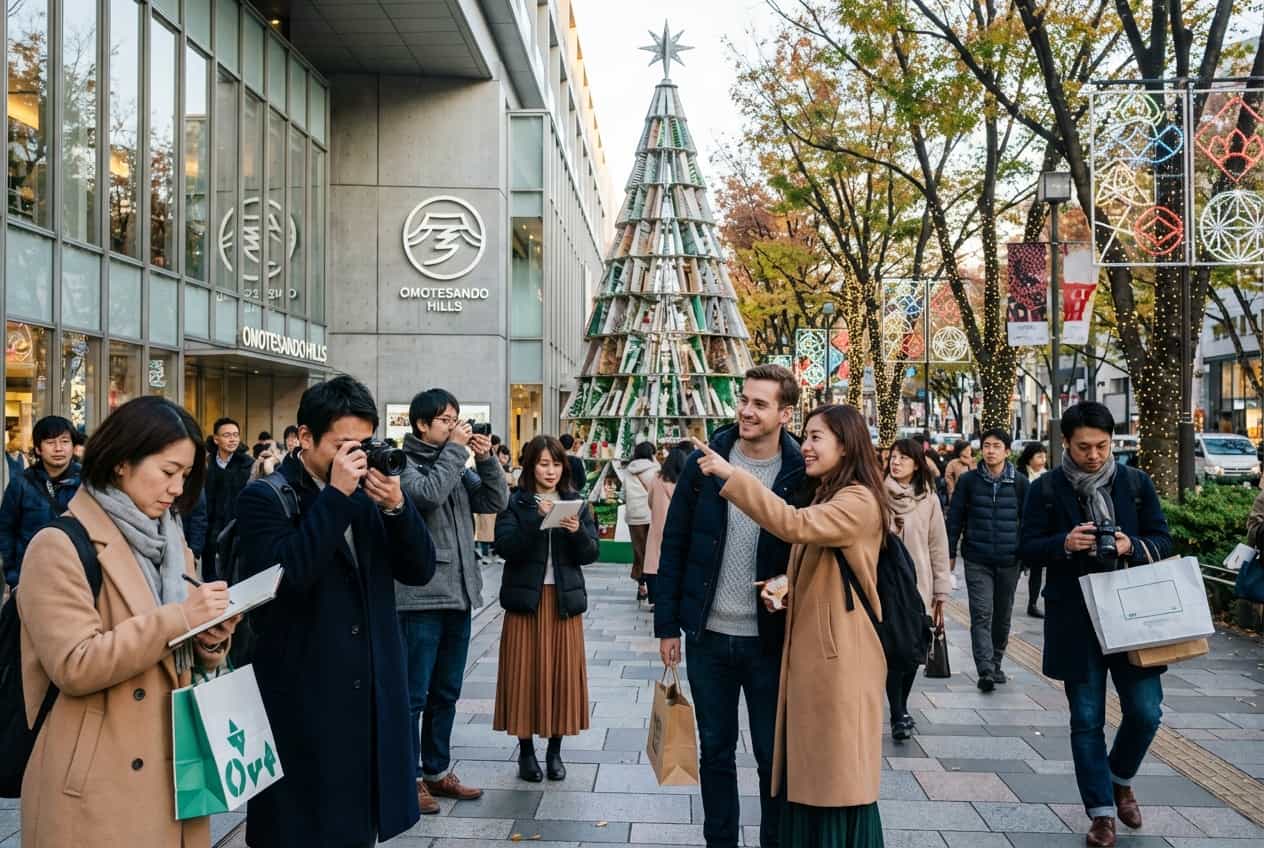
Four winter days in Tokyo focused on contemporary design, craft, architecture and luminous Christmas installations. Curated gallery visits, studio-forward stops, hands-on craft encounters, and evening illuminations for a refined, light-soaked itinerary.
Highlights
- Kengo Kuma’s Nezu Museum and quiet sculpture garden
- 21_21 DESIGN SIGHT—curated design exhibitions
- Tokyo Midtown & Roppongi Christmas illuminations
- Sumida Hokusai Museum and Kappabashi kitchenware street
- teamLab Planets immersive light installation
- Yanaka’s artisan galleries and SCAI The Bathhouse
Explore all itineraries in Tokyo.
Itinerary
Day 1
Aoyama & Omotesando — contemporary architecture, craft showcase, and the first Christmas illumination stroll at dusk.
Nezu Museum — Kengo Kuma architecture & garden
Start with the Nezu Museum to appreciate Kengo Kuma’s refined timber-and-stone interventions and the museum’s seasonal garden. Good for sketching details and studying material joins.
- MondayClosed
- Tuesday10:00 AM – 5:00 PM
- Wednesday10:00 AM – 5:00 PM
- Thursday10:00 AM – 5:00 PM
- Friday10:00 AM – 5:00 PM
- Saturday10:00 AM – 5:00 PM
- Sunday10:00 AM – 5:00 PM
Tips from local experts:
- Arrive at opening to catch soft winter light through the museum’s timber screens — ideal for material studies and sketches.
- Bring a small sketchbook and a graphite pencil (photography is limited in galleries); study the joints where stone meets wood for Kengo Kuma references.
- The museum is compact — focus on circulation routes and how the garden frames views; ask staff about current temporary displays for designer collaborations.
Walk Omotesando — tree‑lined avenue and boutique façades
A 30‑minute observational stroll down Omotesando to read shopfront details and façade materials, from flagship boutiques to small design ateliers.
Tips from local experts:
- Study boutique façades (Prada Aoyama, Omotesando Hills) for lessons in material restraint and urban scale.
- Keep an eye out for small showroom windows and pop‑up installations tucked between flagships — they often host emerging designers.
- Wear comfortable shoes; many side streets have narrow laneways with independent design shops and studios worth popping into.
Lunch — Aoyama Flower Market TEA HOUSE
A floral‑driven café with a thoughtful interior palette — pleasant mid‑day lunch in a design-conscious setting.
- Monday10:00 AM – 9:00 PM
- Tuesday10:00 AM – 9:00 PM
- Wednesday10:00 AM – 9:00 PM
- Thursday10:00 AM – 9:00 PM
- Friday10:00 AM – 9:00 PM
- Saturday10:00 AM – 9:00 PM
- Sunday10:00 AM – 9:00 PM
Tips from local experts:
- The tea house interior doubles as a floral display — note how plants shape seating and light; sit near the window for best natural light.
- Try seasonal set lunches and observe tableware choices — useful for product/material inspiration.
- If you need to recharge devices for sketching, ask politely for a corner outlet; spaces are small and fill quickly at lunchtime.
Japan Traditional Crafts Aoyama Square — contemporary craft showcase
Exhibitions and rotating displays of traditional Japanese craft, with opportunities to meet craft practitioners and see material demonstrations.
- Monday11:00 AM – 7:00 PM
- Tuesday11:00 AM – 7:00 PM
- Wednesday11:00 AM – 7:00 PM
- Thursday11:00 AM – 6:00 PM
- Friday12:00 – 7:00 PM
- Saturday11:00 AM – 7:00 PM
- Sunday11:00 AM – 7:00 PM
Tips from local experts:
- Ask the front desk about live demonstrations or reservation slots for hands-on short sessions — book early when possible.
- Focus on how traditional techniques are reinterpreted by contemporary designers; note joinery, glazes, and lacquer finishes.
- Buy a small craft sample from the shop — excellent for tactile research and design referencing later.
21_21 DESIGN SIGHT — contemporary design exhibitions
Visit exhibitions curated by leading designers; the building itself (designed with Tadao Ando involvement) is part of the experience.
- Monday10:00 AM – 7:00 PM
- TuesdayClosed
- Wednesday10:00 AM – 7:00 PM
- Thursday10:00 AM – 7:00 PM
- Friday10:00 AM – 7:00 PM
- Saturday10:00 AM – 7:00 PM
- Sunday10:00 AM – 7:00 PM
Tips from local experts:
- Check the temporary exhibition schedule in advance; shows often include prototype works and designer talks.
- Take notes on exhibition layouts and interpretive devices — it’s a compact site that makes effective use of light and material.
- Photograph entrance signage and wayfinding (where allowed) for inspiration on exhibition communication and typography.
Break — Café Kitsuné Aoyama
A short café break in a Japanese‑French aesthetic café to assess notes and photos while daylight fades.
- Monday9:00 AM – 7:00 PM
- Tuesday9:00 AM – 7:00 PM
- Wednesday9:00 AM – 7:00 PM
- Thursday9:00 AM – 7:00 PM
- Friday9:00 AM – 7:00 PM
- Saturday9:00 AM – 7:00 PM
- Sunday9:00 AM – 7:00 PM
Tips from local experts:
- Use this pause to sort sketches and photos — cafés in Aoyama attract design crowds, good for networking.
- Order a simple coffee and note the ceramic cup shapes and packaging — small details designers care about.
- Sit by the window to observe street-level branding and shopfront typographies as dusk approaches.
Evening stroll — Omotesando Hills illumination
A curated Christmas illumination along Omotesando’s avenue and Omotesando Hills — a light‑soaked evening walk focused on seasonal lighting design.
- Monday11:00 AM – 8:00 PM
- Tuesday11:00 AM – 8:00 PM
- Wednesday11:00 AM – 8:00 PM
- Thursday11:00 AM – 8:00 PM
- Friday11:00 AM – 8:00 PM
- Saturday11:00 AM – 8:00 PM
- Sunday11:00 AM – 8:00 PM
Tips from local experts:
- Study the layering of architectural lighting and street lighting — note color temperature and contrast used in the illuminations.
- Bring a small tripod or steady your phone for long-exposure photos of canopy lighting and storefront reflections.
- If you want quieter photos, visit the side lanes off Omotesando where boutique lighting designers sometimes stage subtle installations.
Day 2
Roppongi & Midtown — big museum shows and refined Christmas light installations with architecture study-time.
The National Art Center, Tokyo — rotating design and art exhibitions
A large gallery space with thoughtfully curated shows that often intersect with design disciplines.
- Monday10:00 AM – 6:00 PM
- TuesdayClosed
- Wednesday10:00 AM – 6:00 PM
- Thursday10:00 AM – 6:00 PM
- Friday10:00 AM – 8:00 PM
- Saturday10:00 AM – 8:00 PM
- Sunday10:00 AM – 6:00 PM
Tips from local experts:
- Check exhibition catalogs at the shop — they’re a great resource for design research and references.
- Study the museum’s modular gallery systems and how temporary walls affect circulation and sightlines.
- Use on-site seating areas to review sketches and plan the afternoon; staff can advise on nearby design events.
Tokyo Midtown Design Hub — rotating design projects and local studios
A small, curated design hub often featuring local designers, prototypes, and pop-up studio shows.
- Monday11:00 AM – 7:00 PM
- Tuesday11:00 AM – 7:00 PM
- Wednesday11:00 AM – 7:00 PM
- Thursday11:00 AM – 7:00 PM
- Friday11:00 AM – 7:00 PM
- Saturday11:00 AM – 7:00 PM
- Sunday11:00 AM – 7:00 PM
Tips from local experts:
- Arrive early in the hub to speak with curators — they often know local studio contacts and small-run makers.
- Examine exhibition tags for materials and maker contacts; many items are available for limited purchase.
- Note how the hub uses lighting and plinths to present prototypes — useful for exhibition design planning.
Lunch — Le Pain Quotidien Tokyo Midtown
Light, design-conscious lunch in a relaxed setting; good for informal studio conversations.
- Monday7:30 AM – 10:00 PM
- Tuesday7:30 AM – 10:00 PM
- Wednesday7:30 AM – 10:00 PM
- Thursday7:30 AM – 10:00 PM
- Friday7:30 AM – 10:00 PM
- Saturday7:30 AM – 10:00 PM
- Sunday7:30 AM – 10:00 PM
Tips from local experts:
- Choose a window seat if possible to study Tokyo Midtown’s plaza and lighting strategies for outdoor/indoor transitions.
- Observe furniture details and joinery — chain cafés in design districts often use well‑designed fixtures.
- Use their calm interior to review morning notes and sketch exhibition layouts you’ve seen.
Mori Art Museum — contemporary exhibitions with skyline views
A major contemporary art institution; exhibitions often explore spatial and light-based work, plus panoramic city views to study urban composition.
- Monday10:00 AM – 6:00 PM
- Tuesday10:00 AM – 6:00 PM
- Wednesday10:00 AM – 6:00 PM
- Thursday10:00 AM – 6:00 PM
- Friday10:00 AM – 8:00 PM
- Saturday10:00 AM – 8:00 PM
- Sunday10:00 AM – 6:00 PM
Tips from local experts:
- Visit late afternoon to combine indoor exhibits with dusk skyline studies — the observation decks provide useful compositional references.
- Check for artist talks or gallery guide sessions; these often include process details valuable to designers.
- Pay attention to exhibition lighting rigs and how the museum balances daylight and artificial light.
Roppongi Hills & Keyakizaka — architecture, public art and early illumination
Explore Roppongi Hills’ public art, plazas and the Keyakizaka illumination as dusk settles; study large-format outdoor lighting design.
- Monday11:00 AM – 11:00 PM
- Tuesday11:00 AM – 11:00 PM
- Wednesday11:00 AM – 11:00 PM
- Thursday11:00 AM – 11:00 PM
- Friday11:00 AM – 11:00 PM
- Saturday11:00 AM – 11:00 PM
- Sunday11:00 AM – 11:00 PM
Tips from local experts:
- Walk the plaza and rooftop terraces to study scale and public art placement relative to pedestrian flow.
- Observe the gradation of lighting from building facades to tree canopy — great reference for large-scale installations.
- If possible, locate the public art plaques and research the commissioning bodies for insights into public art processes.
Evening — Tokyo Midtown Christmas illumination
Finish the evening at Tokyo Midtown to see lighting displays and curated seasonal installations — a highlight for design-led illumination study.
- Monday11:00 AM – 11:00 PM
- Tuesday11:00 AM – 11:00 PM
- Wednesday11:00 AM – 11:00 PM
- Thursday11:00 AM – 11:00 PM
- Friday11:00 AM – 11:00 PM
- Saturday11:00 AM – 11:00 PM
- Sunday11:00 AM – 11:00 PM
Tips from local experts:
- Note the color temperature and rhythm of programmed lights — great inspiration for holiday lighting schemes.
- Study how retail and public-space lighting are layered to create a cohesive visitor experience.
- If photographing, arrive early to secure vantage points before crowds gather; tripod-friendly spots are limited.
Day 3
Sumida & Toyosu — Hokusai’s influence, craft shopping on Kappabashi, then a light‑immersive teamLab experience at Toyosu.
Sumida Hokusai Museum — Hokusai, prints and museum architecture
A compact museum dedicated to Hokusai with a considered, contemporary building — valuable for studying exhibition sequencing and print display.
- MondayClosed
- Tuesday9:30 AM – 5:30 PM
- Wednesday9:30 AM – 5:30 PM
- Thursday9:30 AM – 5:30 PM
- Friday9:30 AM – 5:30 PM
- Saturday9:30 AM – 5:30 PM
- Sunday9:30 AM – 5:30 PM
Tips from local experts:
- Study the print display cases and humidity controls if possible; ask staff about conservation-friendly lighting.
- Observe visitor flow and how small-format works are sequenced to create narrative — useful for curating series.
- Pick up the museum’s publications for detailed plate reproductions and designer credits for further research.
Kappabashi Dougu Street — design of tools, utensils and shopfronts
Explore the famed kitchenware street to study product design, material finishes, and mock food models — a treasure trove for industrial and product designers.
- Monday10:00 AM – 5:00 PM
- Tuesday10:00 AM – 5:00 PM
- Wednesday10:00 AM – 5:00 PM
- Thursday10:00 AM – 5:00 PM
- Friday10:00 AM – 5:00 PM
- Saturday10:00 AM – 5:00 PM
- SundayClosed
Tips from local experts:
- Search out specialist shops for knives, cast-ironware and displayware — examine how product finish varies across price tiers.
- Study the famous plastic food models for insight into realistic material rendering and colour matching.
- Bring a small daypack for purchases; many shops will wrap pieces carefully for travel — ask for maker contact details for collaborations.
Lunch — Daikokuya Tempura (Asakusa)
A classic tempura meal in Asakusa — regional food craft and presentation that reveals tableware relationships.
- Monday11:00 AM – 8:00 PM
- Tuesday11:00 AM – 8:00 PM
- Wednesday11:00 AM – 8:00 PM
- Thursday11:00 AM – 8:00 PM
- Friday11:00 AM – 8:00 PM
- Saturday11:00 AM – 8:00 PM
- Sunday11:00 AM – 8:00 PM
Tips from local experts:
- Notice tempura plating, bowl shapes and lacquerware choices — small details show how food and object design converse.
- Sit near the open counter if available to observe utensil handling and kitchen layout.
- If time allows, ask staff about local makers of lacquer or ceramics used in service for studio leads.
Transfer — Asakusa to Toyosu (subway)
Subway transfer to Toyosu for the teamLab Planets immersive experience. Use this time to review sketches and charge devices.
Tips from local experts:
- Use the transfer to sort reference photos and note which materials or lighting effects you want to study at teamLab.
- Buy a bottled water at the station and confirm ticket time-slot details for teamLab to avoid queues.
- Keep a small towel and wear shoes you can easily remove — teamLab Planets requires shoe removal in parts of the installation.
teamLab Planets TOKYO — immersive light, color & reflective surfaces
An immersive digital art experience focused on light, reflection and embodied spatial design — ideal for studying responsive light and visitor interaction.
- Monday8:30 AM – 10:00 PM
- Tuesday8:30 AM – 10:00 PM
- Wednesday8:30 AM – 10:00 PM
- Thursday8:30 AM – 10:00 PM
- Friday8:30 AM – 10:00 PM
- Saturday8:30 AM – 10:00 PM
- Sunday8:30 AM – 10:00 PM
Tips from local experts:
- Pre-book time-slot tickets and arrive 10–15 minutes early; the installation is best experienced in lower visitor windows for unobstructed observation.
- Prepare to be barefoot or in provided socks in water-based zones; the tactile element is central to the design and visitor choreography.
- Focus on transitions between rooms — note how sound, light and floor material change perception of scale and color.
Break — Toyosu Market (coffee and reflections)
A short coffee and debrief near Toyosu Market to compile references and rest after the immersive experience.
- Monday5:00 AM – 3:00 PM
- Tuesday5:00 AM – 3:00 PM
- WednesdayClosed
- Thursday5:00 AM – 3:00 PM
- Friday5:00 AM – 3:00 PM
- Saturday5:00 AM – 3:00 PM
- SundayClosed
Tips from local experts:
- Use this break to download images and jot down which light effects you want to attempt on your own projects.
- Observe the market’s signage, packaging and logistics design — it’s an industrial design case study in itself.
- If interested in food‑system design, ask market vendors about their suppliers and packaging choices for material research.
Day 4
Yanaka & Harajuku — intimate galleries and artist-run spaces, artisan streets, and independent design shops to close the trip.
SCAI The Bathhouse — contemporary gallery in a repurposed sento
A renowned contemporary gallery located in a renovated public bathhouse — great for seeing how adaptive reuse supports gallery programming.
- MondayClosed
- Tuesday12:00 – 6:00 PM
- Wednesday12:00 – 6:00 PM
- Thursday12:00 – 6:00 PM
- Friday12:00 – 6:00 PM
- Saturday12:00 – 6:00 PM
- SundayClosed
Tips from local experts:
- Focus on how the gallery retains bathhouse spatial qualities while inserting contemporary display systems; take notes on sightlines.
- Ask gallery staff about represented artists; small gallerists often provide direct maker contacts for studio visits.
- Use quiet morning hours to photograph interior volumes and the unique ceiling/floor transitions for reuse-case studies.
Yanaka Ginza — artisan shopping street and small‑scale retail design
A relaxed shopping street with artisanal shops, ceramics, and small galleries — ideal for slow observation of retail craft presentation.
Tips from local experts:
- Look for small ceramic and textile makers — study window dressing and how crafts are grouped to tell a narrative.
- Pop into family-run shops and ask about makers’ techniques; many offer candid craft history useful for studio research.
- This area is hilly and has narrow pavements — wear sturdy shoes and keep camera gear secure when browsing busy shops.
Transfer — Yanaka to Harajuku
Short transit to Harajuku/Design Festa area; use the ride to plan the afternoon gallery visits.
Tips from local experts:
- Use transit time to contact any designers you noted earlier for potential studio drop‑ins the next day.
- Confirm Design Festa Gallery opening hours and any on‑site workshops before arrival.
- Review your gallery notes and photos to prioritize which makers to approach in Harajuku for conversations.
Lunch — Bills Omotesando
A contemporary, design-conscious café/restaurant near Omotesando — a relaxed midday pause in a refined setting.
- Monday8:30 AM – 10:00 PM
- Tuesday8:30 AM – 10:00 PM
- Wednesday8:30 AM – 10:00 PM
- Thursday8:30 AM – 10:00 PM
- Friday8:30 AM – 10:00 PM
- Saturday8:30 AM – 10:00 PM
- Sunday8:30 AM – 10:00 PM
Tips from local experts:
- Sit by the window or terrace to observe pedestrian flows and storefront design on Omotesando.
- Note the restaurant’s use of natural materials and tableware — small choices that reinforce brand identity.
- If you want a quieter spot, ask for seating away from the main entrance; sketch the interior furniture proportions for reference.
Design Festa Gallery — artist-run, experimental exhibitions
A sprawling artist-run gallery where emerging designers and experimental makers exhibit — great for sourcing fresh contacts and limited-edition objects.
- Monday11:00 AM – 8:00 PM
- Tuesday11:00 AM – 8:00 PM
- Wednesday11:00 AM – 8:00 PM
- Thursday11:00 AM – 8:00 PM
- Friday11:00 AM – 8:00 PM
- Saturday11:00 AM – 8:00 PM
- Sunday11:00 AM – 8:00 PM
Tips from local experts:
- Walk all floors methodically; small studios and pop-ups can be easily missed but often host bold experimental work.
- Bring business cards or a small folio — many exhibiting designers are open to informal collaborations.
- Talk to gallery volunteers about recent exhibits and any studio networks active in the building for further visits.
IDÉE Shop Aoyama — curated furniture, objects and small design brands
Conclude with a visit to IDÉE to see how a design brand curates furniture, textiles and accessories — useful for retail concept and merchandising study.
- Monday11:00 AM – 8:00 PM
- Tuesday11:00 AM – 8:00 PM
- Wednesday11:00 AM – 8:00 PM
- Thursday11:00 AM – 8:00 PM
- Friday11:00 AM – 8:00 PM
- Saturday11:00 AM – 8:00 PM
- Sunday11:00 AM – 8:00 PM
Tips from local experts:
- Examine the shop’s seasonal merchandising and how it integrates craftwork into a cohesive brand language.
- Ask staff about product makers and limited editions — staff can sometimes provide maker contacts.
- Note display heights, prop materials and price signalling; take photos of shelving and plinth details for retail studies.
Final evening — Omotesando dusk walk and reflection
A relaxed dusk walk along Omotesando to absorb seasonal lighting design and review the trip’s inspirations.
- Monday11:00 AM – 8:00 PM
- Tuesday11:00 AM – 8:00 PM
- Wednesday11:00 AM – 8:00 PM
- Thursday11:00 AM – 8:00 PM
- Friday11:00 AM – 8:00 PM
- Saturday11:00 AM – 8:00 PM
- Sunday11:00 AM – 8:00 PM
Tips from local experts:
- Compare early and late-season lighting choices you observed across the trip and note how color temperature affects perceived materiality.
- Choose a bench or café terrace to compile a concise list of three material and lighting ideas to apply to your next project.
- If you have remaining time, revisit a favorite storefront to photograph details under evening illumination for a final case study.
Itinerary Attributes
| Days | 4 |
| Highlights | 6 |
| Season | - |
| Month | - |
| Persona | Design Enthusiasts |
| Transfers | 2 |
| Restaurants | 4 |
| Total Activities | 24 |
| Total Places | 24 |
| Activities Types | Attraction, Neighborhood, Restaurant, Culture, Break, Outdoor, Event, Transfer, Experience, Shopping |
Why this experience
Tokyo at Christmas, for a design enthusiast, is a pilgrimage. The city transforms into a gallery where architecture meets seasonal magic: Kengo Kuma's Nezu Museum—a structure of wood, geometry, and light—becomes even more transcendent when Christmas installations add another layer of intention. You'll move through contemporary design galleries where curators have carefully considered every wall, every threshold, every sight line. You'll encounter craft exhibitions celebrating Japanese makers—ceramicists, textile artists, woodworkers—whose work sits at the intersection of utility and beauty. And throughout, the city glows with Christmas installations that feel less like commercial decoration and more like large-scale art directing your attention toward light, shadow, and the spaces in between.
This four-day itinerary doesn't chase Santa's workshop—it chases the architects, designers, and makers who've shaped Tokyo's visual language. Christmas becomes the context for seeing design at its most deliberate.
Before you go
- Best time: Winter (December 1–25). Christmas installations peak mid-December through December 25. Temperatures are cool (5–10°C), perfect for purposeful walking. The city's design energy compounds as the holiday approaches.
- Budget: Check the booking widget for current tour pricing. Museum and gallery entries vary; some design exhibitions are free. Budget for meaningful purchases if you encounter work that speaks to you.
- Difficulty: Moderate. Consistent walking (8–12 kilometers across four days), frequent transitions between galleries and museums. Mental engagement is demanding—pacing yourself matters.
- What to bring: Comfortable walking shoes, warm layers (wool, insulated jacket), camera or sketchbook (design-focused travel calls for documentation), portable charger, small notebook.
- Getting there: Nezu Museum is in Minato ward (easily accessible via metro). Most contemporary galleries are in central Tokyo. Plan metro hops between venues.
- Accessibility: Nezu Museum and most galleries have elevator access, but flooring varies (some polished concrete, some natural stone). Confirm with venues if mobility is a concern.
Frequently asked questions
Do I need design knowledge to enjoy this itinerary? No. This itinerary assumes curiosity, not expertise. You're learning alongside experiencing. Most galleries have English signage or translations; Kengo Kuma's work speaks visually regardless of language.
Can we extend beyond four days? Yes. Tokyo's design landscape rewards lingering. Add time to revisit favorite galleries, attend artist talks, or explore design districts like Kiyosumi-Shirakawa in depth.
What's included in this itinerary? This itinerary on TheNextGuide is free to read and follow at your own pace. Museum and gallery entries, meals, and any guided experiences or artist workshops are priced via the booking widget or paid directly at venues.
Are there gift/shopping opportunities tied to the design focus? Yes. Many galleries have curated gift shops; contemporary craft fairs often run in December. The itinerary guides you toward makers and their work.
Complete your trip in Tokyo
Sleek, Christmas-season design immersion pairs deeply with other design-focused Tokyo experiences. Extend your design journey with:
- Tokyo: Minimalist, Neon Christmas for Design Enthusiasts (3-Day) — Shift focus to minimalism and neon; a three-day alternative with different venues and philosophy
- Tokyo's Micro-Design Trail: Kiyosumi, Yanaka & Daikanyama (4-Day) — Extend into independent design districts and craft galleries beyond the holiday season
- Tokyo: Sleek, Luminous Christmas (4-Day Design Itinerary) — Deepen your Christmas design experience with architectural walks and luminous installations
Browse all Tokyo itineraries at TheNextGuide.
Last updated: April 2026